
Introduction
This manual provides essential instructions for the safe and effective use of the GÜDE 55369 GHF 800 Manual Tile Cutter. Please read these instructions carefully before assembly, operation, or maintenance. Keep this manual for future reference.
Safety Instructions
Always prioritize safety when operating any tools. Failure to follow these instructions may result in injury or damage to the tool.
- Wear appropriate personal protective equipment (PPE), including safety glasses and gloves.
- Ensure the work surface is stable, level, and clean.
- Keep children and bystanders away from the work area.
- Inspect the tile cutter for any damage before each use. Do not use if damaged.
- Handle tiles carefully; edges can be sharp after cutting.
- Do not force the cutting wheel. Apply steady, even pressure.
- Ensure the tile is properly secured on the anti-slip support before cutting.
Components Overview
Familiarize yourself with the parts of your GÜDE GHF 800 Manual Tile Cutter.

- Cutting Handle: Ergonomically designed for comfortable operation.
- Cutting Wheel: Hardened tungsten carbide wheel for precise scoring.
- Guide Rail: Provides a stable path for the cutting head.
- Base Plate: Stable aluminum base for secure tile placement.
- Anti-slip Support: Ensures the tile remains stationary during cutting.
- Adjustable Stop/Angle Guide: For precise measurement and angled cuts.
- Fold-out Tile Supports: Extendable supports on both sides for larger tiles.
Setup
Before using the tile cutter, ensure it is properly set up.
- Unpacking: Carefully remove all components from the packaging. Check for any shipping damage.
- Placement: Place the tile cutter on a stable, flat, and clean work surface. Ensure there is enough space around the cutter for safe operation and tile handling.
- Extend Tile Supports: For larger tiles, unfold the side tile supports (30 cm each) to provide additional stability.

Figure 2: Fold-out tile support. This image shows one of the side supports extended, providing additional surface area for larger tiles. - Adjustable Stop: Position the adjustable stop according to the desired tile dimension. Secure it firmly.
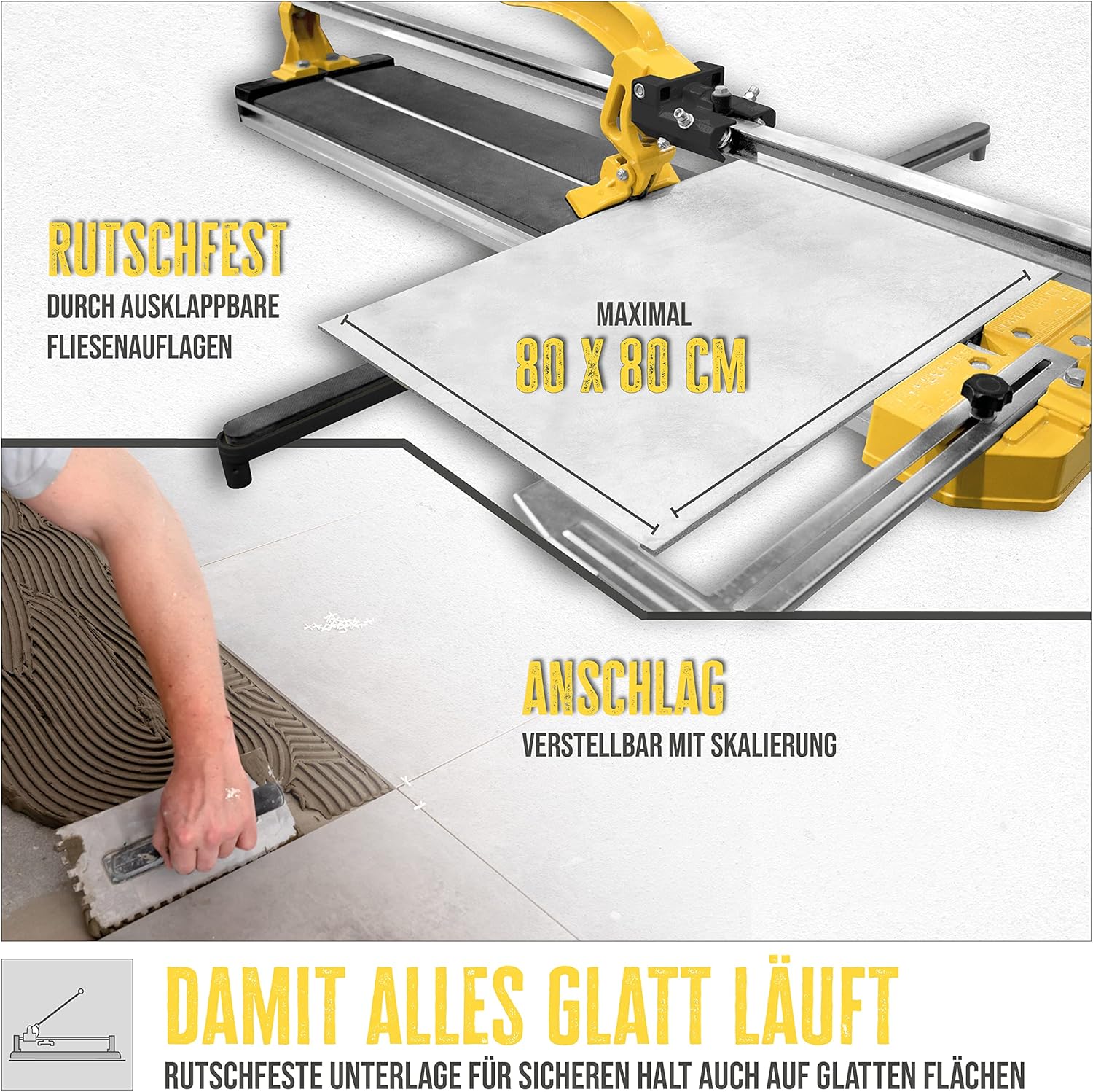
Figure 3: Tile placement and adjustable stop. This image illustrates a tile positioned on the cutter, with the adjustable stop set for a precise cut, indicating a maximum tile size of 80x80 cm.
Operation
Follow these steps for effective and safe tile cutting.
- Prepare the Tile: Clean the tile surface. Mark the desired cut line clearly with a pencil or marker.
- Position the Tile: Place the tile on the base plate, aligning the marked cut line with the cutting wheel's path. Ensure the tile rests firmly against the anti-slip support and the adjustable stop.

Figure 4: Tile positioning for a straight cut. This image shows a tile correctly placed on the cutter, ready for the scoring process. - Score the Tile:
- Position the cutting wheel at the edge of the tile furthest from you.
- Apply firm, consistent downward pressure on the cutting handle.
- Push the cutting handle smoothly and steadily across the tile towards you in a single, continuous motion. Do not make multiple passes. A distinct scoring sound should be heard.

Figure 5: Scoring the tile. This image focuses on the cutting wheel as it scores a line across the tile surface. - Break the Tile:
- Once the tile is scored, position the breaking foot (part of the cutting head) directly over the scored line, near the edge of the tile closest to you.
- Apply quick, firm downward pressure on the cutting handle. The tile should snap cleanly along the scored line.
- For diagonal cuts, use the angle guide and ensure the tile is securely placed.

Figure 6: Performing a diagonal cut. This image demonstrates the tile cutter being used to make an angled cut on a tile. - Finishing: Carefully remove the cut tile pieces. Edges may be sharp and may require light sanding or filing for a smooth finish.
Maintenance
Regular maintenance ensures the longevity and performance of your tile cutter.
- Cleaning: After each use, clean the base plate, guide rails, and cutting head to remove tile dust and debris. Use a dry cloth or brush.
- Lubrication: Periodically apply a light lubricant to the guide rails and the cutting wheel axle to ensure smooth operation.
- Cutting Wheel: The tungsten carbide cutting wheel is durable but will eventually wear out. Replace the cutting wheel when cuts become inconsistent or require excessive force.

Figure 7: Hardened cutting wheel and ergonomic handle. This image provides a detailed view of the durable cutting wheel and the comfortable grip of the handle. - Storage: Store the tile cutter in a dry, clean place, away from direct sunlight and extreme temperatures.
Troubleshooting
Refer to this section for common issues and their solutions.
| Problem | Possible Cause | Solution |
|---|---|---|
| Uneven or jagged cuts |
|
|
| Tile does not break cleanly |
|
|
| Cutting head sticks or moves roughly |
|
|
Specifications
| Feature | Detail |
|---|---|
| Model Number | 55369 |
| Maximum Cutting Length | 800 mm (80 cm) |
| Maximum Tile Dimensions | 800 x 800 mm (for diagonal cuts) |
| Maximum Tile Thickness | 12 mm |
| Cutting Wheel Diameter | 22 mm |
| Cutting Wheel Material | Tungsten Carbide |
| Base Plate Material | Aluminum |
| Product Dimensions (L x W x H) | 105.4 x 86 x 39 cm |
| Item Weight | 7.4 Kilograms |
| Handle Material | Polypropylene |
| Recommended Surface | Ceramic, Porcelain |
| Power Source | Hand-powered |
Warranty and Support
For warranty information or technical support, please refer to the manufacturer's official website or contact their customer service directly. Keep your purchase receipt as proof of purchase.
Manufacturer: GÜDE GmbH & Co.KG
Contact information can typically be found on the product packaging or the official GÜDE website.
