
1. Introduction
The Midwest Hearth MH Combustor is a high-quality catalytic combustor designed for wood stoves. This component plays a crucial role in enhancing the efficiency and environmental performance of your wood-burning appliance. By converting smoke into additional heat, it reduces harmful emissions and can extend burn times.
This manual provides essential information for the proper installation, operation, and maintenance of your new combustor to ensure optimal performance and longevity.

This image displays the rectangular metal catalytic combustor, highlighting its honeycomb structure. It is designed to fit specific wood stove models to improve combustion efficiency.

This diagram visually explains how smoke contacts the catalyst, initiating a chemical reaction at lower temperatures (500°F) to convert gases like carbon monoxide, hydrogen, methane, acetic acid, and hydrocarbons into clean by-products of water vapor and carbon dioxide, raising exhaust temperatures to 1000°F - 1600°F.
2. Installation
Before beginning installation, ensure your wood stove is completely cool and free of any hot embers. It is recommended to wear protective gloves and eyewear.
2.1 Removing the Old Combustor
- Open the wood stove door and locate the existing combustor, typically found in the upper rear section of the firebox.
- Carefully remove any retaining clips or panels that secure the combustor in place.
- Gently slide the old combustor out. Note its orientation for correct installation of the new unit.
- Clean the combustor chamber thoroughly, removing any ash or debris. Ensure any breather holes are clear.
2.2 Installing the New Combustor
- Unpack the new Midwest Hearth MH Combustor. Handle with care to avoid damage to the delicate internal structure.
- If your stove requires a gasket, ensure the expanding Interam gasket wrap is properly installed around the new combustor.
- Slide the new combustor into the chamber, ensuring it is seated correctly and securely. The orientation should match that of the old combustor.
- Reinstall any retaining clips or panels removed earlier.

This image shows a person wearing gloves carefully sliding a new catalytic combustor into the designated slot within a wood stove's firebox, illustrating the proper placement during installation.

This image displays a roll of expanding Interam gasket wrap, which is used to seal the catalytic combustor within the wood stove, ensuring a tight fit and proper airflow.
2.3 Installation Video
Video 1: An instructional video from Midwest Hearth demonstrating the installation process for catalytic combustors in wood burning stoves.
3. Operation
Proper operation of your catalytic wood stove with the new combustor will maximize its benefits, including extended burn times and reduced emissions.
3.1 Activating the Combustor
- Start a fire in your wood stove as usual.
- Once the fire is established and the stove reaches a sufficient temperature (typically around 500°F), the catalytic combustor will activate. This is often indicated by a visible glow within the combustor or a change in the flame pattern.
- Engage the bypass damper (if applicable) to direct smoke through the combustor.
3.2 Monitoring Stove Temperature
Monitoring the flue pipe temperature is essential for efficient and safe operation. A flue pipe thermometer can help you maintain optimal burning conditions.
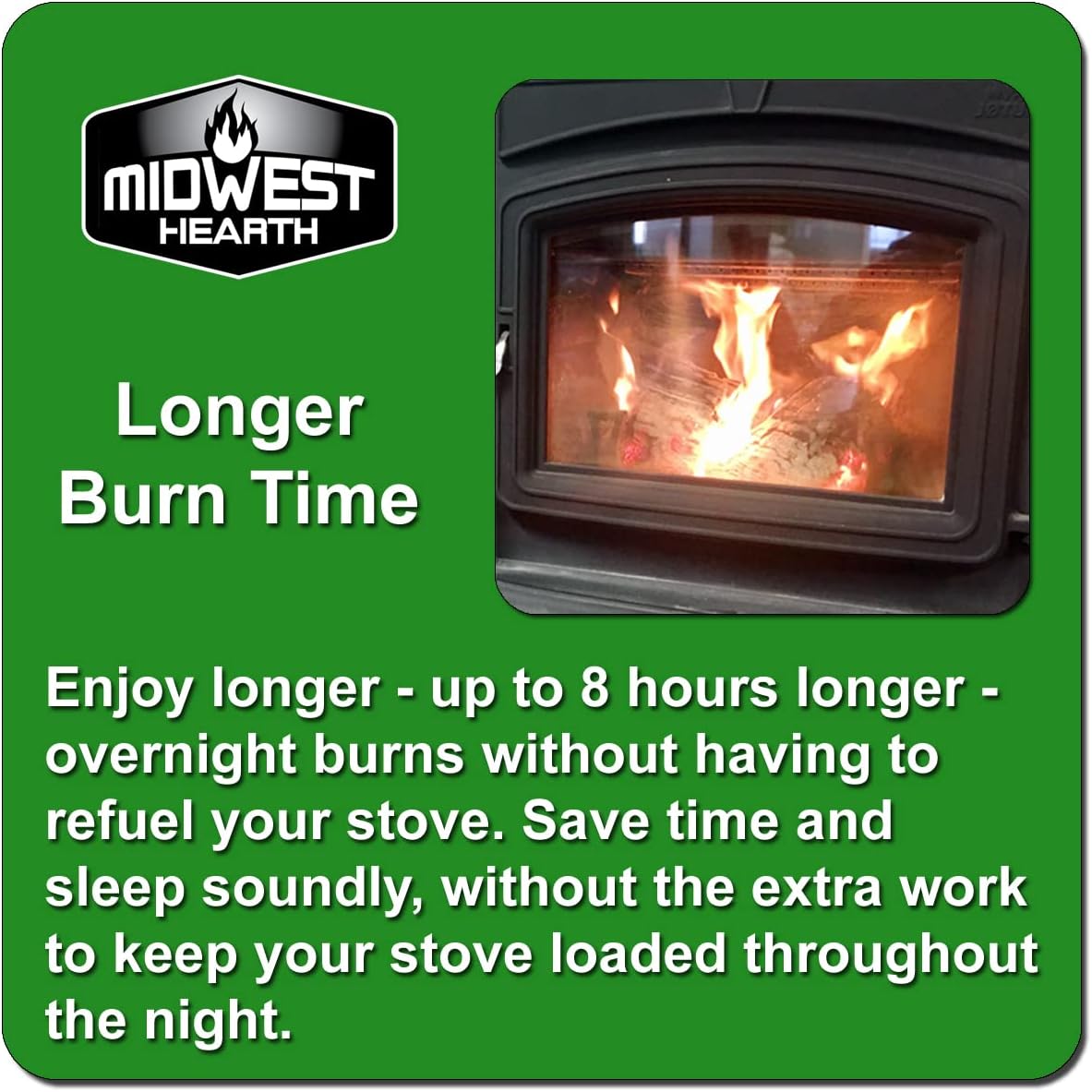
This image shows a wood stove with a roaring fire, accompanied by text indicating "Longer Burn Time," suggesting the benefit of extended heat output from the catalytic combustor.
3.3 Flue Pipe Thermometer Video
Video 2: A demonstration of the Midwest Hearth Flue Probe Thermometer, showing its installation and how it provides accurate temperature readings inside the flue pipe for optimal wood stove operation.
4. Maintenance
Regular maintenance of your catalytic combustor is essential for maintaining efficiency and extending its lifespan. It is recommended to clean the combustor at least annually, or more frequently with heavy use.
4.1 Cleaning the Combustor
- Ensure the stove is completely cool before attempting any cleaning.
- Carefully remove the combustor from the stove as described in the installation section.
- Using moderate air pressure (e.g., from an air compressor set to around 45 PSI), gently blow air through the honeycomb structure to remove any accumulated ash or creosote. Avoid high-pressure air, solvents, or abrasive materials, as these can damage the catalyst.
- Inspect the combustor for any signs of damage or degradation.
- Reinstall the clean combustor into the stove.
Regular cleaning helps prevent blockages that can reduce efficiency and potentially lead to premature failure of the combustor.
5. Troubleshooting
If you experience issues with your catalytic combustor, consider the following common problems and solutions:
5.1 Reduced Efficiency or Short Burn Times
- Clogged Combustor: Ash or creosote buildup can block the honeycomb cells, reducing catalytic activity. Refer to the Maintenance section for cleaning instructions.
- Degraded Combustor: Over time, the catalytic material can degrade, or the internal structure may erode. Inspect the combustor for signs of rust, holes, or a hollow appearance. If significantly degraded, replacement is necessary.
- Improper Wood: Burning unseasoned wood or inappropriate materials can lead to excessive creosote buildup and hinder combustor performance. Use only well-seasoned, clean firewood.
5.2 Combustor Not Activating
- Insufficient Temperature: The stove may not be reaching the required activation temperature (around 500°F). Ensure proper draft and a hot enough fire before engaging the combustor.
- Damper Issues: Check that the bypass damper is fully engaged, directing smoke through the combustor.
5.3 Physical Damage to Combustor
- Cracks or Breakage: Physical impact or extreme thermal stress can cause cracks. A damaged combustor should be replaced immediately to maintain safety and efficiency.
- Warping: Excessive heat can cause the metal frame to warp. If warping is severe, the combustor may not fit correctly or function optimally, requiring replacement.
6. Specifications
| Feature | Detail |
|---|---|
| Brand | Midwest Hearth |
| Model Number | MH Combustor |
| Dimensions | 10.6 x 5 x 2 inches |
| Material | Steel |
| Item Weight | 3.61 pounds (1.64 Kilograms) |
| UPC | 645360707376 |
| Origin | Made in USA |

This image clearly labels the dimensions of the metal catalytic combustor: 10.6 inches in length, 5 inches in width, and 2 inches in height, aiding in proper fitment verification.
7. Warranty & Support
7.1 5-Year Prorated Warranty
The Midwest Hearth MH Combustor comes with a 5-year prorated warranty, guaranteeing its quality against manufacturing defects. This warranty reflects the manufacturer's confidence in the product's durability and performance.
7.2 Customer Support
For further assistance, questions, or warranty claims, please visit the official Midwest Hearth store or contact their customer service department. Refer to the product packaging or the brand's official website for the most current contact information.
You can find more information and products from Midwest Hearth at their Amazon Brand Store.