
1. Product Overview
This manual provides instructions for the endlessparts Micro Limit Switch, a compact electromechanical device designed to detect the presence or absence of an object by physical contact. It features both Normally Closed (N/C) and Normally Open (N/O) contacts, allowing for versatile application in various control circuits. The switch is rated for 5A at 125/250VAC and is manufactured under ISO9001 standards, with CE, CQC, and RoHS certifications.
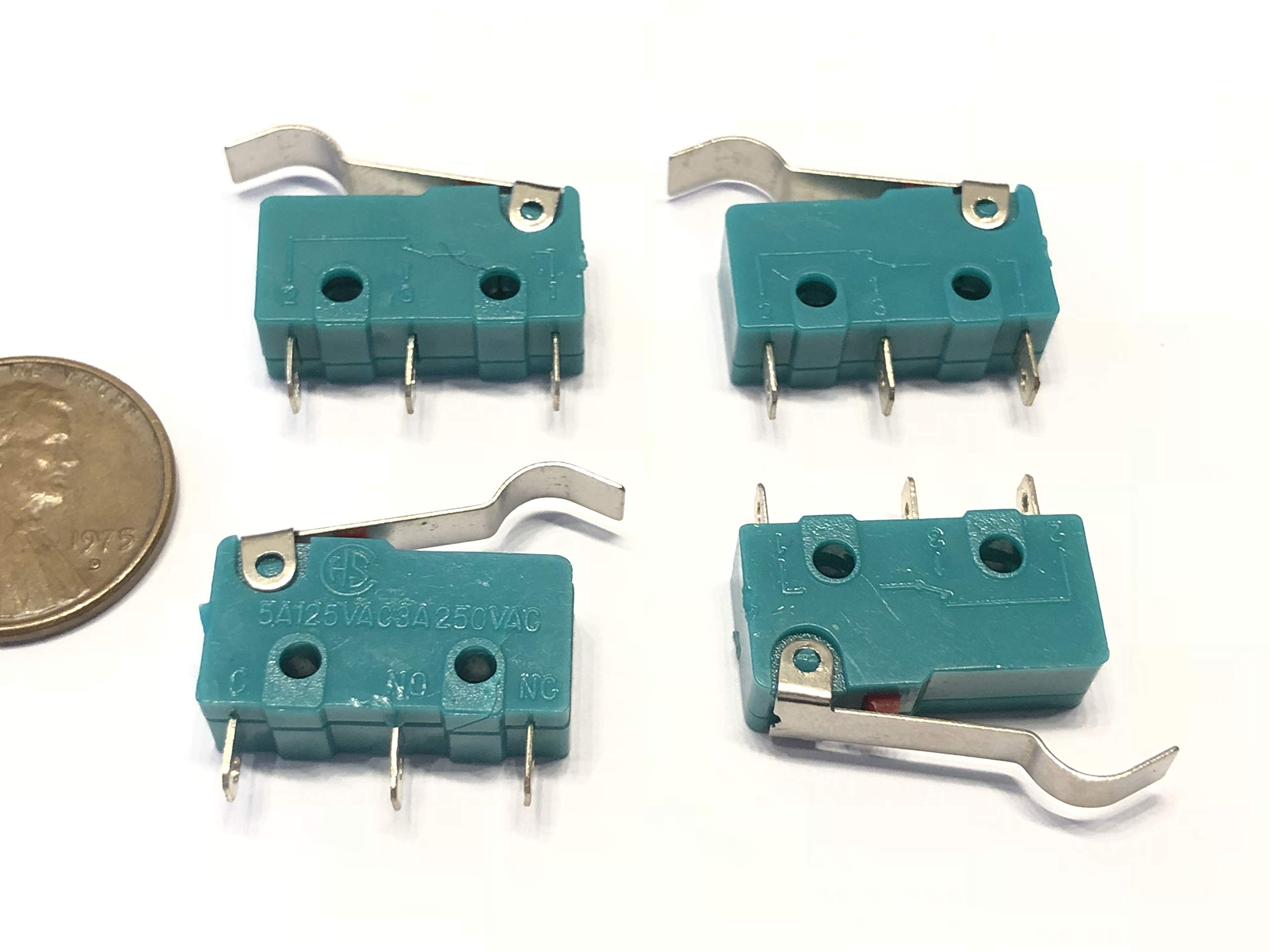
This image displays the green micro limit switch, featuring a metal lever actuator on one end and three electrical terminals on the underside. A US penny is placed beside the switch to provide a clear visual reference for its compact size.
2. Specifications
| Specification | Value |
|---|---|
| Operation Mode | ON-OFF |
| Current Rating | 3 Amps, 5 Amps |
| Operating Voltage | 125/250VAC |
| Dielectric Strength | 1500VAC, 1 Minute |
| Contact Resistance | 30mΩ max |
| Operating Temperature | -25°C to +80°C |
| Insulation Resistance | 500VDC 100mΩ min |
| Electrical Life | 100,000 Cycles |
| Switch Type | Limit Switch (N/C, N/O) |
| Material | Copper (contacts) |
| Mounting Type | Surface Mount |
| Certifications | CE, CQC, ISO9001, RoHS |
3. Setup and Installation
Safety First: Always disconnect power to the circuit before installing or servicing the limit switch to prevent electrical shock or damage to equipment.
3.1 Mounting
- Identify a suitable mounting location where the switch's lever can be reliably actuated by the target object.
- Ensure the mounting surface is clean, dry, and stable.
- Secure the limit switch using appropriate fasteners through its mounting holes. Avoid overtightening, which could damage the switch housing.
- Verify that the lever mechanism operates freely and without obstruction.
3.2 Wiring
The limit switch typically features three terminals: Common (C), Normally Closed (N/C), and Normally Open (N/O). Refer to any markings on the switch for terminal identification.
- Common (C): This is the central terminal to which the power source or signal input is connected.
- Normally Closed (N/C): This terminal is electrically connected to the Common terminal when the switch lever is in its unactuated (rest) position. The circuit through N/C will open when the lever is pressed.
- Normally Open (N/O): This terminal is electrically disconnected from the Common terminal when the switch lever is in its unactuated (rest) position. The circuit through N/O will close when the lever is pressed.
Connect your circuit wires to the appropriate terminals based on your application's requirements. For example, if you need a circuit to activate when the switch is pressed, use the N/O and Common terminals. If you need a circuit to deactivate when the switch is pressed, use the N/C and Common terminals.
Note: If you are unsure about electrical wiring, consult a qualified electrician.
4. Operating Instructions
The endlessparts Micro Limit Switch operates by physical actuation of its lever. When an external force (e.g., from a moving part of machinery) presses the lever, the internal contacts switch state:
- The connection between Common (C) and Normally Closed (N/C) is broken.
- A new connection is established between Common (C) and Normally Open (N/O).
When the force is removed, the lever returns to its original position, and the contacts revert to their unactuated state (C-N/C connected, C-N/O disconnected). Ensure the switch is positioned to allow for full and consistent lever travel for reliable operation.
5. Maintenance
The endlessparts Micro Limit Switch is designed for durability and requires minimal maintenance. However, periodic checks can ensure optimal performance and longevity:
- Inspection: Regularly inspect the switch for any signs of physical damage, corrosion, or loose connections.
- Cleaning: Keep the switch and its lever mechanism free from dust, dirt, and debris. Use a dry, soft cloth for cleaning. Avoid using harsh chemicals or abrasive materials.
- Actuator Check: Verify that the lever actuator moves freely and returns to its original position without sticking.
- Wiring Integrity: Ensure all wiring connections remain secure and that insulation is intact.
Always disconnect power before performing any maintenance.
6. Troubleshooting
If the limit switch is not functioning as expected, consider the following common issues and solutions:
- Switch Not Actuating:
- Ensure the object making contact with the lever is reaching it with sufficient force and travel.
- Check for obstructions preventing the lever from moving freely.
- Intermittent Operation:
- Inspect wiring for loose connections or damaged insulation.
- Verify that the mounting is secure and the switch is not shifting position.
- Clean any debris from the lever mechanism.
- No Electrical Response:
- Confirm that power is supplied to the circuit.
- Check all wiring connections to the Common, N/C, and N/O terminals for correctness and tightness.
- Use a multimeter to test continuity across the terminals in both actuated and unactuated states to confirm internal switch function.
- Physical Damage:
- If the switch housing or lever is visibly damaged, replace the unit.
7. Warranty and Support
For specific warranty information or technical support regarding your endlessparts Micro Limit Switch, please refer to the product packaging or contact the retailer from whom the product was purchased. Keep your purchase receipt as proof of purchase.