
1. Introduction
This manual provides detailed instructions for the proper use, calibration, and maintenance of your Geko G02662 Freezing Point Refractometer. This precision optical instrument is designed to measure the freezing point of automotive coolants (ethylene glycol and propylene glycol based) and battery fluid condition. Please read this manual thoroughly before operating the device to ensure accurate results and prolong its lifespan.
2. Safety Information
- Always handle the refractometer with care. Avoid dropping or subjecting it to strong impacts.
- Do not immerse the instrument in water or other liquids.
- Avoid direct exposure of the prism to strong light sources, as this may damage the optical components.
- When handling automotive fluids, wear appropriate personal protective equipment (e.g., gloves, eye protection) and follow manufacturer safety guidelines for the fluids being tested.
- Keep the instrument out of reach of children.
3. Package Contents
Verify that all items are present in the package:
- Geko G02662 Refractometer
- Pipette
- Mini-screwdriver (for calibration)
- Cleaning cloth
- Storage case
- Instruction Manual (this document)
4. Product Overview
Familiarize yourself with the components of the Geko G02662 Refractometer:
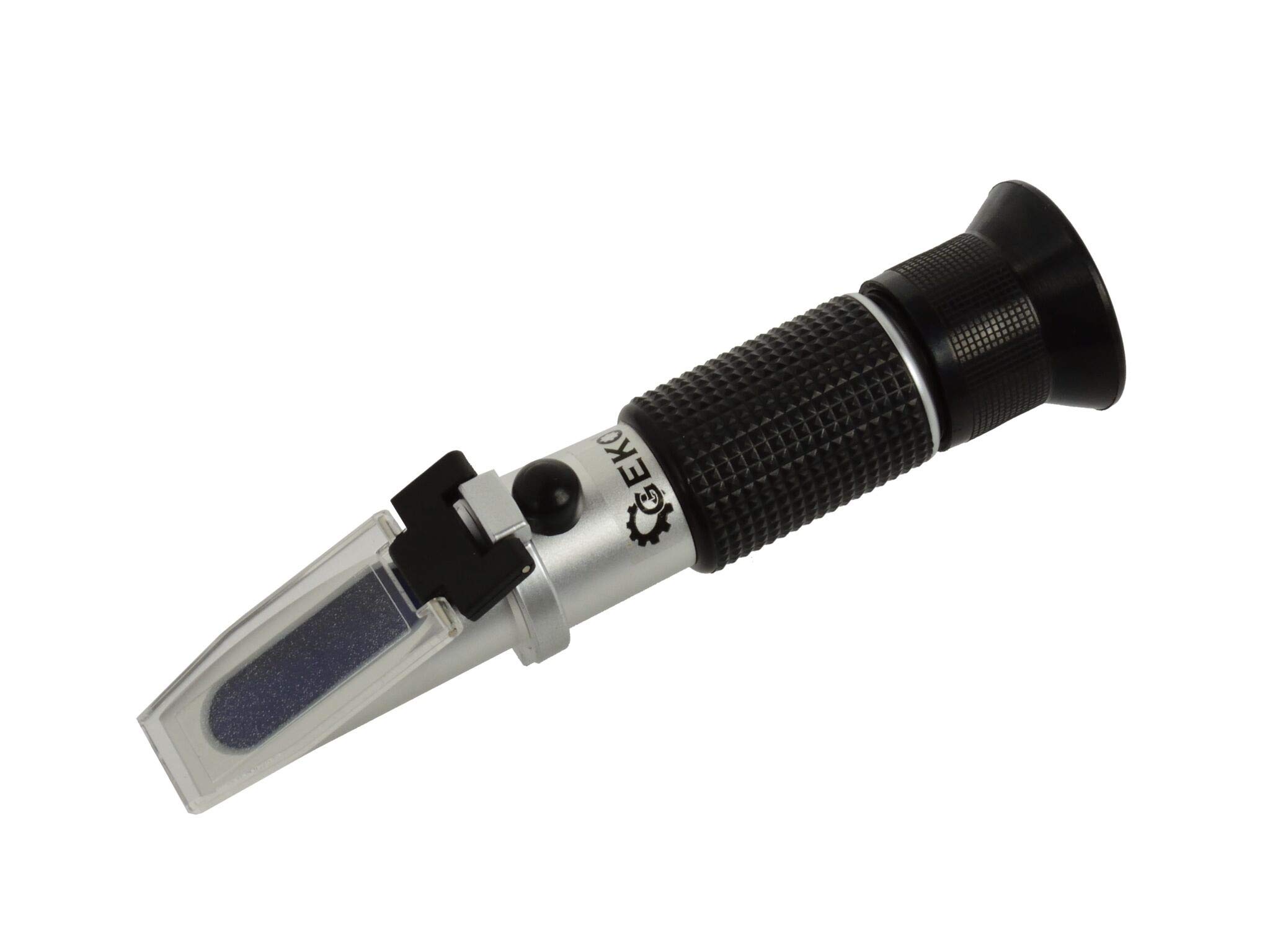
Figure 1: Side view of the Geko G02662 Refractometer. This image displays the overall structure of the device, including the eyepiece, main body, and prism assembly.

Figure 2: Close-up of the prism and cover plate. The sample is applied to the main prism, which is then covered by the transparent plate.

Figure 3: View of the eyepiece. The user looks through this end to read the measurement scale.
- Eyepiece: Used to view the measurement scale. Rotate to adjust focus.
- Rubber Grip: Provides a secure hold.
- Main Body: Contains the optical system.
- Calibration Screw: Used to adjust the zero point (under a cap).
- Prism: The surface where the sample is placed.
- Cover Plate: Covers the sample on the prism.
5. Setup
Before first use, or if the focus appears blurry:
- Hold the refractometer towards a light source.
- Look through the eyepiece.
- Rotate the eyepiece (part 1 in Figure 1) until the scale is clear and in sharp focus.
6. Operating Instructions
Follow these steps to take an accurate measurement:
- Clean the Prism: Ensure the prism (part 5) and cover plate (part 6) are clean and dry using the provided cleaning cloth.
- Apply Sample: Open the cover plate. Using the pipette, place 2-3 drops of the liquid to be tested onto the main prism.
- Close Cover Plate: Gently close the cover plate so that the liquid spreads evenly across the entire surface of the prism without air bubbles.
- Wait for Temperature Equalization: Allow approximately 30 seconds for the sample to equalize to the instrument's temperature. This is crucial for accurate readings.
- Read Measurement: Hold the refractometer towards a light source and look through the eyepiece. The boundary line between the blue and white fields will indicate the measurement on the appropriate scale.
- Clean After Use: Immediately after each measurement, clean the prism and cover plate thoroughly with a damp cloth, then dry with the cleaning cloth. Failure to do so can lead to inaccurate readings and damage to the prism.
7. Calibration
Calibration should be performed before first use, after cleaning, or if you suspect inaccurate readings. Use distilled water for calibration.
- Ensure the refractometer is at room temperature (20°C / 68°F).
- Clean the prism and cover plate thoroughly.
- Place 2-3 drops of distilled water onto the prism. Close the cover plate.
- Wait 30 seconds for temperature equalization.
- Look through the eyepiece. The boundary line should align with the 'WATERLINE' or '0' mark on the scale.
- If it does not, use the provided mini-screwdriver to turn the calibration screw (part 4, usually under a small cap) until the boundary line aligns perfectly with the 'WATERLINE' or '0' mark.
- Clean and dry the prism and cover plate.
8. Maintenance and Care
- Cleaning: Always clean the prism and cover plate immediately after use with a soft, damp cloth, then dry with the cleaning cloth. Do not use abrasive materials or solvents.
- Storage: Store the refractometer in its protective case in a dry, cool, and dust-free environment when not in use. Avoid direct sunlight or extreme temperatures.
- Avoid Damage: Do not touch the prism surface with your fingers or any hard objects.
9. Troubleshooting
| Problem | Possible Cause | Solution |
|---|---|---|
| Blurry scale | Eyepiece out of focus | Rotate the eyepiece to adjust focus. |
| Inaccurate readings | Instrument not calibrated; Prism dirty; Insufficient sample; Air bubbles in sample; Temperature difference. | Calibrate the instrument; Clean the prism; Apply sufficient sample (2-3 drops); Ensure no air bubbles; Allow sample to equalize temperature. |
| Boundary line not visible | Insufficient light; Sample too dark/opaque. | Point towards a brighter light source; Ensure sample is clear enough for measurement. |
10. Specifications
- Model Number: Geko G02662
- Manufacturer: Firma Handlowa GEKO
- Package Dimensions: 35 x 35 x 15 cm
- Weight: 220 g
- Measurement Range: Typically for Ethylene Glycol, Propylene Glycol, and Battery Fluid (specific scales visible through eyepiece).
- Automatic Temperature Compensation (ATC): Yes (for accurate readings regardless of ambient temperature).
11. Warranty and Support
For warranty information and technical support, please refer to the documentation provided at the point of purchase or contact your retailer. Keep your purchase receipt as proof of purchase.
