
Introduction
This manual provides detailed instructions for the installation, operation, and maintenance of the ECS Elitegroup B350AM4-M2 Micro ATX Motherboard. This motherboard is designed to support AMD AM4 socket processors, including AMD Ryzen and 7th Gen Athlon processors. It features a 4+2 phase thermal design, 100% solid capacitor design, and dual-channel DDR4 memory architecture supporting up to 64 GB across four DIMM sockets.
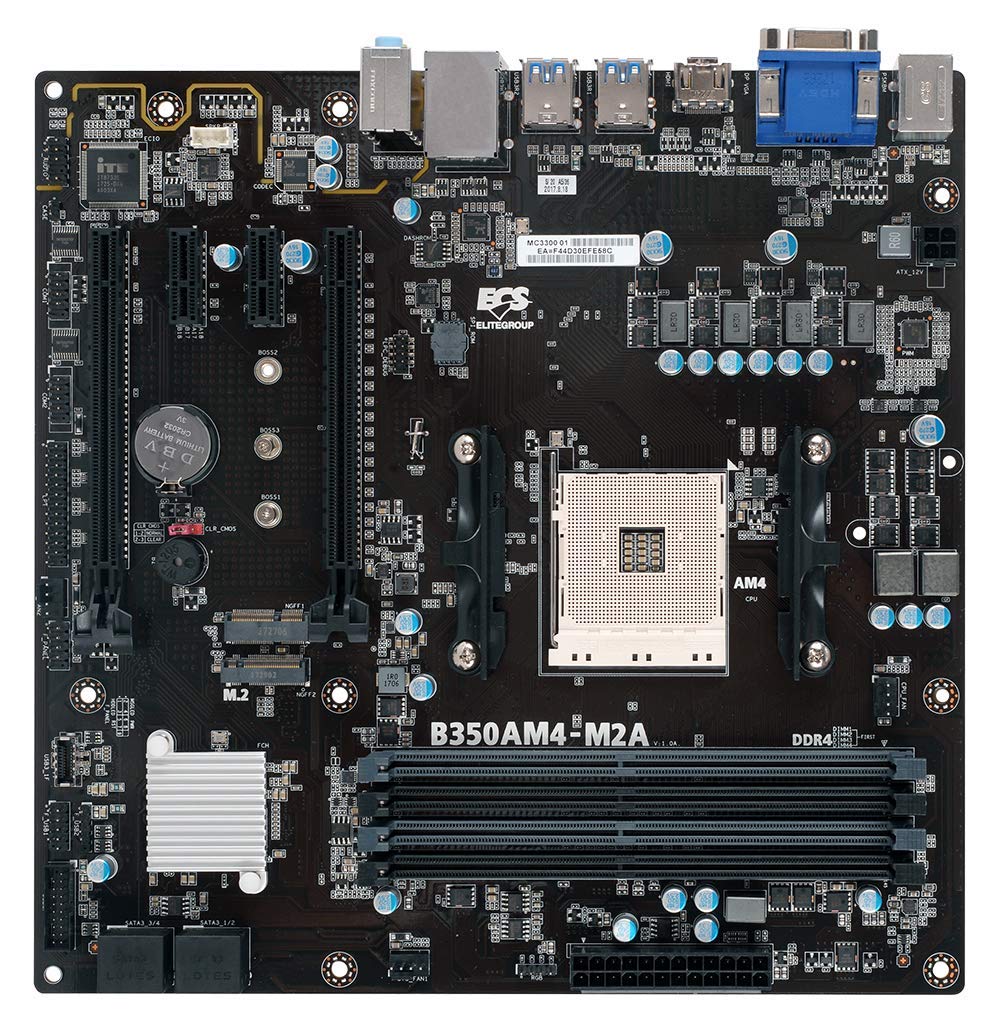
Figure 1: Overview of the ECS B350AM4-M2 Motherboard, showing its general layout and components.
Package Contents
Verify that all items listed below are present in the package. If any item is missing or damaged, contact your retailer.
- ECS B350AM4-M2 Motherboard
- Driver CD
- User Manual (this document)
- SATA Cables
Setup and Installation
Before beginning installation, ensure your system is powered off and disconnected from the power outlet. Wear an anti-static wrist strap to prevent electrostatic discharge (ESD) damage to components.
1. CPU Installation
- Locate the AM4 CPU socket on the motherboard.
- Lift the load lever on the side of the socket.
- Carefully align the triangular mark on the CPU with the corresponding mark on the socket.
- Gently place the CPU into the socket without forcing it.
- Lower the load lever back into its locked position to secure the CPU.
- Apply thermal paste to the CPU surface and install the CPU cooler according to its manufacturer's instructions.
Figure 2: The AM4 CPU socket and surrounding area on the motherboard, where the processor is installed.
2. Memory (RAM) Installation
The B350AM4-M2 motherboard has four 288-pin DDR4 DIMM sockets. For optimal performance, install memory modules in pairs for dual-channel operation. Refer to the motherboard's silkscreen for recommended slot population order.
- Open the clips at both ends of the DIMM socket.
- Align the notch on the DDR4 memory module with the key in the DIMM socket.
- Insert the module firmly into the socket until the clips snap into place.
- Repeat for additional memory modules.
Figure 3: Location of the four DDR4 DIMM slots for memory installation.
3. Storage Device Installation (SATA & M.2)
Connect SATA storage devices (HDDs/SSDs) to the SATA 6Gb/s ports. For M.2 SSDs, locate the M.2 slot.
- For SATA devices: Connect one end of the SATA data cable to the storage device and the other end to a SATA port on the motherboard. Connect the SATA power cable from your power supply to the device.
- For M.2 SSDs: Insert the M.2 SSD into the M.2 slot at an angle. Push it down and secure it with the provided screw.
4. Expansion Card Installation (PCIe)
Install graphics cards or other expansion cards into the appropriate PCI Express slots.
- Align the expansion card with the chosen PCIe slot.
- Press down firmly until the card is seated correctly and the retention clip (if present) locks into place.
- Secure the card to the chassis with a screw.
5. Power Connections
Connect the power supply cables to the motherboard.
- 24-pin ATX Power Connector: Connect the main 24-pin power cable from your power supply to the corresponding connector on the motherboard.
- 4-pin CPU Power Connector: Connect the 4-pin CPU power cable (often labeled P4 or ATX12V) from your power supply to the connector near the CPU socket.
6. Front Panel and USB Connections
Connect your chassis's front panel connectors (power button, reset button, HDD LED, power LED, front USB ports, front audio) to the corresponding headers on the motherboard. Refer to the motherboard layout diagram in the full manual for exact header locations.
Operating Instructions
1. BIOS/UEFI Setup
The BIOS (Basic Input/Output System) or UEFI (Unified Extensible Firmware Interface) is the firmware that initializes hardware during startup. To access the BIOS/UEFI setup utility:
- Power on your computer.
- Press the DEL key repeatedly during the initial boot screen. The exact key may vary; consult the on-screen prompts.
Within the BIOS/UEFI, you can configure system settings such as boot order, date/time, CPU/memory frequencies, and enable/disable integrated peripherals. Save changes before exiting.
2. Operating System Installation
After assembling your system, you will need to install an operating system (e.g., Windows 10, Windows Vista, Linux).
- Insert your operating system installation media (USB drive or DVD) into the computer.
- Access the BIOS/UEFI setup and set the boot order to prioritize your installation media.
- Save changes and exit. The system will boot from the installation media.
- Follow the on-screen instructions to install the operating system.
- After installation, install the necessary drivers from the provided driver CD or the ECS Elitegroup website.
Maintenance
Proper maintenance ensures the longevity and stable operation of your motherboard.
- Dust Removal: Regularly clean dust from inside your computer case using compressed air. Ensure fans and heatsinks are free from obstructions.
- BIOS Updates: Periodically check the ECS Elitegroup website for updated BIOS versions. BIOS updates can improve compatibility, stability, and performance. Follow the update instructions carefully to avoid system damage.
- Cable Management: Ensure internal cables are neatly routed to improve airflow and prevent interference.
Troubleshooting
This section addresses common issues you might encounter.
No Power / System Does Not Turn On
- Check all power connections: 24-pin ATX, 4-pin CPU, and power cables to peripherals.
- Ensure the power supply switch is in the 'ON' position.
- Verify the front panel power button connector is correctly attached to the motherboard header.
- Test the power supply with another system or a power supply tester if available.
No Display / No POST (Power-On Self-Test)
- Ensure the monitor is connected to the correct display output (motherboard integrated graphics or discrete graphics card).
- Reseat the graphics card and memory modules.
- Check if the CPU cooler is properly installed and connected.
- Listen for beep codes. A series of 9 short beeps often indicates a BIOS ROM error, suggesting a potential issue with the motherboard's firmware.
- Try booting with only essential components (CPU, one RAM stick, graphics card if no integrated graphics) to isolate the problem.
System Instability / Crashes
- Ensure all drivers are up to date.
- Check CPU and GPU temperatures to prevent overheating.
- Run memory diagnostic tools to check for faulty RAM.
- Verify that the power supply provides sufficient wattage for all components.
Specifications
| Feature | Detail |
|---|---|
| Brand | ECS Elitegroup |
| Model Number | B350AM4-M2 |
| CPU Socket | Socket AM4 |
| Compatible Processors | AMD Ryzen Processors, AMD 7th Gen Athlon Processors |
| Chipset Type | AMD B350 |
| RAM Memory Technology | DDR4 |
| Memory Slots Available | 4 x 288-pin DDR4 DIMM sockets |
| RAM Memory Maximum Size | 64 GB |
| Memory Clock Speed | 2667/2400 MHz (non-ECC, Un-buffered SDRAM) |
| Graphics Card Interface | PCI Express |
| Total Number of HDMI Ports | 1 (HDMI 1.4a) |
| DisplayPort | Integrated DP with up to 2560x1600 resolution |
| USB 2.0 Ports | 1 (internal header, total ports may vary) |
| S/PDIF Connector Type | Optical |
| System Bus Standard Supported | SATA 3 |
| Platform | Windows 10, Windows Vista |
| Item Weight | 1.15 Pounds |
Warranty and Support
The ECS Elitegroup B350AM4-M2 Motherboard comes with a 2-year warranty from the date of purchase. This warranty covers defects in materials and workmanship under normal use. For warranty claims or technical support, please contact your retailer or visit the official ECS Elitegroup website for support resources and contact information.
Online Support: For the latest drivers, BIOS updates, and additional support, please visit the ECS Elitegroup official website.

