
1. Introduction
This manual provides detailed instructions for the safe and efficient use, maintenance, and troubleshooting of your BRA Excellent 6 Liter Rapid Pressure Cooker. Please read all instructions carefully before first use and retain this manual for future reference. Proper use ensures optimal performance and longevity of your appliance.
2. Important Safety Instructions
WARNING: Failure to follow these safety instructions may result in serious injury or property damage.
- Read all instructions before using the pressure cooker.
- Do not touch hot surfaces. Use handles or knobs.
- Close supervision is necessary when the pressure cooker is used near children.
- Do not place the pressure cooker in a heated oven.
- Exercise extreme caution when moving a pressure cooker containing hot liquids.
- Do not use the pressure cooker for purposes other than its intended use.
- This appliance cooks under pressure. Improper use may result in scalding injury. Make certain unit is properly closed before operating. See "Closing the Lid" section.
- Never force the pressure cooker open. Make sure internal pressure is completely reduced before opening. See "Opening the Lid" section.
- Do not use this pressure cooker for deep frying with oil.
- Do not fill the unit over 2/3 full. When cooking foods that expand during cooking, such as rice or dried vegetables, do not fill the unit over 1/2 full. Overfilling may cause a risk of clogging the vent pipe and developing excess pressure.
- Always check the pressure release device for clogging before use.
- Use only BRA replacement parts.
3. Product Overview
The BRA Excellent Rapid Pressure Cooker is designed for efficient and healthy cooking. It features durable 18/10 stainless steel construction and a triple diffuser base for even heat distribution. This model includes two cooking programs and multiple safety systems, ensuring reliable performance on all types of cooktops, including induction.

Image: The BRA Excellent 6 Liter Rapid Pressure Cooker, showcasing its sleek stainless steel design.
Key Features:
- Material: High-quality 18/10 Stainless Steel for durability and wear resistance.
- Base: Triple diffuser base ensures uniform heat distribution, suitable for all cooktops (induction, gas, ceramic, electric).
- Cooking Programs: Two operational levels for varied cooking needs: Level 1 for dietetic cooking, Level 2 for foods requiring longer cooking times.
- Safety Systems: Equipped with 3 pressure safety systems and 1 opening lock system, compliant with CE regulations.
- Capacity: 6 Liters, ideal for preparing a wide range of dishes.
4. Setup
4.1 Initial Cleaning
- Before first use, wash all parts of the pressure cooker (pot, lid, gasket, and valves) with warm soapy water.
- Rinse thoroughly with clean water.
- Dry all components completely before assembly.
4.2 Checking Components
Before each use, inspect the following components:
- Gasket: Ensure the rubber gasket is properly seated inside the lid and is free from cracks or damage. A damaged gasket can prevent proper sealing.
- Valves: Check that the pressure regulating valve and safety valve are clean and free from any food debris that could obstruct their function.
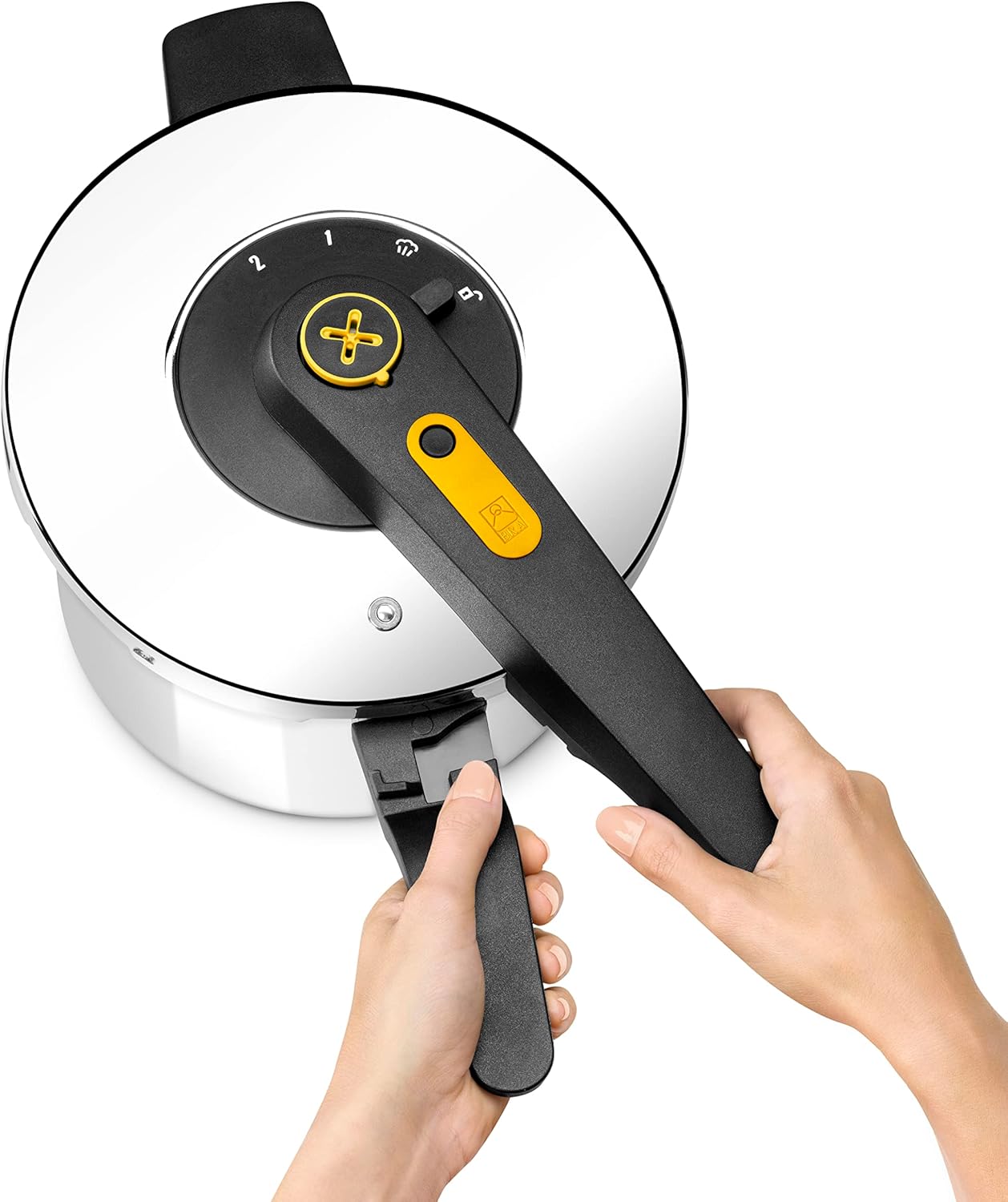
Image: Underside of the pressure cooker lid, illustrating the position of the gasket and safety valves.
5. Operating Instructions
5.1 Filling the Pot
- Add food and liquid to the pressure cooker.
- Maximum Fill Line: Never fill the pot more than two-thirds (2/3) full.
- Expanding Foods: For foods that expand (e.g., rice, dried beans, grains), do not fill more than half (1/2) full.
- Ensure there is always a minimum amount of liquid (e.g., 250ml or 1 cup) to generate steam.

Image: The pressure cooker pot filled with various vegetables and water, demonstrating appropriate fill levels.
5.2 Closing the Lid
- Align the lid with the pot.
- Place the lid onto the pot and rotate the handle until it locks securely into place. You should hear a click or feel it engage.
- Ensure the lid is fully closed and locked before applying heat. The safety lock system prevents opening under pressure.
5.3 Heat Source
- Place the pressure cooker on a suitable hob. The triple diffuser base is compatible with induction, gas, ceramic, and electric cooktops.
- Use a burner size that matches or is slightly smaller than the base of the pressure cooker to ensure even heating and energy efficiency.
- Begin heating on high until the desired pressure level is reached.

Image: The BRA Excellent pressure cooker placed on a gas stove, ready for cooking.
5.4 Cooking Programs
Your pressure cooker offers two cooking programs:
- Level 1 (Dietetic): For delicate foods like vegetables, fish, or fruits that require lower pressure and shorter cooking times to preserve nutrients.
- Level 2 (Intensive): For foods that require higher pressure and longer cooking times, such as meats, legumes, or stews.
- Once the cooker starts to build pressure, steam will begin to escape from the pressure regulating valve.
- Adjust the selector on the lid to your desired cooking program (1 or 2).
- Reduce the heat to maintain a steady, gentle release of steam from the valve. Cooking time begins now.

Image: A close-up view of the pressure cooker lid, highlighting the cooking program selector dial.

Image: A hand demonstrating how to adjust the cooking program selector on the pressure cooker lid.
5.5 Pressure Release
There are two primary methods for releasing pressure:
- Natural Release: Remove the pressure cooker from the heat source and allow it to cool down naturally. Pressure will gradually decrease on its own. This method is ideal for foods that benefit from continued cooking, such as stews and roasts.
- Quick Release: Carefully turn the pressure regulating valve to the steam release position. Steam will rapidly escape. This method is suitable for delicate foods that can overcook quickly. Exercise extreme caution to avoid scalding from hot steam.

Image: Steam being released from the pressure cooker's valve, indicating pressure reduction.
5.6 Opening the Lid
- Ensure all pressure has been released before attempting to open the lid. The safety lock will prevent opening if pressure remains.
- Once pressure is fully released, rotate the lid handle counter-clockwise to unlock it.
- Carefully lift the lid away from you to avoid any residual steam.

Image: A user demonstrating the safe method of opening the pressure cooker lid after cooking.
6. Maintenance and Cleaning
Regular cleaning and maintenance will ensure the longevity and safe operation of your pressure cooker.
6.1 General Cleaning
- Always allow the pressure cooker to cool completely before cleaning.
- Wash the pot and lid with warm soapy water using a non-abrasive sponge or cloth.
- Rinse thoroughly and dry immediately to prevent water spots and maintain the stainless steel finish.
- The pot is generally dishwasher safe, but hand washing is recommended for the lid to protect its delicate components.
6.2 Cleaning the Gasket and Valves
- Remove the gasket from the lid after each use. Wash it with warm soapy water and rinse well. Ensure it is completely dry before reinserting.
- Clean the pressure regulating valve and safety valve openings with a small brush or toothpick to remove any food particles. Ensure they move freely.
- Periodically check the gasket for signs of wear, cracks, or hardening. Replace if necessary to maintain a proper seal.
6.3 Storage
- Store the pressure cooker with the lid inverted or slightly ajar to allow air circulation and prevent odors.
- Store in a dry place.
7. Troubleshooting
If you encounter issues with your pressure cooker, refer to the following common problems and solutions:
| Problem | Possible Cause | Solution |
|---|---|---|
| Pressure not building or steam leaking from lid. | Lid not properly closed; Gasket is dirty, worn, or improperly seated; Food debris blocking seal. | Ensure lid is securely locked. Check gasket for proper placement and cleanliness. Clean gasket and sealing edge of the pot. Replace gasket if damaged. |
| Lid cannot be opened after cooking. | Internal pressure has not fully released. | Do not force the lid. Allow more time for natural pressure release, or use the quick release method if safe for your food. Ensure the pressure indicator has dropped completely. |
| Food is undercooked. | Insufficient cooking time; Heat too low; Not enough liquid. | Increase cooking time. Ensure heat is sufficient to maintain pressure. Add adequate liquid. |
| Food is overcooked. | Excessive cooking time; Heat too high. | Reduce cooking time. Lower heat once pressure is reached. |
| Valves are clogged. | Food particles or debris. | Clean valves thoroughly before each use. Do not overfill the cooker, especially with expanding foods. |
If the problem persists after attempting these solutions, please contact customer support.
8. Specifications
| Feature | Detail |
|---|---|
| Brand | BRA |
| Model Number | A185702 |
| Capacity | 6 Liters |
| Material | 18/10 Stainless Steel |
| Color | Silver |
| Diameter | 18 Centimeters (Base) |
| Voltage | 220 Volts |
| Special Feature | Induction Compatible Base |
| Product Weight | 3.1 kg (3105 Grams) |
| Dimensions (L x W x H) | 43 x 18 x 16 Centimeters |
| Control Method | Touch |
| Operating Mode | Manual |
9. Warranty and Support
For warranty information, product support, or to purchase replacement parts, please refer to the documentation included with your purchase or visit the official BRA website. Keep your proof of purchase for warranty claims.
If you require further assistance or have questions not covered in this manual, please contact BRA customer service.


