
Cutex 3330370
Cutex Needle Plate #3330370 Instruction Manual
For PFAFF 793, 794, 796, 797, 799 Home Serger Overlock Machines
1. Introduction
This manual provides essential information for the installation, function, and care of your Cutex Needle Plate #3330370. This precision-engineered component is designed to ensure optimal performance of your compatible PFAFF home serger machine.
2. Compatibility
The Cutex Needle Plate #3330370 is specifically designed to fit the following PFAFF portable home serger models:
- PFAFF 793
- PFAFF 794
- PFAFF 796
- PFAFF 797
- PFAFF 799
This needle plate may also be identified by alternate part numbers: 29-924993-70/298, 29-924 993-62-00, and 330371.
3. Setup and Installation
Proper installation of the needle plate is crucial for the correct operation of your serger. Always refer to your serger's main instruction manual for specific machine-model installation steps.
3.1 Identifying the Needle Plate
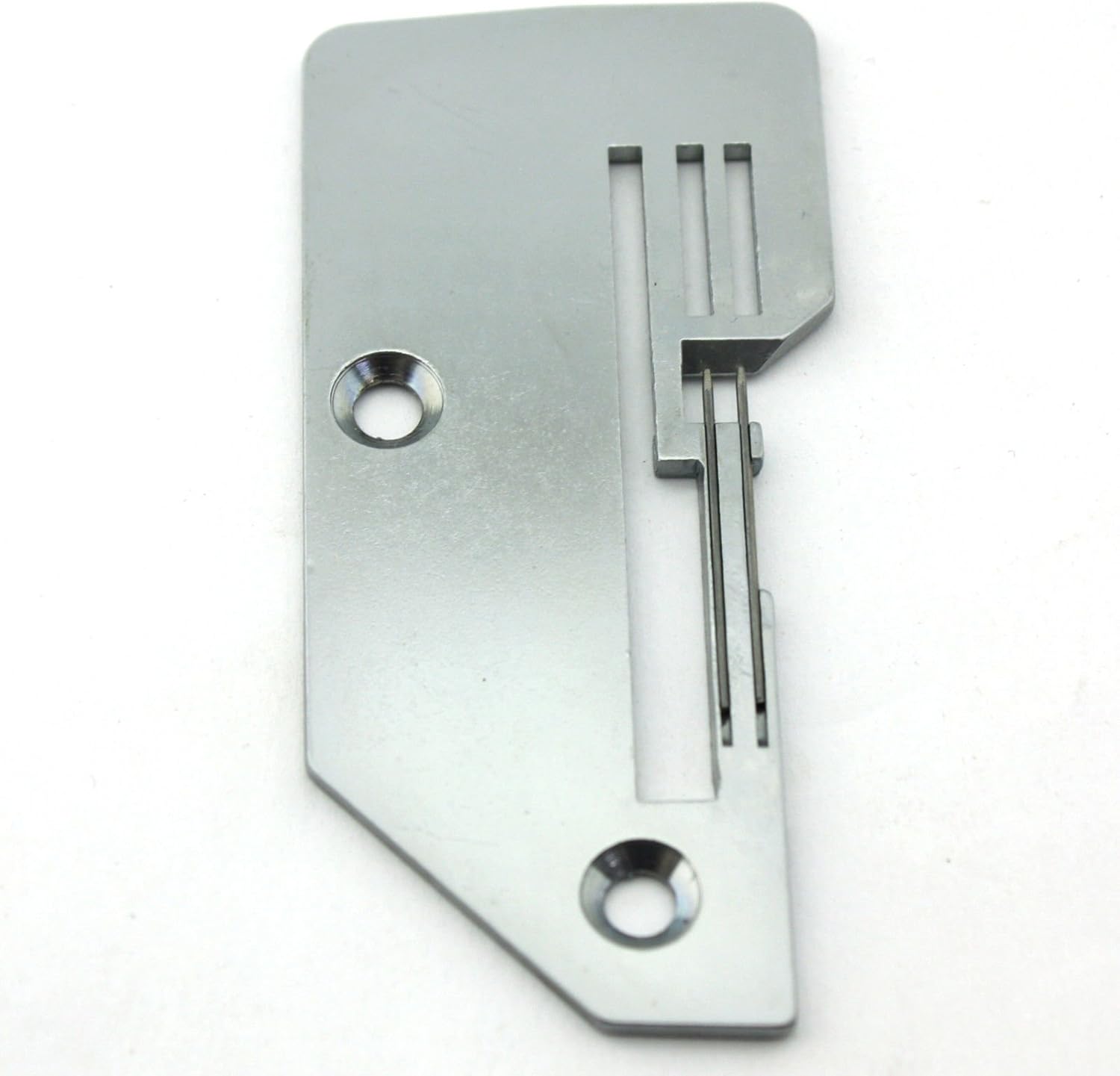
Figure 1: The Cutex Needle Plate #3330370. This silver-colored metal plate features two screw holes for secure attachment to the serger and multiple slots designed for needle passage and precise fabric feeding during sewing operations.
3.2 Installation Steps (General Guide)
- Power Off: Ensure your serger machine is turned off and unplugged from the power outlet before beginning any installation or maintenance.
- Remove Old Plate: Locate the existing needle plate on your serger. Typically, it is secured by one or two screws. Use an appropriate screwdriver to carefully loosen and remove these screws. Lift the old needle plate away from the machine.
- Clean Area: Gently clean any lint, dust, or debris from the area where the needle plate sits. A small brush or vacuum can be used.
- Position New Plate: Align the Cutex Needle Plate #3330370 with the screw holes and the feed dog mechanism on your serger. Ensure it sits flush and correctly.
- Secure Plate: Insert the screws into the designated holes on the new needle plate. Hand-tighten them initially, then use the screwdriver to secure them firmly, but do not overtighten.
- Test: Plug in and power on your serger. Perform a manual test by slowly turning the handwheel to ensure the needles move freely through the plate's slots without obstruction.
4. Operating Principles
The needle plate is a stationary component that works in conjunction with the feed dogs to move fabric smoothly under the needles. Its precise design ensures:
- Needle Clearance: Provides accurate holes for the needles to pass through without hitting the plate.
- Fabric Support: Offers a flat, stable surface for the fabric as it is sewn, preventing it from being pushed down into the machine.
- Feed Dog Interaction: Allows the feed dogs to protrude and grip the fabric effectively, ensuring consistent stitch length.
No direct operation of the needle plate is required; its function is passive and integral to the serger's sewing mechanism.
5. Maintenance and Care
To ensure the longevity and optimal performance of your needle plate and serger:
- Regular Cleaning: Periodically remove the needle plate and clean any accumulated lint or thread bits from underneath it and around the feed dogs. Use a small brush or compressed air.
- Inspect for Damage: Before each use, quickly inspect the needle plate for any signs of damage, such as bent edges, burrs, or enlarged needle holes. A damaged plate can cause skipped stitches, needle breakage, or fabric damage.
- Avoid Impact: Be careful not to drop or strike the needle plate, as this can cause bending or cracking.
- Proper Needle Use: Always use the correct type and size of needles for your serger and fabric. Using bent or incorrect needles can damage the needle plate.
6. Troubleshooting
Issues related to the needle plate are often symptoms of other problems or can cause specific sewing malfunctions. Consider the following:
- Skipped Stitches: If your serger is skipping stitches, check the needle plate for any burrs or damage around the needle holes. Even minor imperfections can interfere with loop formation.
- Needle Breakage: Frequent needle breakage can indicate a bent needle plate or incorrect needle installation. Ensure the plate is flat and securely fastened.
- Fabric Not Feeding Properly: While often related to feed dogs, a misaligned or damaged needle plate can also hinder fabric movement. Ensure the plate is correctly seated and screws are tightened.
- Unusual Noise: A rattling or grinding noise might suggest the needle plate is loose or rubbing against another component. Re-check installation.
If problems persist after inspecting the needle plate, consult your serger's main troubleshooting guide or a qualified technician.
7. Specifications
| Part Number | 3330370 |
| Alternate Part Numbers | 29-924993-70/298, 29-924 993-62-00, 330371 |
| Material | Metal |
| Compatible Models | PFAFF 793, 794, 796, 797, 799 Home Serger Overlock |
| Manufacturer | Cutex Sewing Supplies |
8. Warranty and Support
For information regarding warranty coverage or technical support for your Cutex Needle Plate #3330370, please refer to the purchase documentation or contact Cutex Sewing Supplies directly. Keep your proof of purchase for any warranty claims.
For general inquiries or to explore other products, visit the official Cutex store on Amazon: Cutex Store
Ask a question about this manual
Ask about setup, troubleshooting, compatibility, parts, safety, or missing instructions. Manuals+ will review the question and use this page’s manual context to help answer it.