
1. Introduction
The Phoenix Systems 8006-B Double-Ended Brake Fluid + Coolant Test Strips are designed to provide clear, repeatable, and reliable proof of the condition of your vehicle's essential fluids. This product offers a simple, quick, and effective way to monitor the health of your brake fluid and coolant, helping you identify potential issues before they lead to costly repairs or safety hazards. Each pack contains 15 double-ended test strips, individually foil-wrapped for freshness and accuracy.
Regular testing ensures your brake fluid maintains its ability to protect your brake system from corrosion and that your coolant effectively manages engine temperature and prevents corrosion. This proactive approach can save you from unnecessary fluid changes and provide peace of mind regarding your vehicle's safety and performance.

Image: Phoenix Systems 8006-B Double-Ended Brake Fluid + Coolant Test Strips packaging.
2. What's in the Box
- 15 x Double-Ended Brake Fluid + Coolant Test Strips (individually foil-wrapped)
- 1 x Comparison Chart Card (for interpreting test results)
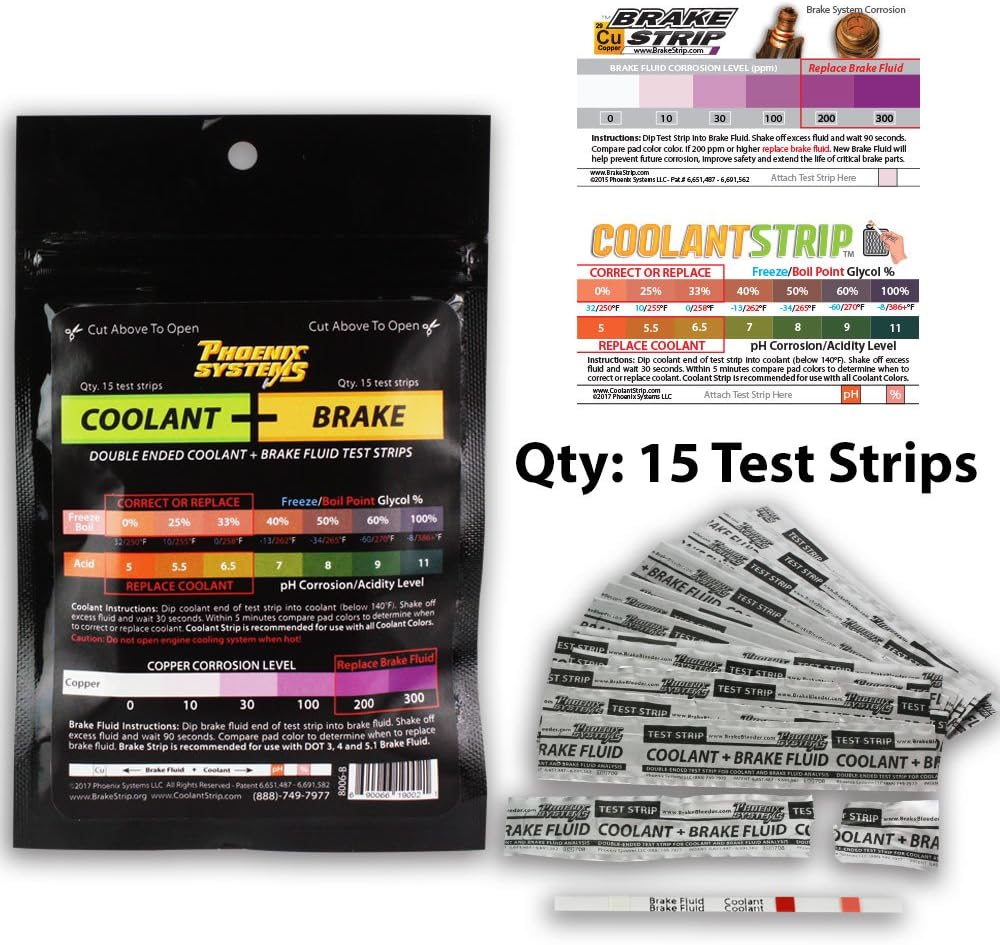
Image: Contents of the Phoenix Systems 8006-B kit, including test strips and the comparison chart card.
3. Safety Precautions
- CAUTION: DO NOT remove the radiator cap when the engine is HOT! Allow the engine to cool completely before attempting to access the coolant reservoir.
- Always wear appropriate personal protective equipment (PPE), such as gloves and eye protection, when handling automotive fluids.
- Keep test strips and fluids out of reach of children and pets.
- Dispose of used test strips and contaminated fluids according to local environmental regulations.
- DO NOT test coolant in full concentrate without proper dilution. The test strips are designed for coolant that is generally diluted 50/50 as it is in the vehicle.
4. Setup
- Ensure your vehicle's engine is cool before proceeding with any fluid checks, especially for coolant.
- Locate your vehicle's brake fluid reservoir and coolant reservoir. Refer to your vehicle's owner's manual if unsure.
- Carefully clean the area around the caps to prevent contaminants from entering the fluid reservoirs.
- Open one foil-wrapped test strip just before use.
5. Operating Instructions
5.1. Brake Fluid Testing
- Remove the cap from your brake master cylinder reservoir.
- Dip the Brake Strip end of the test strip (the white end) into the brake fluid for one second.
- Shake off any excess fluid from the strip.
- Wait 90 seconds for the color to develop.
- Compare the color of the brake fluid pad to the 'Copper Corrosion Level (ppm)' chart on the included comparison card. The color will change from white to purple in direct proportion to the corrosion level.
- High levels of corrosion (indicated by darker purple, typically 200 ppm or higher) suggest that the brake fluid has lost its ability to protect your brake system and should be changed.
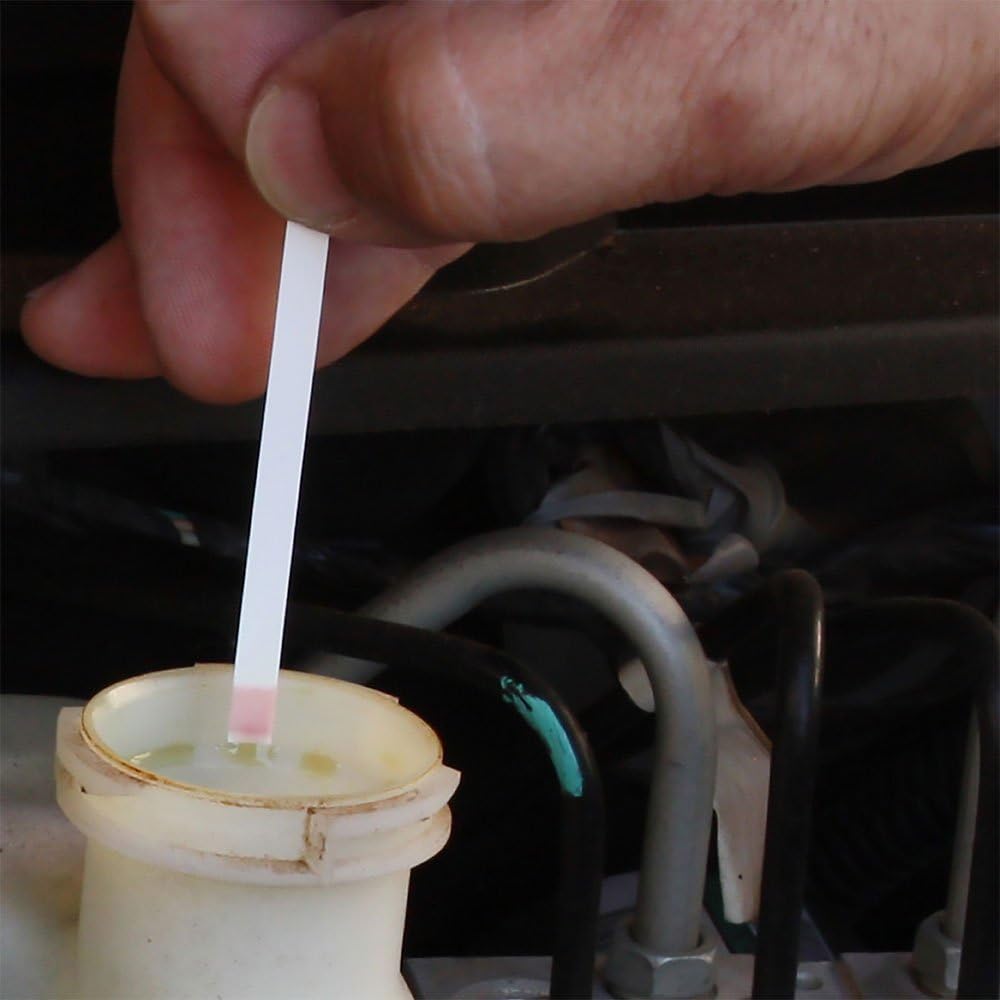
Image: A hand carefully dipping the brake fluid end of the test strip into a vehicle's brake fluid reservoir.
Video: An official product video demonstrating the importance of brake fluid and how to use the Brake Strip to test for corrosion. This video highlights the simplicity and effectiveness of the test in ensuring vehicle safety.
5.2. Coolant Testing
- Ensure the engine is cool before opening the radiator cap or coolant reservoir cap.
- Dip the Coolant Strip end of the test strip (the orange/red end) into the coolant for 30 seconds.
- Shake off any excess fluid from the strip.
- Wait 5 minutes for the color to develop.
- Compare the color of the glycol pad and the pH pad to the 'Freeze/Boil Point Glycol %' and 'pH Corrosion/Acidity Level' charts on the included comparison card.
- The glycol pad can range from pink to red/blue depending on your glycol percentage. Low levels of glycol can lead to freezing in cold weather or overheating, and can cause corrosion.
- The pH pad can range from orange to yellow/green depending on the acid or alkaline level. pH levels below 7 indicate acidic coolant, which will quickly corrode a cooling system.

Image: A hand carefully dipping the coolant end of the test strip into a vehicle's coolant reservoir.
6. Interpreting Results
The comparison chart card provided with your test strips is crucial for accurately interpreting the results. Each side of the card corresponds to either brake fluid or coolant, with color scales indicating different levels of fluid health.
- Brake Fluid: Match the color of the brake fluid pad on your strip to the 'Copper Corrosion Level (ppm)' scale. If the color matches or exceeds the 'Replace Brake Fluid' threshold (typically 200 ppm or higher), it indicates significant corrosion and the fluid should be changed.
- Coolant: For coolant, assess both the glycol percentage and the pH level. Match the glycol pad to the 'Freeze/Boil Point Glycol %' scale to determine the freeze/boil protection. Match the pH pad to the 'pH Corrosion/Acidity Level' scale. If either indicates 'REPLACE COOLANT' or falls outside optimal ranges (e.g., pH below 7 or very low glycol percentage), a coolant flush and replacement are recommended.
The goal is to ensure your fluids are within the 'CORRECT' range to maintain optimal vehicle performance and safety. If results indicate 'REPLACE', consult a qualified mechanic for fluid replacement.

Image: A person examining the test strip results by comparing them to the provided comparison chart, likely within the engine bay of a vehicle.
7. Maintenance
Regular fluid checks are a critical part of vehicle maintenance. It is recommended to test your brake fluid and coolant with these strips at least once a year, or with every oil change, to proactively monitor their condition. This helps in identifying potential issues early, preventing major system failures, and ensuring the longevity of your vehicle's components.
8. Troubleshooting
If you encounter unexpected results or have concerns about your fluid readings:
- Re-test: Use a new test strip and repeat the procedure carefully to ensure accuracy.
- Check fluid levels: Ensure fluid levels are adequate before testing. Low fluid levels can sometimes indicate a leak or other issue.
- Consult a professional: If test results consistently indicate fluid replacement is needed, or if you have any doubts about the fluid condition or your vehicle's braking/cooling system, it is always best to consult a certified automotive technician.
9. Specifications
| Manufacturer | Phoenix Systems |
| Brand | Phoenix Systems |
| Model | 8006-B (BrakeStrip Plus) |
| Item Weight | 0.634 ounces |
| Package Dimensions | 6.46 x 3.98 x 0.28 inches |
| Country of Origin | USA |
| Number of Test Strips | 15 (Double-Ended) |