
1. Introduction
This manual provides essential information for the safe and effective use of your TROJAN T-105 PLUS 6V Deep Cycle Flooded Batteries. Please read all instructions carefully before installation, operation, or maintenance to ensure optimal performance and longevity of your batteries.

Image 1.1: Four TROJAN T-105 PLUS 6V Deep Cycle Flooded Batteries. These batteries are designed for applications requiring regular deep discharge and recharge cycles.
2. Safety Information
WARNING: Lead-acid batteries contain sulfuric acid, which is highly corrosive, and produce explosive hydrogen gas during charging. Improper handling can result in severe injury or death.
- Always wear appropriate Personal Protective Equipment (PPE), including safety glasses, face shield, and acid-resistant gloves, when working with batteries.
- Ensure adequate ventilation in the area where batteries are being charged or stored to disperse hydrogen gas.
- Keep sparks, flames, and metallic objects away from batteries. Do not smoke near batteries.
- Avoid contact with battery acid. If contact occurs, flush immediately with water and seek medical attention.
- Do not short-circuit battery terminals.
- Always use insulated tools.
Proposition 65 Warning: This product contains chemicals known to the State of California to cause cancer and birth defects or other reproductive harm.
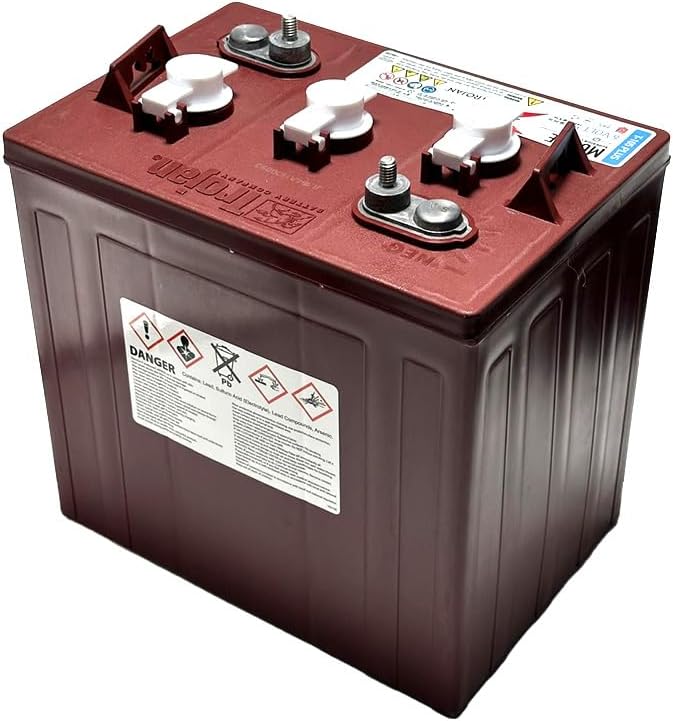
Image 2.1: Side view of a TROJAN T-105 PLUS battery, highlighting important safety warning labels regarding corrosive materials and potential hazards.
3. Product Overview
The TROJAN T-105 PLUS is a 6-volt deep cycle flooded lead-acid battery, offering 225 Amp-hours (Ah) capacity. It is engineered for robust performance in applications such as golf carts, renewable energy systems, floor scrubbers, and other industrial equipment requiring reliable, long-lasting power.

Image 3.1: Top view of a single TROJAN T-105 PLUS battery, illustrating the terminal posts, vent caps, and product identification labels.
4. Delivery and Initial Handling
These batteries are shipped on a pallet via truck freight. It is crucial to understand the following:
- Appointment Required: All deliveries, especially to residential addresses, require a scheduled appointment. The carrier will contact you to arrange a delivery time. Ensure your contact email and phone number on file are current.
- Presence Required: Someone must be present at the time of delivery to sign for the shipment.
- Inspection Upon Arrival: Before signing for the shipment, carefully inspect the pallet and packaging for any visible damage. Verify the box count matches the delivery receipt. Note any discrepancies or damage directly on the carrier's delivery receipt. Failure to do so may impact your ability to claim damages.
- Refused Shipments: If the carrier is unable to contact you to schedule delivery, or if the shipment is refused without valid reason, the pallet will be returned. In such cases, all freight and re-consignment charges will be deducted from any refund.

Image 4.1: Palletized shipment of batteries, displaying 'NO STACK' and 'CORROSIVE' hazard warnings, emphasizing the importance of careful handling and inspection upon delivery.
5. Setup and Installation
Proper installation is critical for battery performance and safety.
- Preparation: Ensure the battery compartment is clean, dry, and well-ventilated. Confirm that all cables and connectors are in good condition.
- Positioning: Place batteries in their designated locations, ensuring they are secure and cannot shift during operation. Use appropriate hold-down straps if necessary.
- Connections: Connect batteries in series or parallel as required by your system's voltage and capacity needs. Always connect positive (+) terminals to positive (+) and negative (-) terminals to negative (-). For series connections, connect the positive terminal of one battery to the negative terminal of the next.
- Terminal Torque: Secure all terminal connections firmly. Refer to the terminal configuration diagram for recommended torque values. Overtightening can damage terminals, while undertightening can lead to poor contact and overheating.
- Final Check: Double-check all connections for correct polarity and tightness before applying power.

Image 5.1: A single TROJAN T-105 PLUS battery displayed with a hold-down strap and terminal nuts, illustrating components used for secure installation.
Terminal Configuration
| Type | Description |
|---|---|
| ELPT (Embedded Low Profile Terminal) | Terminal Height: 1.22 inches (31 mm) Torque Values: 95 – 105 in-lb (11 – 12 Nm) Bolt Size: 5/16" |
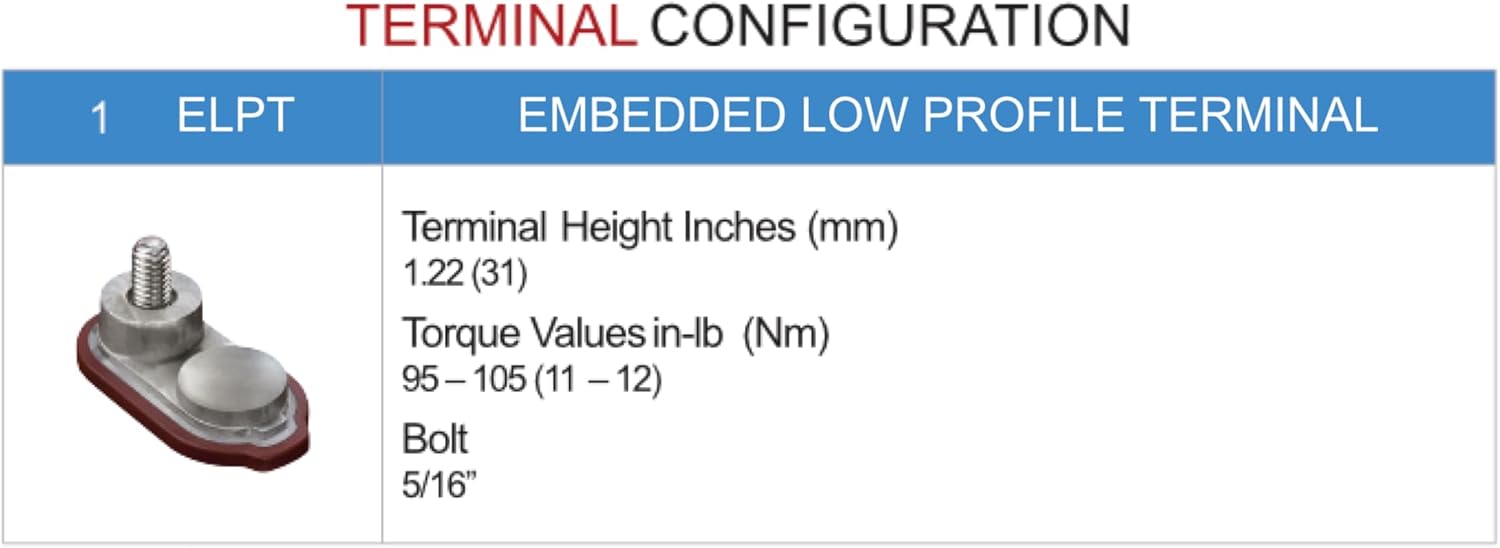
Image 5.2: Diagram detailing the Embedded Low Profile Terminal (ELPT) configuration, including its dimensions, recommended torque values, and bolt size for proper connection.
6. Operation
TROJAN T-105 PLUS batteries are deep cycle batteries, designed to be discharged and recharged repeatedly. For optimal life and performance:
- Avoid routinely discharging the batteries below 50% Depth of Discharge (DoD). Deeper discharges can shorten battery life.
- Always recharge batteries promptly after use. Leaving batteries in a discharged state can lead to sulfation and permanent capacity loss.
- Use a charger specifically designed for flooded lead-acid batteries with appropriate voltage and amperage settings for your battery bank.
7. Maintenance
Regular maintenance is essential for maximizing the lifespan and performance of your flooded lead-acid batteries.
- Electrolyte Level Check: Periodically check the electrolyte level in each cell. The electrolyte should cover the plates. If the level is low, add distilled water until the plates are covered, but do not overfill. It is often best to add water after charging.
- Cleaning Terminals: Keep battery terminals clean and free of corrosion. Use a wire brush and a solution of baking soda and water to clean corroded terminals. Rinse with clean water and dry thoroughly. Apply a thin coat of petroleum jelly or anti-corrosion spray to prevent future corrosion.
- Charging: Follow the charger manufacturer's instructions. Ensure batteries are fully charged regularly, especially during periods of non-use.
- Ventilation: Always ensure proper ventilation during charging to allow hydrogen gas to dissipate safely.
- Inspection: Regularly inspect batteries for any signs of damage, cracks, or leaks.
8. Troubleshooting
If you encounter issues with your batteries, consider the following common problems and solutions:
- Low Voltage / Short Run Time:
- Cause: Undercharging, sulfation, or old age.
- Solution: Ensure charger is functioning correctly and batteries are receiving a full charge. Check electrolyte levels and add distilled water if needed. If batteries are old, replacement may be necessary.
- Corrosion on Terminals:
- Cause: Acid fumes, loose connections.
- Solution: Clean terminals as described in the Maintenance section. Ensure connections are tight.
- Battery Overheating During Charge:
- Cause: Overcharging, high ambient temperature, internal short.
- Solution: Check charger settings. Ensure adequate ventilation. If overheating persists, discontinue use and consult a professional.
9. Specifications
| Specification | Value |
|---|---|
| Brand | TROJAN |
| Model Number | T105 |
| Product Dimensions (Single Battery) | 7 x 10 x 11 inches |
| Item Weight (Single Battery) | 62 pounds (248 pounds for 4 units) |
| Battery Cell Composition | Lead Acid |
| Battery Capacity | 225 Amp Hours (Ah) |
| Voltage | 6V |
| Recommended Uses | UPS, Golf Carts, Industrial Equipment, Renewable Energy |
| Unit Count | 4.0 Count |
10. Warranty and Support
For warranty information and technical support, please refer to the documentation provided with your purchase or contact TROJAN Battery Company directly through their official website or customer service channels. Keep your purchase receipt as proof of purchase.
11. Important Notes
Always adhere to local regulations for battery disposal and recycling. Do not dispose of batteries in household waste.


