
1. Introduction
Thank you for purchasing the SABAJ Da3 Portable USB DAC Headphone Amplifier. This device is designed to deliver high-fidelity audio from your digital sources to your headphones. Please read this manual carefully to ensure proper setup, operation, and maintenance of your Da3 unit.

Figure 1: SABAJ Da3 Portable USB DAC Headphone Amplifier
2. Product Overview
The SABAJ Da3 is a compact and powerful Digital-to-Analog Converter (DAC) and headphone amplifier. It features a fully balanced design utilizing dual ESS SABRE9018Q2C decoding chips, an XMOS USB audio solution for high-resolution audio playback, and an OLED display for easy operation. It supports both 3.5mm unbalanced and 2.5mm balanced headphone outputs.
3. Key Features
- Dual SABRE9018Q2C DAC Chips: Fully balanced design with two high-performance ESS SABRE9018Q2C decoding chips for superior audio quality, high dynamic range, and ultra-low distortion.
- Advanced USB Audio Solution: Utilizes the second-generation XMOS USB audio solution (XCore200XU208), supporting PCM up to 32-bit/768kHz and native DSD512.
- Asynchronous Clock System: Features two ultra-low phase noise crystal oscillators for precise timing, resulting in more accurate sound reproduction and higher resolution.
- Independent Power Supplies: Two ultra-low noise LDO power supplies independently power the left and right amplifier channels, ensuring stable voltage and a purer sound free from interference.
- OLED Display: A 0.96-inch OLED screen provides clear information and a simple, intuitive user interface.
- Dual Headphone Outputs: Equipped with both 3.5mm unbalanced and 2.5mm balanced headphone jacks to accommodate various headphone types.
4. Package Contents
Please check the package for the following items:
- SABAJ Da3 Unit
- USB-C to USB-A Cable
- User Manual (this document)

Figure 2: SABAJ Da3 Package Contents
5. Setup
5.1 Connecting to a Source Device
- Connect the SABAJ Da3 to your computer (PC/Mac) or compatible smartphone/tablet using the provided USB-C to USB-A cable. The Da3 draws power directly from the USB source.
- For optimal performance on Windows systems, you may need to install a specific driver for the XMOS USB audio solution. This driver can typically be found on the SABAJ official website. Mac and Linux systems are generally plug-and-play.
5.2 Connecting Headphones
The SABAJ Da3 offers two headphone output options:
- 3.5mm Unbalanced Output: For standard headphones with a 3.5mm stereo jack.
- 2.5mm Balanced Output: For headphones equipped with a 2.5mm TRRS balanced cable. This output can provide more power and better channel separation for compatible headphones.
Insert your headphone connector firmly into the desired output jack on the Da3 unit.

Figure 3: Headphone Output Jacks (BAL and UNBAL)
6. Operating Instructions
6.1 Power On/Off
The Da3 powers on automatically when connected to a powered USB source. Disconnect the USB cable to power off the device.
6.2 OLED Display
The 0.96-inch OLED display shows important information such as:
- Current audio format (e.g., PCM, DSD)
- Sampling rate (e.g., 44.1kHz, 192kHz, DSD256)
- Volume level
- Selected output mode (3.5mm or 2.5mm)
6.3 Volume Control
Use the '+' and '-' buttons on the front panel to adjust the volume. The volume level will be displayed on the OLED screen.
6.4 Audio Modes / Filters
The Da3 may offer different audio filter modes to subtly alter the sound characteristics. Refer to the device's on-screen menu (accessed via the central button, if available) to cycle through these modes and select your preferred sound profile. The device typically remembers your last selected settings.
6.5 Output Selection
The Da3 automatically detects which headphone output (3.5mm or 2.5mm) is in use. Ensure your headphones are connected to the correct jack for your cable type.
7. Maintenance
- Cleaning: Use a soft, dry cloth to clean the exterior of the Da3. Avoid using liquid cleaners or solvents.
- Storage: When not in use, store the device in a cool, dry place away from direct sunlight and extreme temperatures.
- Handling: Handle the device with care to prevent physical damage. Avoid dropping or subjecting it to strong impacts.
8. Troubleshooting
| Problem | Possible Cause | Solution |
|---|---|---|
| Device does not power on. | Insufficient power from USB source or faulty USB cable. | Ensure the USB source provides adequate power. Try a different USB port or cable. Some smartphones may not provide enough power; try connecting to a computer. |
| No sound from headphones. |
|
|
| Sound quality is poor or distorted. |
|
|
9. Specifications
| Feature | Detail |
|---|---|
| Model Number | Da3 |
| DAC Chip | Dual ESS SABRE9018Q2C |
| USB Audio Solution | XMOS XCore200XU208 |
| PCM Support | Up to 32-bit / 768 kHz |
| DSD Support | Native DSD512 |
| Headphone Outputs | 3.5mm Unbalanced, 2.5mm Balanced |
| Display | 0.96-inch OLED |
| Dimensions (L x W x H) | 13.41 x 1.85 x 2.59 cm (approx. 94mm x 40mm x 12mm) |
| Weight | 50 g (approx. 64g net weight) |
| Color | Silver |
| Power Supply | USB Bus Power |
9.1 Technical Measurements

Figure 4: Dynamic Range (125.219 dB)

Figure 5: Frequency Response
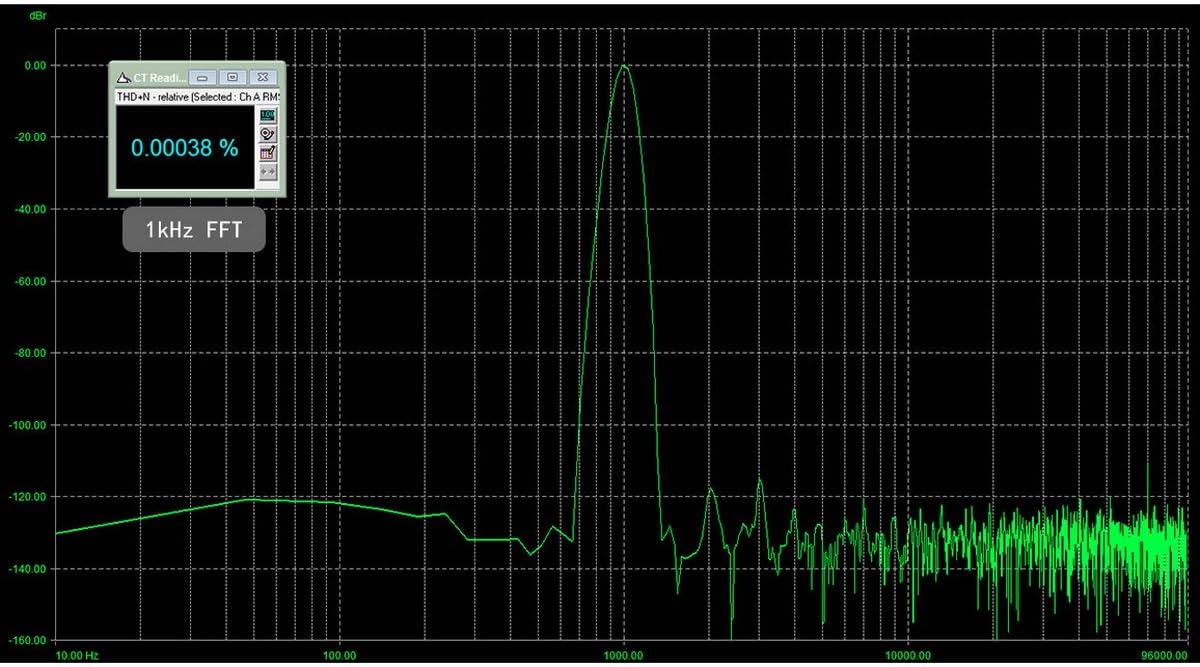
Figure 6: 1kHz FFT (THD+N 0.00038%)
10. Warranty and Support
SABAJ products typically come with a limited warranty. For specific warranty terms and conditions, please refer to the warranty card included with your product or visit the official SABAJ website. For technical support, driver downloads, or service inquiries, please contact SABAJ customer support directly through their official channels.