
1. Introduction
This manual provides essential information for the safe and effective use of your Vanguard Run Capacitor. This component is designed to provide a phase shift to the auxiliary winding of single-phase AC motors, enabling them to start and run efficiently. Please read this manual thoroughly before installation and operation.
2. Safety Information
WARNING: Electrical components can cause severe injury or death. Installation and servicing should only be performed by qualified personnel.
- Always disconnect power to the equipment before installing, servicing, or removing the capacitor.
- Capacitors can store an electrical charge even after power is disconnected. Always discharge the capacitor before handling. Use a properly insulated screwdriver with an insulated handle to short the terminals, or use a resistor designed for capacitor discharge.
- Wear appropriate personal protective equipment (PPE), including insulated gloves and safety glasses.
- Ensure the replacement capacitor matches the original specifications (capacitance in MFD and voltage in VAC). Using an incorrect capacitor can damage the motor or create a fire hazard.
- Do not touch the terminals of the capacitor while power is applied or before it has been discharged.
- Keep children and unauthorized persons away from electrical equipment.
3. Product Overview
The Vanguard Run Capacitor is a cylindrical, oil-filled capacitor designed for continuous duty in AC motor applications. It features a durable metal casing and standard spade terminals for connection. This specific model has a capacitance of 15 Microfarads (MFD) and is rated for 370 Volts AC (VAC).
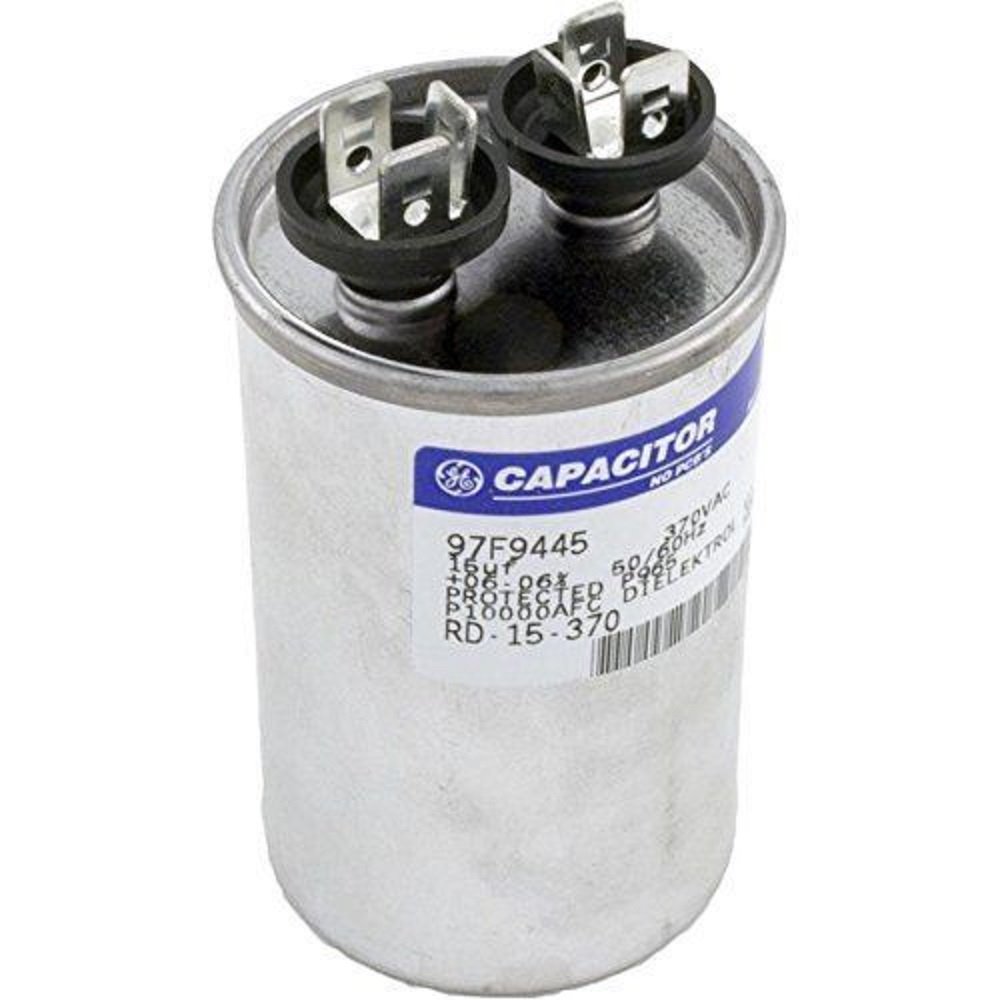
Image: Vanguard 15MFD 370V Run Capacitor. This image displays the cylindrical capacitor with its terminals, indicating its compact size and robust construction.
4. Setup and Installation
Follow these general steps for installing the run capacitor. Always refer to the specific equipment's service manual for detailed instructions.
- Power Disconnection: Turn off and lock out all power to the equipment before beginning any work. Verify power is off using a voltage meter.
- Discharge Old Capacitor: If replacing an existing capacitor, carefully discharge it using a suitable tool to prevent electrical shock.
- Remove Old Capacitor: Disconnect the wires from the old capacitor and remove it from its mounting bracket. Note the wiring configuration before disconnecting.
- Inspect New Capacitor: Visually inspect the new Vanguard capacitor for any signs of damage.
- Mount New Capacitor: Securely mount the new capacitor in the same location as the old one, ensuring it is stable and not subject to excessive vibration.
- Connect Wiring: Connect the wires to the new capacitor's terminals according to the original wiring configuration. Ensure connections are tight and secure.
- Verify Installation: Double-check all connections and ensure no tools or debris are left inside the equipment.
- Restore Power: Restore power to the equipment and test its operation.
5. Operating Principles
A run capacitor is a passive electrical component that continuously corrects the power factor and provides a phase shift to the auxiliary winding of an AC motor. This allows the motor to operate efficiently and continuously. Unlike start capacitors, run capacitors are designed for continuous duty and remain in the circuit during the entire operation of the motor. The capacitor helps the motor maintain a consistent rotation and reduces energy consumption.
6. Maintenance
Run capacitors are generally maintenance-free components. However, periodic inspection can help identify potential issues before they lead to motor failure.
- Visual Inspection: Annually inspect the capacitor for signs of bulging, leaking oil, or corrosion around the terminals. These are indicators of capacitor failure.
- Cleaning: Ensure the capacitor and its terminals are free from dust, dirt, and debris, which can affect performance and lead to overheating.
- Replacement: Capacitors have a finite lifespan. If the motor exhibits symptoms of a failing capacitor (e.g., slow start, humming, reduced efficiency), consider testing and replacing the capacitor.
7. Troubleshooting
If your motor is not functioning correctly, a failing run capacitor could be the cause. Here are common symptoms and potential solutions:
| Symptom | Possible Cause | Solution |
|---|---|---|
| Motor hums but does not start or starts slowly. | Failed or weak run capacitor. | Test the capacitor with a multimeter (capacitance function). Replace if capacitance is significantly lower than rated or if it shows open/short circuit. |
| Motor runs hot or draws excessive current. | Weak or incorrect run capacitor. | Verify capacitor rating. Replace if weak or incorrect. |
| Visible bulging or leaking from capacitor. | Catastrophic capacitor failure. | Immediately disconnect power and replace the capacitor. |
8. Specifications
- Brand: Vanguard
- Model: 15MFD, 370V, 1-3/4" x 2-7/8"
- Capacitance: 15 Microfarad (MFD)
- Operating Voltage: 370 Volts AC (VAC)
- Maximum Voltage: 370 Volts AC (VAC)
- Shape: Round
- Item Weight: 0.3 Pounds
- UPC: 753610341116
- ASIN: B06WLL4CRG
9. Warranty and Support
For specific warranty information, please refer to the documentation provided at the time of purchase or contact Vanguard customer support. Keep your purchase receipt as proof of purchase. For technical assistance or inquiries, please contact your authorized Vanguard dealer or the point of purchase.