
1. Introduction
This manual provides essential instructions for the safe and effective operation, setup, and maintenance of your PowerVision PowerEgg Drone (Model PEG10). The PowerEgg is an aerial camera drone featuring a unique egg-shaped design for portability, equipped with a 360 panoramic 4K HD camera and a 3-axis gimbal for stable video capture. It supports control via a standard remote controller and a gesture-based Maestro controller.
2. What's in the Box
Carefully unpack your PowerEgg Drone and verify that all components are present:
- PowerEgg Aircraft
- Drone Stand
- Base Station
- Standard Remote Control
- Maestro Gesture Controller
- Charger
- Smart Battery
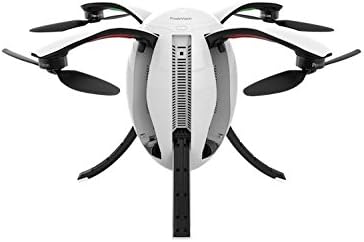
Image: PowerEgg Drone, Base Station, Standard Remote Control, and Maestro Gesture Controller.
3. Setup
3.1 Charging the Battery
Before first use, fully charge the smart battery using the provided charger. Connect the charger to a power outlet and then to the smart battery. The charging indicator lights will show the charging status.

Image: PowerVision charger with various cables for charging components.
3.2 Unfolding the PowerEgg
The PowerEgg is designed to fold into an egg shape for transport. To prepare for flight:
- Gently pull the top and bottom sections of the egg to extend the arms.
- Unfold the propellers on each arm.
- Extend the landing gear from the bottom of the drone.

Image: PowerEgg Drone in its compact, folded egg configuration.

Image: PowerEgg Drone fully unfolded, ready for flight, showing propellers and landing gear.
3.3 Installing the App
Download the official PowerVision flight application from your device's app store (iOS or Android). This app is required for advanced flight modes and camera control.
4. Operating Instructions
4.1 Powering On/Off
To power on the drone, press and hold the power button on the smart battery until the indicator lights illuminate. Repeat this process for the remote controller and Maestro controller. To power off, press and hold the power button until the lights turn off.
4.2 Using the Standard Remote Controller
The standard remote controller provides precise control over the drone's flight and camera functions. Refer to the controller diagram for button assignments.

Image: The standard remote controller for the PowerEgg Drone.
4.3 Using the Maestro Gesture Controller
The Maestro controller allows for intuitive gesture-based flight control. Your arm movements are interpreted in real-time to direct the drone's position in the sky.

Image: The Maestro gesture controller, designed for intuitive drone control.
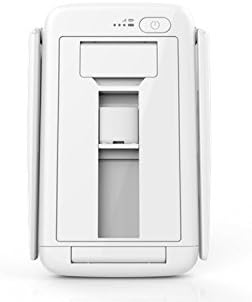
Image: A hand demonstrating the use of the Maestro controller to direct the PowerEgg Drone.
4.4 Flight Modes
The PowerEgg supports various autonomous flight modes accessible through the mobile application. These modes assist in capturing specific shots while the user focuses on camera operation. Consult the app's guide for detailed information on each mode.
4.5 Camera Operation
The integrated 4K HD camera with a 3-axis gimbal provides stabilized and smooth video footage. Control camera tilt, pan, and recording functions via the remote controller or the mobile app.

Image: Close-up view of the PowerEgg Drone's 4K camera and its 3-axis gimbal for stabilization.
5. Maintenance
5.1 Battery Care
To prolong the life of your Lithium Ion smart battery:
- Avoid fully discharging the battery.
- Store batteries at approximately 50% charge if not used for extended periods.
- Charge in a well-ventilated area and avoid extreme temperatures.
5.2 Cleaning
Regularly clean the drone's body, propellers, and camera lens. Use a soft, dry cloth for the body and a lens-cleaning cloth for the camera. Avoid using harsh chemicals or abrasive materials.
5.3 Propeller Inspection
Before each flight, inspect propellers for any cracks, bends, or damage. Replace damaged propellers immediately to ensure safe flight.
6. Troubleshooting
6.1 Drone Does Not Power On
- Ensure the smart battery is fully charged.
- Verify the battery is correctly inserted into the drone.
- Press and hold the power button for the specified duration.
6.2 Loss of Connection
- Ensure the remote controller and drone are within the operational range (up to 5 kilometers).
- Check for potential interference from other wireless devices.
- Restart both the drone and the controller.
6.3 Poor Video Quality
- Clean the camera lens.
- Ensure the 3-axis gimbal is functioning correctly and not obstructed.
- Check recording settings in the mobile application (e.g., resolution, frame rate).
7. Specifications
| Brand | PowerVision |
| Model Number | PEG10 |
| Product Dimensions | 6.9 x 6.9 x 10.7 inches |
| Item Weight | 4.6 pounds |
| Video Capture Resolution | 4K HD |
| Video Capture Format | MP4 |
| Optical Sensor Technology | CMOS |
| Maximum Range | 5 Kilometers (3.1 miles) |
| Battery Type | Lithium Ion (1 included) |
| Control Type | Remote Control, Maestro Gesture Control |
| Skill Level | Beginner, Professional |
| UPC | 852123007028 |
8. Warranty and Support
8.1 Warranty Information
For detailed warranty information regarding your PowerVision PowerEgg Drone, please refer to the official PowerVision website or the warranty card included with your product packaging. Warranty terms and conditions may vary by region.
8.2 Customer Support
If you encounter any issues or require further assistance, please visit the official PowerVision support website for FAQs, software updates, and contact information. You can typically find support resources at www.powervision.me (or similar official domain).