
1. Product Overview
The Quick Dam Water Force Portable Flood Barrier is a self-rising, heavy-duty flood control system designed to contain and control floodwaters. This barrier is engineered for rapid deployment and reusability, offering an efficient alternative to traditional sandbags. It is FM Approved and has been tested by the US Army Corps of Engineers for its effectiveness.
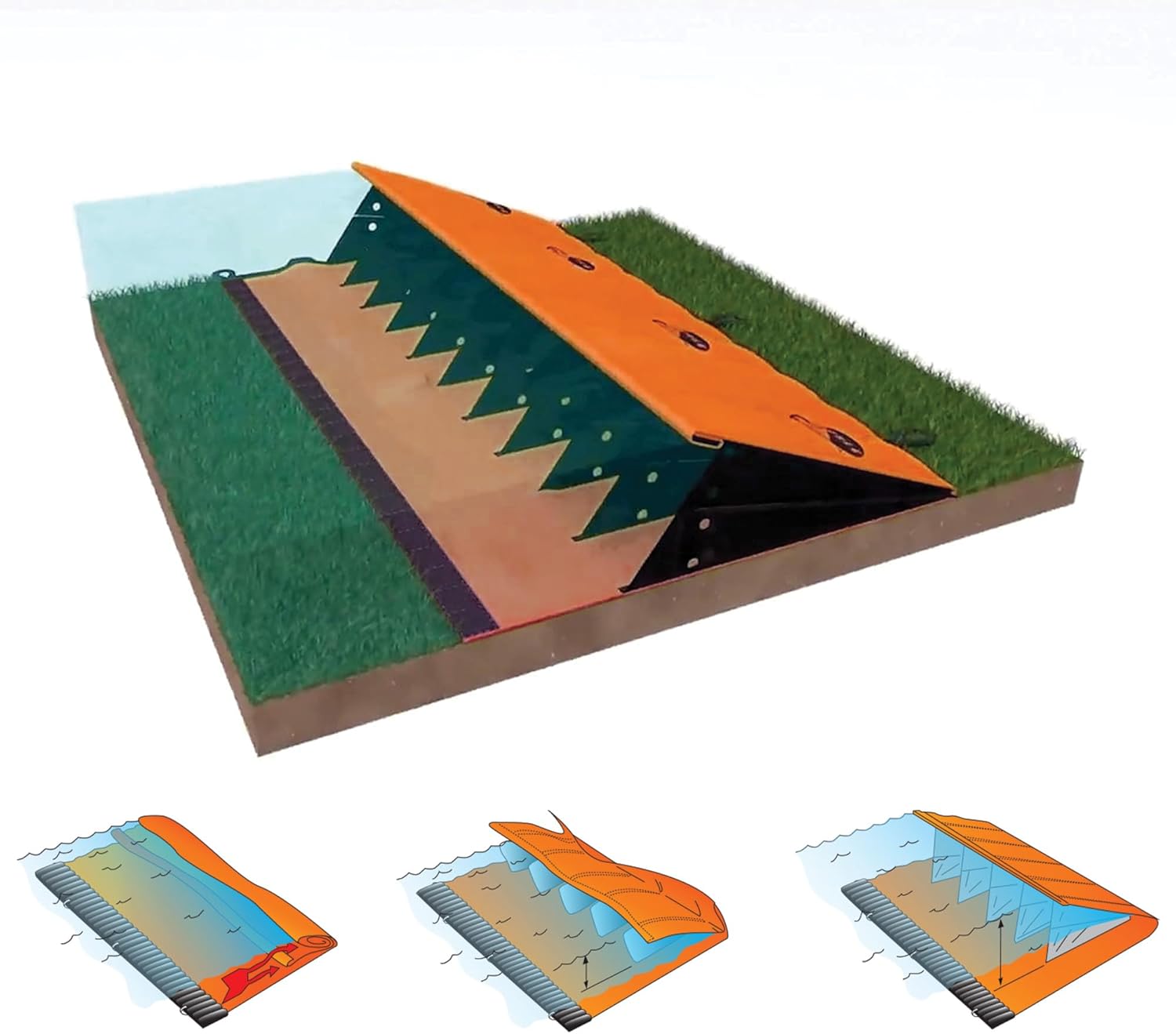
Image: Quick Dam Water Force Portable Flood Barrier, rolled up and ready for deployment.
Key Features:
- Self-Rising Design: Activates automatically with the presence of water.
- Portable and Reusable: Easy to deploy, store, and transport for multiple uses.
- Durable Construction: Made from robust PVC material for longevity.
- Flexible: Conforms to various surfaces and can be shaped around corners.
- FM Approved: Certified for flood protection.
- US Army Corps of Engineers Tested: Proven effective in rigorous testing scenarios.
2. Setup and Deployment
The Quick Dam Water Force barrier is designed for quick and straightforward deployment. No external water source or extensive labor is required for its initial setup.
Deployment Steps:
- Unroll the Barrier: Carefully unroll the Water Force barrier in the desired location, ensuring it lies flat on the ground. The barrier can be unrolled directly from its storage crate.
- Positioning: Place the barrier in the path of anticipated floodwaters. Ensure the 'front' side (the side designed to face the oncoming water) is correctly oriented.
- Connecting Multiple Units (if applicable): If using multiple units for extended lengths, connect them using the integrated connection points at each end.
- No Staking Required: The design incorporates built-in weights and relies on the weight of the floodwater itself to anchor and stabilize the barrier.

Image: Quick Dam Water Force barrier deployed around a residential property, effectively containing floodwaters.
Video: This video showcases the Quick Dam Water Force Portable Flood Barrier in action, demonstrating its self-rising capability as it encounters floodwaters and its versatility across different environments and applications.
3. Operating Principles
The Water Force barrier operates on a self-rising principle. As floodwater approaches and makes contact with the barrier, the water enters internal chambers, causing the barrier to inflate and rise, forming a protective wall. The weight of the water pressing against the barrier's base and filling its internal structure provides stability and prevents movement.

Image: Close-up view of the internal structure of the Quick Dam Water Force barrier, illustrating its self-rising mechanism.
Video: This video demonstrates the rapid deployment and self-rising action of the Quick Dam Water Force barrier, comparing its efficiency against traditional water-filled barriers. It highlights the minimal labor and time required for setup and removal.
4. Maintenance and Storage
Proper maintenance ensures the longevity and effectiveness of your Water Force barrier for future use.
Post-Flood Procedures:
- Draining: Once floodwaters recede, the water within the barrier will naturally drain.
- Cleaning: If exposed to debris or mud, gently rinse the barrier with water. Avoid harsh chemicals that could damage the PVC material.
- Drying: Allow the barrier to air dry completely before folding and storing. This prevents mold and mildew growth and preserves the material's integrity.
- Folding and Storage: Once dry, carefully fold or roll the barrier back into its compact form. Store it in a cool, dry place, ideally in its original crate or a protective bag, away from direct sunlight and sharp objects.

Image: Quick Dam Water Force barrier in its compact, rolled-up state, demonstrating ease of transport.
5. Troubleshooting
While the Water Force barrier is designed for reliability, certain conditions may affect its performance. Here are some common issues and their resolutions:
- Barrier Not Rising/Inflating Properly:
- Ensure the barrier is laid completely flat and unobstructed.
- Verify that sufficient water is making contact with the 'front' side of the barrier to initiate the self-rising action.
- Check for any folds or kinks that might prevent water from entering the internal chambers.
- Water Seepage Underneath:
- The barrier performs best on relatively flat, even surfaces. Significant irregularities or gaps beneath the barrier can lead to seepage.
- For highly uneven surfaces, consider preparing the ground or using additional sealing materials if minor seepage is critical.
- Movement or Instability:
- The barrier relies on the weight of the water for stability. Ensure adequate water pressure is maintained against the barrier.
- This product is primarily designed for standing water protection. It may not be suitable for areas with strong, fast-moving currents or significant wave action, such as ocean applications, which can dislodge or damage the barrier.
- Damage (Tears/Punctures):
- Inspect the barrier for damage before and after each use.
- Small punctures or tears may be repairable with appropriate PVC repair kits. For significant damage, replacement may be necessary.
6. Specifications
| Attribute | Detail |
|---|---|
| Model Number | QDWGWL-2030 |
| Size | 20in x 30ft |
| Material | PVC |
| Color | Orange |
| Item Weight | 70 pounds |
| Product Dimensions (packaged) | 17 x 29 x 12 inches |
| Included Components | 1 Water Force Unit |
| Manufacturer | Absorbent Specialty Products |
7. Warranty Information
The Quick Dam Water Force Portable Flood Barrier is warranted to be free of manufacturing defects. For specific warranty claims or details, please contact the manufacturer directly.
8. Support and Contact
For further assistance, technical support, or inquiries regarding your Quick Dam Water Force product, please refer to the manufacturer's official website or contact their customer service department. Contact information can typically be found on the product packaging or the Quick Dam brand store on Amazon.
Visit the Quick Dam Store for more information.