
1. Introduction
This manual provides essential information for the proper installation, operation, and maintenance of TRW GDB2038 Front Brake Pads. These brake pads are designed for specific vehicle applications and comply with ECE R90 regulations, ensuring high quality and performance. Adherence to these instructions is crucial for safety and optimal braking performance.
2. Safety Information
- Professional Installation Recommended: Brake system components are critical for vehicle safety. Installation should be performed by a qualified technician or individuals with extensive automotive repair experience.
- Consult Vehicle Service Manual: Always refer to your vehicle's specific service manual for detailed instructions, torque specifications, and safety procedures relevant to your make and model.
- Wear Personal Protective Equipment: Always wear appropriate safety glasses, gloves, and other protective gear when working on brake systems. Brake dust can contain hazardous materials.
- Secure Vehicle: Ensure the vehicle is safely supported on jack stands on a level surface before beginning any work. Never rely solely on a jack.
- Brake Fluid: Use only new, recommended brake fluid. Do not mix different types of brake fluid.
- Proper Disposal: Dispose of old brake pads and other automotive fluids according to local environmental regulations.
3. Package Contents
The TRW GDB2038 brake pad set typically includes:
- 4 x TRW GDB2038 Front Brake Pads (for one axle)
- Associated hardware (e.g., shims, clips) if applicable for the specific vehicle application.

Figure 1: Image showing the TRW GDB2038 front brake pads. The set includes four individual pads, designed for a single axle, with a dark friction material and metal backing plates. Some pads feature an integrated wear indicator contact.
4. Installation (Setup)
This section provides a general overview. Always consult your vehicle's specific service manual for detailed, model-specific instructions.
- Preparation: Park the vehicle on a level surface, engage the parking brake, and block the wheels. Loosen the lug nuts on the wheels to be removed. Raise the vehicle safely and support it with jack stands. Remove the wheels.
- Caliper Removal: Carefully remove the brake caliper mounting bolts. Do not let the caliper hang by the brake hose; support it with a wire or bungee cord.
- Old Pad Removal: Remove the old brake pads from the caliper bracket. Inspect the brake rotor for wear, scoring, or cracks. Replace or resurface rotors if necessary.
- Clean and Lubricate: Clean the caliper bracket, guide pins, and any contact points thoroughly. Apply a thin layer of high-temperature brake lubricant to the guide pins and any metal-to-metal contact points (excluding the friction material).
- Compress Caliper Piston: Using a suitable caliper piston compression tool, slowly and evenly push the caliper piston(s) back into the caliper bore. Ensure the brake fluid reservoir does not overflow.
- New Pad Installation: Install the new TRW GDB2038 brake pads into the caliper bracket, ensuring they are correctly seated and oriented. If equipped, connect the wear indicator contact.
- Caliper Reinstallation: Reinstall the brake caliper onto the bracket, ensuring all bolts are tightened to the manufacturer's specified torque.
- Final Steps: Reinstall the wheels, lower the vehicle, and tighten the lug nuts to specification. Pump the brake pedal several times until a firm pedal feel is achieved before driving. Check the brake fluid level and top up if necessary.
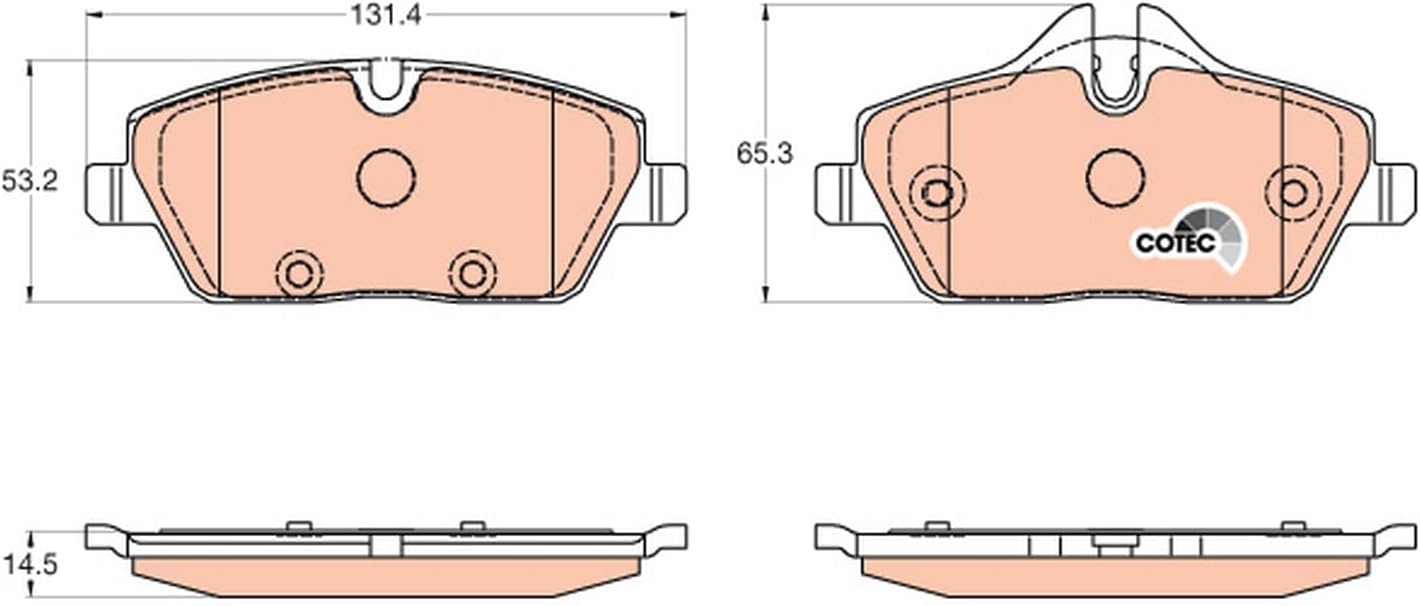
Figure 2: Technical drawing illustrating the key dimensions of the TRW GDB2038 brake pads. The drawing shows the length (131.4 mm), height (53.2 mm and 65.3 mm for different sections), and thickness (14.5 mm) of the friction material and backing plate. This diagram is crucial for verifying fitment.
5. Operation (Brake Pad Break-in)
After installing new brake pads, a proper break-in procedure is essential to ensure optimal performance and longevity. This process, often called 'bedding-in', transfers a thin layer of friction material to the rotor surface, improving braking efficiency and reducing noise.
- Initial Driving: Drive at moderate speeds (e.g., 30-40 mph) and perform approximately 10-15 moderate stops, allowing the brakes to cool slightly between each stop. Avoid hard braking during this phase.
- Gradual Increase: Gradually increase the intensity of stops over the next 100-200 miles of normal driving. Avoid sudden, aggressive braking or prolonged heavy braking (e.g., descending a long hill) during the break-in period.
- Avoid Overheating: Do not overheat the brakes during break-in, as this can glaze the pads and rotors, leading to reduced performance.
A slight burning smell or minor smoke during the initial break-in is normal. If excessive smoke or a strong, persistent burning smell occurs, allow the brakes to cool completely before resuming.
6. Maintenance
Regular inspection and maintenance of your brake system are vital for safety and performance.
- Routine Inspection: Inspect brake pads, rotors, calipers, and brake fluid levels at least every 12,000 miles or annually, whichever comes first.
- Pad Wear: Replace brake pads when the friction material thickness reaches the manufacturer's minimum specification, typically around 2-3mm, or when the wear indicator contact signals replacement.
- Rotor Condition: Check rotors for excessive wear, deep grooves, cracks, or warping. Replace rotors if they are below minimum thickness or show significant damage.
- Brake Fluid: Check brake fluid for contamination and proper level. Brake fluid should be flushed and replaced according to your vehicle manufacturer's recommendations.
7. Troubleshooting
Common issues related to brake pads and potential solutions:
- Brake Noise (Squealing/Grinding):
- Squealing: Often caused by vibration. Ensure proper lubrication of contact points, correct installation of shims, and proper break-in.
- Grinding: Typically indicates severely worn pads, where the metal backing plate is contacting the rotor. Immediate inspection and replacement are required.
- Reduced Braking Performance:
- Could be due to improper break-in, glazed pads/rotors, air in the brake lines, or contaminated brake fluid.
- Inspect the entire brake system for leaks or component failure.
- Uneven Pad Wear:
- Often indicates a seized caliper guide pin, a sticking caliper piston, or an issue with the caliper bracket.
- Requires inspection and repair or replacement of caliper components.
If you experience any persistent brake issues, consult a qualified mechanic immediately.
8. Specifications
| Feature | Specification |
|---|---|
| Brand | TRW |
| Model Number | GDB2038 |
| Auto Part Position | Front |
| Vehicle Service Type | Vehicle specific |
| Length | 131 mm (approx. 131.4 mm as per diagram) |
| Height | 55 mm (approx. 53.2 mm / 65.3 mm as per diagram) |
| Thickness | 14 mm (approx. 14.5 mm as per diagram) |
| Inspection Tag | E9 90R - 01107/974 |
| Wear Warning Contact | Prepared for wear indicator |
| OEM Part Number | 34 11 6 862 309 |
| Item Weight | 7.72 pounds (for the set) |
| Global Trade Identification Number (GTIN) | 03322938221805 |
9. Warranty and Support
TRW brake pads are manufactured to high-quality standards and typically come with a manufacturer's warranty against defects in materials and workmanship. For specific warranty terms, conditions, and duration, please refer to the documentation provided with your purchase or visit the official TRW website.
For technical support, installation assistance, or warranty claims, please contact TRW customer service through their official channels. Ensure you have your product model number (GDB2038) and proof of purchase available when contacting support.