
1. Safety Information
Read all instructions carefully before using the appliance. Keep this manual for future reference. Failure to follow these instructions may result in electric shock, fire, or damage to the appliance.
- Electrical Safety: Ensure the washing machine is connected to a properly grounded power outlet. Do not use extension cords or adapters. Unplug the appliance before cleaning or performing any maintenance.
- Water Connection: Connect the water inlet hoses securely to the water supply and the machine. Check for leaks before first use.
- Children and Pets: Keep children and pets away from the appliance during operation. Do not allow them to play with the machine or climb inside the drum.
- Flammable Materials: Do not wash items that have been cleaned, washed, soaked, or spotted with combustible or explosive substances (such as wax, oil, paint, gasoline, degreasers, dry-cleaning solvents, kerosene, etc.).
- Installation: The appliance must be installed on a firm, level surface. Adjust the leveling feet to prevent vibration and noise.
- Damage: Do not operate the machine if it is damaged, malfunctioning, or has a damaged power cord. Contact authorized service personnel for repairs.
2. Product Overview
Familiarize yourself with the main components of your Svan SVL5610 washing machine.
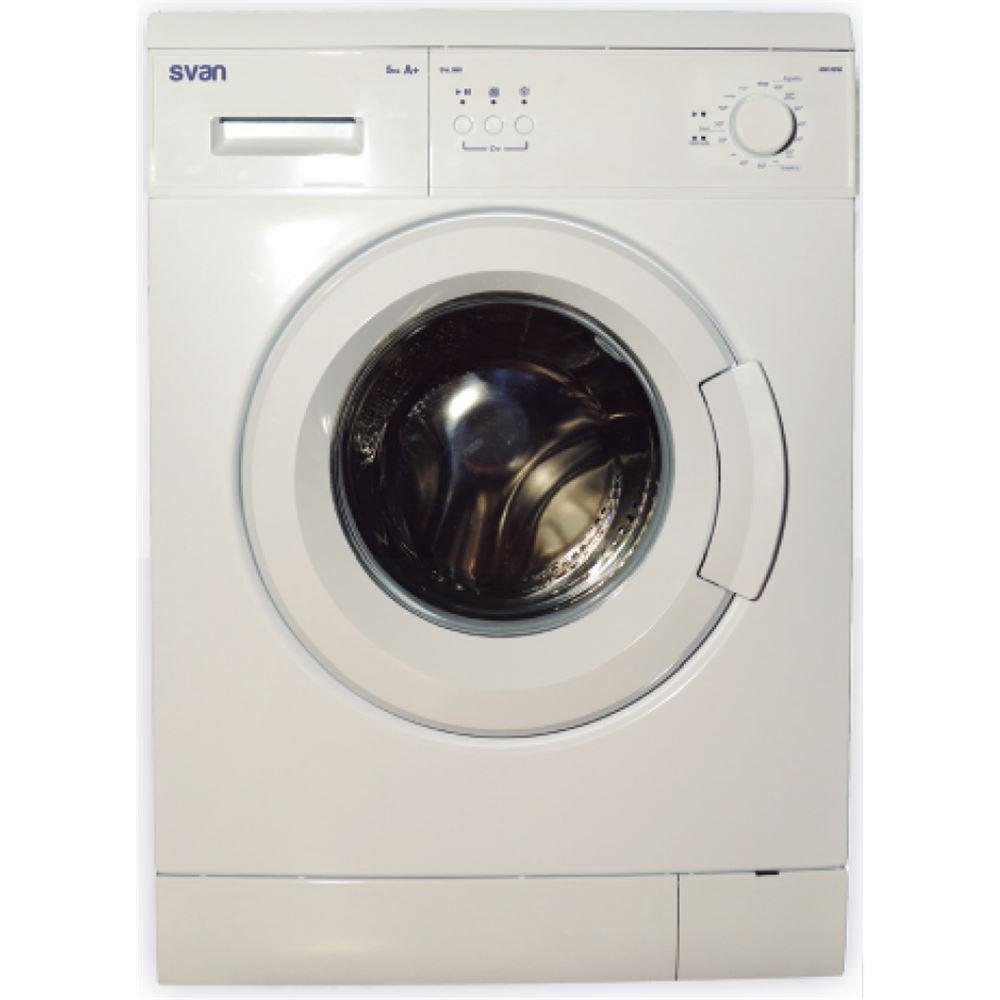
Image 2.1: Front view of the Svan SVL5610 washing machine. This image shows the main body, the front-loading door, the control panel at the top, and the detergent dispenser drawer.
2.1 Main Components
- Control Panel: Located at the top front, it includes the program selector knob, function buttons, and a display screen (if applicable) for cycle information.
- Detergent Dispenser Drawer: Positioned on the left side of the control panel, it has compartments for pre-wash detergent, main wash detergent, and fabric softener.
- Drum: The stainless steel inner drum where laundry is placed for washing.
- Door: The front-loading door with a safety lock mechanism.
- Filter Cover: Located at the bottom front, covering the drain pump filter.
2.2 Control Panel Overview
The control panel allows you to select washing programs and customize settings.
- Program Selector Knob: Used to choose the desired washing program (e.g., Cotton, Synthetics, Delicates, Quick Wash).
- Start/Pause Button: Initiates or temporarily stops a washing cycle.
- Temperature Button: Adjusts the wash water temperature.
- Spin Speed Button: Modifies the spin speed for the final rinse.
- Delay Start Button: Sets a delayed start time for the wash cycle.
- Display Screen: Shows remaining time, error codes, and selected options.
3. Installation and Setup
Proper installation is crucial for the safe and efficient operation of your washing machine.
3.1 Unpackaging
- Remove all packaging materials, including the polystyrene base and any protective film.
- Remove Transit Bolts: Locate and remove the transit bolts at the rear of the machine. These bolts secure the drum during transport and must be removed before operation. Keep them for future transport.
- Insert the plastic caps provided into the holes left by the transit bolts.
3.2 Positioning and Leveling
- Place the machine on a firm, level floor, away from direct sunlight or heat sources.
- Adjust the leveling feet at the bottom of the machine by turning them clockwise or counter-clockwise until the machine is perfectly level and stable. Use a spirit level to verify.
3.3 Water Connection
- Connect the cold water inlet hose to the cold water tap and the corresponding inlet valve on the back of the machine. Ensure a tight seal to prevent leaks.
- Open the water tap fully and check for any leaks.
3.4 Drain Hose Connection
- The drain hose can be hooked over the edge of a sink or connected to a dedicated standpipe.
- Ensure the drain hose is not kinked or obstructed. The height of the drain hose should be between 60 cm and 100 cm from the floor.
3.5 Electrical Connection
- Plug the power cord into a grounded electrical outlet. Ensure the voltage and frequency match the specifications of your appliance.
- Do not overload the electrical circuit.
4. Operating Instructions
Follow these steps for effective and safe operation of your washing machine.
4.1 Preparing Laundry
- Sort laundry by fabric type, color, and degree of soiling.
- Check garment care labels for washing instructions.
- Empty pockets, close zippers, and fasten hooks. Place small or delicate items in a mesh laundry bag.
4.2 Loading Laundry
- Open the washing machine door.
- Load laundry loosely into the drum, ensuring not to overload the machine. An overloaded machine will not wash effectively and may cause excessive vibration.
- Close the door firmly until it clicks shut.
4.3 Adding Detergent and Softener
- Pull out the detergent dispenser drawer.
- Add the appropriate amount of detergent to the main wash compartment (usually marked 'II' or 'Main Wash').
- If using pre-wash, add detergent to the pre-wash compartment (usually marked 'I' or 'Pre-Wash').
- Add fabric softener to the softener compartment (usually marked with a flower symbol). Do not exceed the 'MAX' line.
- Push the detergent drawer back in completely.
4.4 Selecting a Program and Starting the Wash
- Turn the Program Selector Knob to choose the desired washing program.
- Adjust additional settings such as temperature and spin speed using the corresponding buttons, if desired.
- Press the Start/Pause button to begin the wash cycle. The machine will automatically lock the door and start filling with water.
4.5 During the Wash Cycle
- To pause a running cycle, press the Start/Pause button. Press it again to resume.
- To change a program, you may need to cancel the current program first (refer to your specific model's instructions for cancelling a program, often by holding the Start/Pause button or turning the program knob to 'Off').
4.6 End of Cycle
- The machine will signal the end of the cycle (e.g., with a beep or 'End' on the display).
- Wait for the door lock to release before opening the door.
- Remove laundry promptly to prevent wrinkles and odors.
- Unplug the machine and turn off the water tap after each use.
5. Maintenance and Cleaning
Regular maintenance ensures optimal performance and extends the lifespan of your washing machine.
5.1 Cleaning the Detergent Dispenser Drawer
- Pull out the detergent drawer completely.
- Remove any removable parts (e.g., softener insert).
- Rinse all parts under running water to remove detergent residue. Use a brush if necessary.
- Clean the drawer housing with a damp cloth.
- Reassemble and reinsert the drawer.
5.2 Cleaning the Drain Pump Filter
The drain pump filter should be cleaned periodically to prevent blockages.
- Place a shallow container or towel under the filter cover to catch any residual water.
- Open the filter cover at the bottom front of the machine.
- Slowly unscrew the filter counter-clockwise. Allow water to drain out.
- Remove any lint, coins, or foreign objects from the filter and its housing.
- Rinse the filter under running water.
- Screw the filter back in clockwise until it is tight. Close the filter cover.
5.3 Cleaning the Drum and Door Seal
- Run a maintenance wash cycle (e.g., a hot wash with no laundry and a descaling agent or washing machine cleaner) monthly to prevent odor and residue buildup.
- Wipe the rubber door seal with a damp cloth after each wash to remove moisture and lint, preventing mold growth.
- Leave the door slightly ajar after use to allow the drum to air dry.
5.4 Cleaning the Exterior
- Wipe the exterior surfaces with a soft, damp cloth. Do not use abrasive cleaners or solvents.
6. Troubleshooting
Before contacting service, consult this section for common issues and their solutions.
| Problem | Possible Cause | Solution |
|---|---|---|
| Machine does not start | Power cord not plugged in; door not closed properly; water tap closed; program not selected; Start/Pause button not pressed. | Check power connection; ensure door is latched; open water tap; select a program; press Start/Pause. |
| No water filling | Water tap closed; water inlet hose kinked; water supply cut off. | Open water tap; straighten hose; check household water supply. |
| Water not draining | Drain hose kinked or blocked; drain pump filter clogged. | Straighten drain hose; clean drain pump filter (see Section 5.2). |
| Excessive vibration/noise | Transit bolts not removed; machine not level; uneven load; too much laundry. | Remove transit bolts (if not already); adjust leveling feet; redistribute laundry; reduce load size. |
| Detergent residue in drawer | Insufficient water pressure; clogged dispenser; too much detergent. | Check water pressure; clean detergent drawer (see Section 5.1); use recommended detergent amount. |
| Door will not open | Cycle not finished; water still in drum; safety lock engaged. | Wait for cycle to complete and door lock to release; if water remains, select a drain program. |
If the problem persists after attempting these solutions, please contact Svan customer support.
7. Specifications
Technical data for the Svan SVL5610 Front-Load Washing Machine.
| Feature | Specification |
|---|---|
| Model Number | SVL5610 (8436545120750) |
| Brand | Svan |
| Type | Front-Load Washing Machine |
| Capacity | 5 Kilograms |
| Maximum Spin Speed | 600 RPM |
| Color | White |
| Product Depth | 49.7 centimeters |
| Human Interface Input | Buttons |
| ASIN | B014WFEF5O |
8. Warranty and Support
For warranty information, service requests, or technical support, please refer to the warranty card included with your product or visit the official Svan website.
- Warranty Period: The warranty period typically begins from the date of purchase. Keep your proof of purchase for warranty claims.
- Contact Support: For assistance, please contact Svan customer service. Contact details can usually be found on the manufacturer's website or in the product packaging.
- Authorized Service: All repairs must be carried out by authorized service personnel to maintain warranty validity.
Note: Product specifications and features are subject to change without prior notice for product improvement.
