
1. Introduction
This manual provides essential information for the proper installation, operation, and maintenance of the UAC KT 2297 A/C Compressor/Component Kit. This kit is designed as a replacement solution for automotive air conditioning systems. Adherence to these instructions is crucial for optimal performance and longevity of the components.
2. Safety Information
Working with automotive air conditioning systems involves high pressures and specialized refrigerants. Improper handling can lead to serious injury or system damage. Always observe the following safety precautions:
- Professional Installation Recommended: Installation should ideally be performed by a certified automotive air conditioning technician.
- Personal Protective Equipment: Always wear appropriate safety glasses and gloves when handling refrigerant or working on the A/C system.
- Refrigerant Handling: Refrigerant must be handled in accordance with local, state, and federal regulations. Do not vent refrigerant into the atmosphere. Use proper recovery and recycling equipment.
- High Pressure: The A/C system operates under high pressure. Never disconnect lines or components without first safely discharging the system.
- Electrical Hazards: Disconnect the vehicle's battery before performing any electrical work on the A/C system.
- Component Compatibility: Ensure all components are compatible with the vehicle's specific make, model, and year.
3. Kit Contents
The UAC KT 2297 A/C Compressor/Component Kit typically includes the following items. Please verify all components are present and undamaged upon receipt.
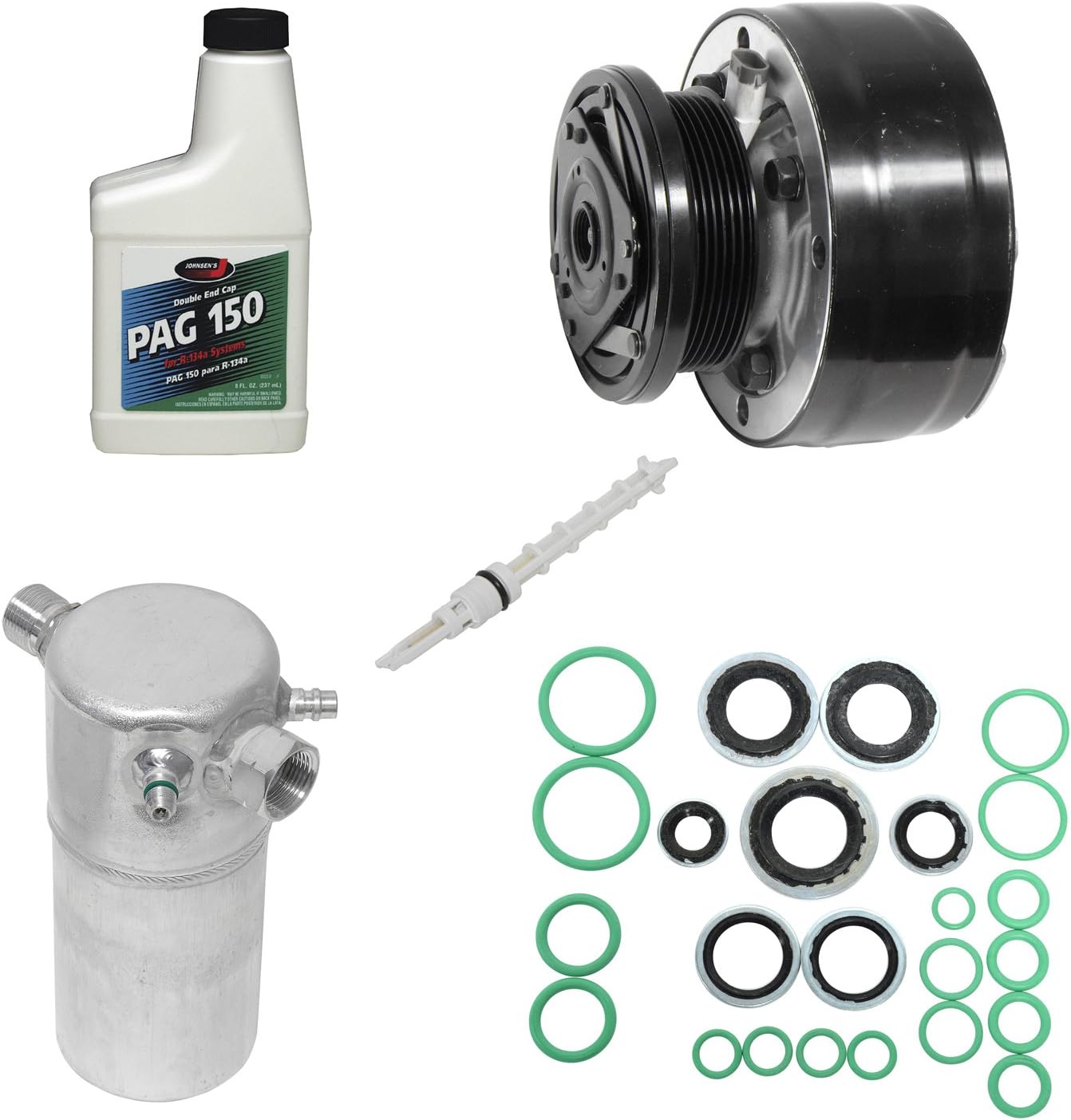
This image displays the complete contents of the UAC KT 2297 A/C Compressor/Component Kit, including the compressor, accumulator, orifice tube, PAG oil, and O-ring kit.
- A/C Compressor: The primary component responsible for circulating refrigerant.
- Accumulator/Receiver Drier: Filters moisture and debris from the refrigerant and stores excess refrigerant.
- Orifice Tube / Expansion Valve: Controls refrigerant flow and pressure into the evaporator.
- PAG 150 A/C Compressor Oil: Specific lubricant for the compressor and system.
- O-Ring and Seal Kit: Essential gaskets for sealing connections and preventing leaks.
4. Setup and Installation
Proper installation is critical for the performance and longevity of your A/C system. It is highly recommended that this procedure be performed by a qualified technician.
General Installation Steps:
- System Evacuation: Safely recover all refrigerant from the existing A/C system using approved equipment.
- Component Removal: Carefully remove the old A/C compressor, accumulator/receiver drier, and orifice tube/expansion valve.
- System Flushing: Flush the entire A/C system (condenser, evaporator, and lines) to remove any contaminants, debris, or old oil. This step is crucial to prevent damage to the new compressor.
- New Component Installation:
- Install the new UAC A/C compressor. Ensure all mounting bolts are torqued to manufacturer specifications.
- Replace the accumulator/receiver drier. This component should always be replaced when the system is opened.
- Install the new orifice tube or expansion valve.
- Replace all O-rings and seals with the new ones provided in the kit. Lubricate new O-rings with clean PAG oil before installation.
- Add Compressor Oil: Add the specified amount of PAG 150 compressor oil to the system. Refer to the vehicle manufacturer's specifications for the correct total system oil capacity and distribution.
- Vacuum the System: Evacuate the A/C system using a vacuum pump for at least 30-60 minutes to remove air and moisture. This creates a deep vacuum essential for proper system operation.
- Leak Test: Perform a leak test on the system to ensure all connections are sealed.
- Refrigerant Recharge: Recharge the system with the correct type and amount of refrigerant (e.g., R-134a) according to the vehicle manufacturer's specifications.
- System Performance Check: Start the vehicle and test the A/C system for proper operation, including vent temperature and pressure readings.
5. Operating Principles
The vehicle's air conditioning system operates on the principle of heat transfer. The UAC KT 2297 kit components are integral to this process:
- The compressor pressurizes and circulates refrigerant gas.
- The high-pressure gas flows to the condenser, where it releases heat and condenses into a liquid.
- The liquid refrigerant then passes through the orifice tube or expansion valve, which reduces its pressure and temperature.
- The low-pressure, cold liquid enters the evaporator, absorbing heat from the passenger compartment and turning back into a gas.
- The accumulator/receiver drier ensures only liquid refrigerant enters the expansion device and removes moisture.
- The gaseous refrigerant returns to the compressor to restart the cycle.
6. Maintenance
Regular maintenance helps ensure the longevity and efficiency of your A/C system:
- Regular System Checks: Have your A/C system inspected annually by a qualified technician.
- Refrigerant Levels: Do not overcharge or undercharge the system. Incorrect refrigerant levels can damage components.
- Leak Detection: If cooling performance decreases, have the system checked for leaks promptly. Even small leaks can lead to significant refrigerant loss over time.
- Cabin Air Filter: Replace the cabin air filter regularly to maintain good airflow and air quality.
7. Troubleshooting
If you experience issues with your A/C system after installation, consider the following common problems and potential solutions:
| Problem | Possible Cause | Action |
|---|---|---|
| No cold air | Low refrigerant, compressor not engaging, electrical issue, clogged orifice tube | Check refrigerant levels, inspect compressor clutch, verify electrical connections, consult technician. |
| Weak airflow | Clogged cabin air filter, blower motor issue | Replace cabin air filter, inspect blower motor. |
| Unusual noise from A/C | Compressor bearing wear, loose components, incorrect refrigerant charge | Have system inspected by a technician to diagnose source of noise. |
| System cycles on/off rapidly | Low refrigerant, faulty pressure switch | Check refrigerant levels, inspect pressure switches. |
For complex issues or if basic troubleshooting does not resolve the problem, it is recommended to seek assistance from a certified automotive A/C technician.
8. Specifications
- Manufacturer: Universal Air Conditioner
- Brand: UAC
- Model Number: KT 2297
- Manufacturer Part Number: KT 2297
- Item Weight: Approximately 19.6 pounds
- Product Dimensions: Approximately 17 x 14 x 12 inches
- Refrigerant Compatibility: Designed for R-134a systems (as indicated by PAG 150 oil).
9. Warranty Information
UAC products are manufactured to meet or exceed OE specifications. For specific warranty terms and conditions, please refer to the warranty documentation included with your purchase or visit the official UAC website. Keep your proof of purchase for any warranty claims.
10. Support
If you require further assistance, have questions regarding installation, or need technical support, please contact UAC customer service or consult a certified automotive air conditioning technician. Always provide your product model number (KT 2297) and purchase details when seeking support.
