
Introduction
This manual provides comprehensive instructions for the repair, overhaul, and servicing of the GM THM 4L60E electronic automatic overdrive transmission. It is designed to assist technicians and DIY enthusiasts in understanding and maintaining this specific transmission model.
The 4L60E transmission is commonly found in 1993 and newer trucks and vans, and 1994 and newer passenger cars. This guide covers assembly, disassembly, diagnosis, troubleshooting, electronic controls, and operation.

Image: Cover of the ATSG 4L60E Transmission Repair Manual, illustrating the complexity and detail within.
Key Features
- Highest quality charts available in the automatic transmission industry.
- Step-by-step process to help you along the way.
- Essential for any 4L60E rebuild.
- ATSG researches, writes, illustrates, and produces all technical manuals in-house.
- Authored by industry leaders with over 100 years of combined experience.
Using This Manual
This manual is structured to guide you through the repair and overhaul process step-by-step. It includes detailed descriptions, charts, and illustrations to ensure clarity and accuracy. For optimal results, read through the relevant sections before beginning any work.
Important Considerations
- Safety First: Always prioritize safety. Disconnect the vehicle's battery and allow components to cool before beginning any work. Use appropriate personal protective equipment such as safety glasses and gloves.
- Tools: Ensure you have the necessary specialized and general automotive tools before starting any procedure. Refer to the manual's introduction for a list of recommended tools.
- Cleanliness: Maintain a clean working environment to prevent contamination of transmission components, which can lead to premature failure.
- Updates: Note that there have been many engineering changes to the 4L60E since its introduction. An "Update Handbook" may be required in conjunction with this manual for proper overhaul and repair. Consult ATSG for the latest updates.
Transmission Components Overview
The 4L60E transmission consists of various critical components, including clutch packs, bands, seals, gaskets, and filters. This manual details the function and repair procedures for each part, ensuring a thorough understanding of the transmission's internal workings.
Video: An overview of components typically found in a 4L60E transmission rebuild kit, including clutch plates, bands, seals, and gaskets. This video provides a visual reference for the parts discussed in the manual.
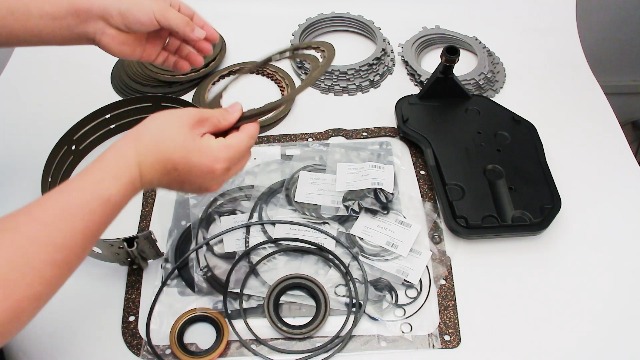
Image: A visual representation of the various components included in a typical 4L60E transmission rebuild kit, such as friction plates, steel plates, bands, seals, and the transmission filter.
Disassembly and Assembly Procedures
Follow the sequential steps outlined in this manual for proper disassembly and reassembly of the 4L60E transmission. Pay close attention to torque specifications and component orientation to ensure correct operation and longevity.
General Steps:
- Prepare the transmission for removal from the vehicle, ensuring all necessary safety precautions are taken.
- Drain transmission fluid completely into an appropriate container.
- Disassemble external components such as the pan, filter, and sensors.
- Systematically disassemble internal components, carefully noting their order, orientation, and condition. Use labeled containers for small parts.
- Inspect all parts for wear, damage, or fatigue. Refer to the manual for wear limits and inspection criteria.
- Replace worn or damaged components using appropriate rebuild kits and new parts as specified.
- Reassemble the transmission following the reverse order of disassembly, ensuring all seals, gaskets, and fasteners are correctly installed and torqued to specifications.
- Reinstall the transmission into the vehicle, connecting all lines, electrical connectors, and mounting hardware.
- Refill with the specified type and quantity of transmission fluid. Perform initial checks for leaks and proper function.
Diagnosis and Troubleshooting
This section provides guidance on identifying common issues and diagnosing problems within the 4L60E transmission. Accurate diagnosis is crucial for effective repair.
Common Symptoms and Potential Causes:
- No engagement in drive or reverse: Possible causes include low fluid level, clogged filter, faulty solenoids, or internal mechanical failure.
- Delayed engagement: Often indicative of low fluid, worn clutch packs, or a faulty valve body.
- Harsh shifts: May be caused by a faulty pressure control solenoid, worn valve body components, or electronic control unit (ECU) issues.
- Slipping: Common causes are worn clutch packs, low fluid pressure, or a faulty torque converter.
- Overheating: Can result from low fluid, restricted cooler lines, a faulty torque converter, or excessive internal friction.
Refer to the detailed diagnostic charts within the manual for specific troubleshooting steps and recommended repairs based on observed symptoms and diagnostic trouble codes (DTCs).
Specifications
| Attribute | Value |
|---|---|
| Manufacturer | ATSG |
| Brand | ATSG |
| Model | 4L60E |
| Item Weight | 10.5 ounces |
| Package Dimensions | 10.91 x 8.46 x 0.35 inches |
| Item Model Number | 4L60E |
| Exterior | Gloss Cover |
| Manufacturer Part Number | 4L60E |
| ASIN | B00Z1RFENA |
| Date First Available | June 6, 2015 |
Warranty and Support
For information regarding product warranty, technical support, or to inquire about additional resources such as the "Update Handbook," please contact ATSG directly or visit their official website. ATSG is the original author and illustrator of this manual, ensuring expert support.
You can also visit the ATSG Store on Amazon for more products and information.
