
1. Introduction
This manual provides detailed instructions for the installation, operation, and maintenance of the Tell Manufacturing Grade 3 Commercial Door Closer, model DC100001. This heavy-duty aluminum door closer is designed for commercial interior and exterior wood and metal doors. It complies with ANSI A156.4 standards and is UL/ULC listed for up to 3-hour fire-rated applications. Please read these instructions thoroughly before installation and use to ensure proper function and safety.
2. Product Features
- Grade 3 Heavy-Duty Construction: Designed for commercial use with a 500,000 cycle rating.
- ANSI A156.4 Compliant: Meets industry standards for door closers.
- UL/ULC Listed: Suitable for up to 3-hour fire-rated doors.
- Non-Handed Design: Versatile for regular, top jamb, or parallel arm mounting applications.
- Fixed Spring Tension: Size 3 spring tension for consistent closing force.
- Dual Independent Closing Speed Adjustment: Allows for precise control over closing and latching speeds.
- Door Compatibility: Suitable for interior and exterior wood and metal doors.
- Retrofit Capability: Mounting hole locations (9-1/16 In. horizontal and 3/4 In. vertical) are designed to retrofit traditional closers.

Figure 1: Key features of the Tell Manufacturing Commercial Door Closer, including suitability for wood and metal doors, non-handed design, and dual speed adjustment.
3. Safety Information
- Always wear appropriate personal protective equipment (PPE), such as safety glasses and gloves, during installation.
- Ensure the door is properly supported and secured before beginning installation to prevent accidental movement.
- Do not overtighten screws, as this can damage the door or closer components.
- Improper installation or adjustment can lead to injury or damage to the door and closer. If unsure, consult a qualified professional.
- Keep hands and fingers clear of moving parts during operation and adjustment.
4. Installation
The Tell Manufacturing DC100001 door closer is non-handed, allowing for flexible installation on various door types and configurations. It can be mounted in regular, top jamb, or parallel arm applications.
4.1. Mounting Applications
Refer to the diagrams below for standard commercial mounting applications:
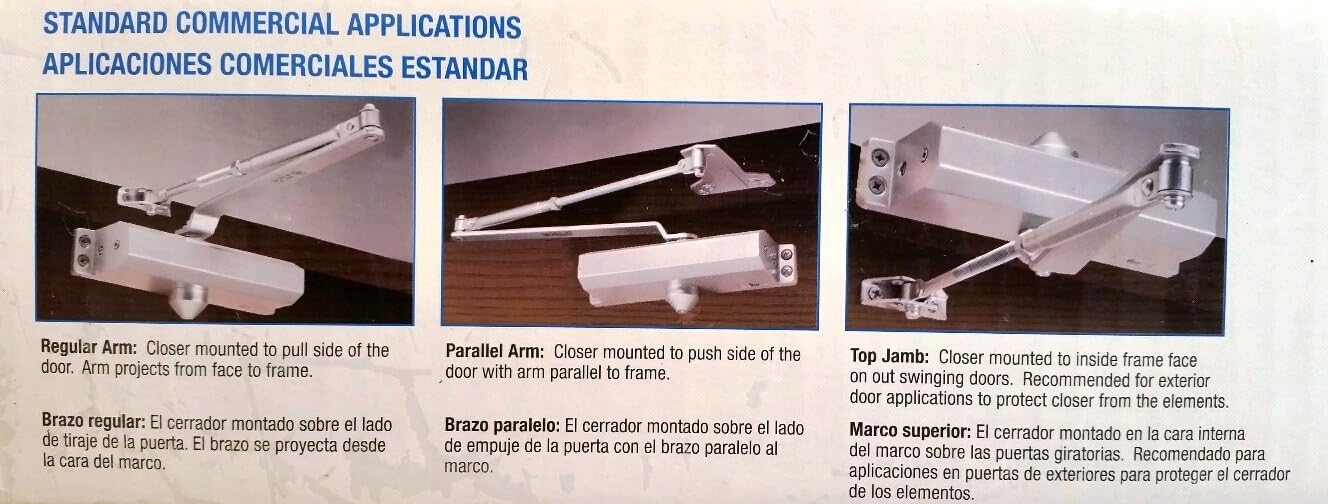
Figure 2: Illustrations of Regular Arm, Parallel Arm, and Top Jamb mounting configurations. Regular Arm mounts the closer to the pull side of the door, Parallel Arm to the push side, and Top Jamb to the inside frame face on out-swinging doors, recommended for exterior applications to protect the closer.
- Regular Arm: Closer mounted to the pull side of the door. The arm projects from the face to the frame.
- Parallel Arm: Closer mounted to the push side of the door with the arm parallel to the frame.
- Top Jamb: Closer mounted to the inside frame face on out-swinging doors. This application is recommended for exterior door installations to protect the closer from environmental elements.
4.2. Door Preparation and Closer Size Selection
The door closer requires specific mounting hole locations: 9-1/16 inches horizontal and 3/4 inches vertical. This pattern is designed to retrofit many traditional closers. Use the size chart below to determine the appropriate closer size based on your door's width and installation type.

Figure 3: Closer Size Chart indicating maximum door width for different installation types (Regular/Top Jamb, Parallel Arm) and locations (Interior/Exterior). Note that the DC100001 is a fixed size 3 closer.
Note: The DC100001 model has a fixed spring tension of Size 3. Ensure this size is appropriate for your door's width and usage as per the chart. Compliance with maximum opening force requirements for barrier-free accessibility (ADA) is based on a minimum 3'0" wide door, with proper hanging means, and the closer installed and adjusted according to instructions.
4.3. Retrofit Pattern
The mounting hole pattern for the DC100001 is designed to be compatible with common closer mounting holes, including those for Norton 1600 and Yale 50 series closers. This facilitates easier replacement of existing units.
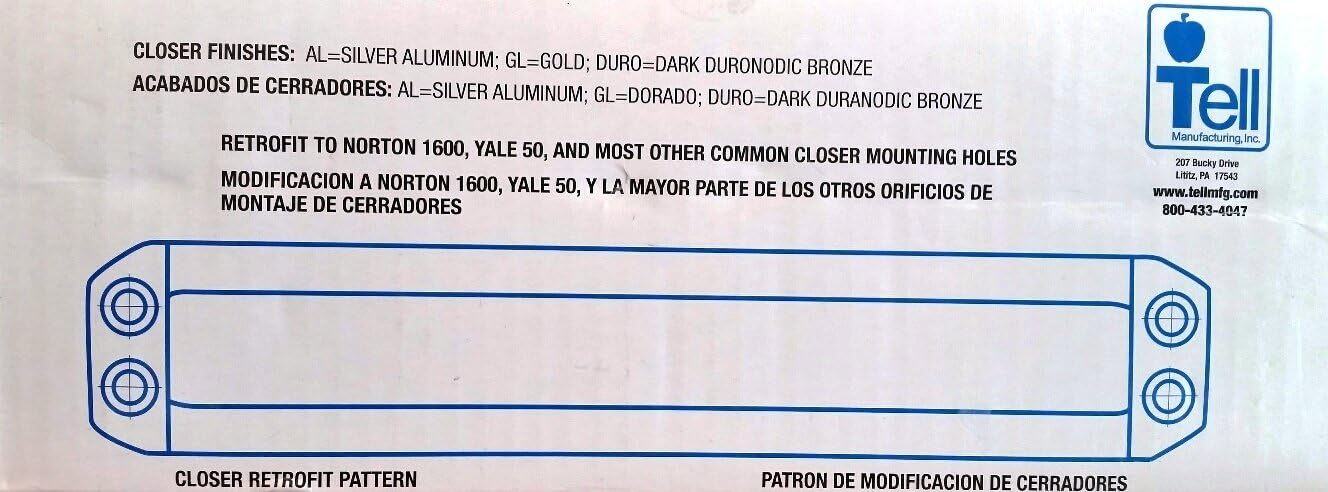
Figure 4: Diagram illustrating the closer retrofit pattern, showing the horizontal and vertical mounting hole locations for compatibility with various traditional closers.
Always use the provided mounting hardware and follow the specific template included with your product for precise hole drilling.
5. Operation and Adjustment
The DC100001 features dual independent closing speed adjustments, allowing you to control both the main closing speed and the latching speed of the door.
- Closing Speed: This adjustment controls the speed at which the door closes from its fully open position until approximately the last 10-15 degrees of closing. Turn the adjustment screw clockwise to slow down the closing speed, and counter-clockwise to increase it.
- Latching Speed: This adjustment controls the speed of the door for the final 10-15 degrees of closing, ensuring the door latches securely without slamming. Turn the adjustment screw clockwise to slow down the latching speed, and counter-clockwise to increase it.
Important: Make small adjustments at a time (e.g., quarter turns) and test the door's operation after each adjustment. Over-adjusting can damage the closer or cause the door to malfunction. Do not force adjustment screws beyond their limits.
6. Maintenance
Regular maintenance ensures the longevity and proper function of your door closer.
- Periodic Inspection: Annually inspect the closer body, arm, and mounting screws for any signs of wear, damage, or looseness.
- Cleaning: Wipe the closer body with a soft, damp cloth to remove dust and grime. Avoid abrasive cleaners or solvents.
- Lubrication: The internal mechanisms are factory-lubricated and generally do not require additional lubrication. If the arm joints become stiff, a small amount of silicone-based lubricant can be applied to the pivot points.
- Re-tighten Fasteners: Periodically check and re-tighten all mounting screws and arm fasteners to ensure secure attachment.
7. Troubleshooting
| Problem | Possible Cause | Solution |
|---|---|---|
| Door slams shut. | Latching speed set too fast. | Slow down the latching speed adjustment (clockwise turn). |
| Door closes too slowly or doesn't latch. | Closing or latching speed set too slow. | Increase closing or latching speed adjustment (counter-clockwise turn). |
| Door does not close completely. | Insufficient spring tension (fixed size 3, check door weight/width compatibility); improper installation; door hinges binding. | Verify door closer size is appropriate for door. Check for proper installation and alignment. Lubricate or repair door hinges if binding. |
| Closer makes unusual noise. | Loose mounting screws; worn arm components; internal issue. | Check and tighten all mounting screws. Inspect arm for wear. If noise persists, contact customer support. |
| Oil leakage from closer body. | Damaged seals; internal component failure. | This indicates a serious issue. The closer should be replaced. Contact customer support. |
8. Specifications
| Feature | Detail |
|---|---|
| Model Number | DC100001 |
| Brand | Tell |
| Closer Series | 300 Series |
| Grade | Grade 3 (500,000 cycles) |
| Spring Tension | Fixed Size 3 |
| Material | Cast Aluminum |
| Finish | Silver Aluminum |
| Compliance | ANSI A156.4, UL/ULC Listed (up to 3-hour fire rated) |
| Mounting Applications | Regular, Top Jamb, Parallel Arm |
| Door Type | Wood and Metal |
| Use Location | Interior/Exterior Commercial |
| Door Range | Up to 180 degrees |
| Item Weight | 5.6 pounds |
| Package Dimensions | 12.8 x 5.1 x 3.4 inches |
| UPC | 737874123435 |
9. Warranty and Support
For warranty information, technical support, or replacement parts, please contact Tell Manufacturing directly. Specific warranty terms may vary and are typically provided with the product packaging or available on the manufacturer's website.
Manufacturer: Tell Manufacturing, Inc.
Website: www.tellmfg.com
Phone: 800-433-4047
Address: 207 Buckley Drive, Lititz, PA 17543

