
Introduction
The Ultrasharp II Diamond Sharpening Stone 300 Grit (Coarse) is designed for efficient and effective sharpening of various cutting tools. This manual provides essential information for the proper use and care of your sharpening stone to ensure optimal performance and longevity.

Image: The Ultrasharp II Diamond Sharpening Stone 300 Grit (Coarse).
Product Features
- 300 Grit Coarse Diamond Plate: Specifically designed for repairing dull or damaged edges quickly.
- Ultra-Fast Diamond Abrasive: Engineered with monocrystalline diamonds for significantly faster sharpening compared to traditional whetstones.
- Durable & Stay-Flat Design: Unlike waterstones, this plate remains flat, providing consistent precision sharpening throughout its lifetime. It sharpens the hardest steels with ease.
- Mess-Free Operation: Requires no soaking in water or messy oils. Use with glass cleaner for simple, hassle-free sharpening and cleaning.
- Versatile Use: Suitable for a variety of knives, woodworking tools, and other cutting implements.
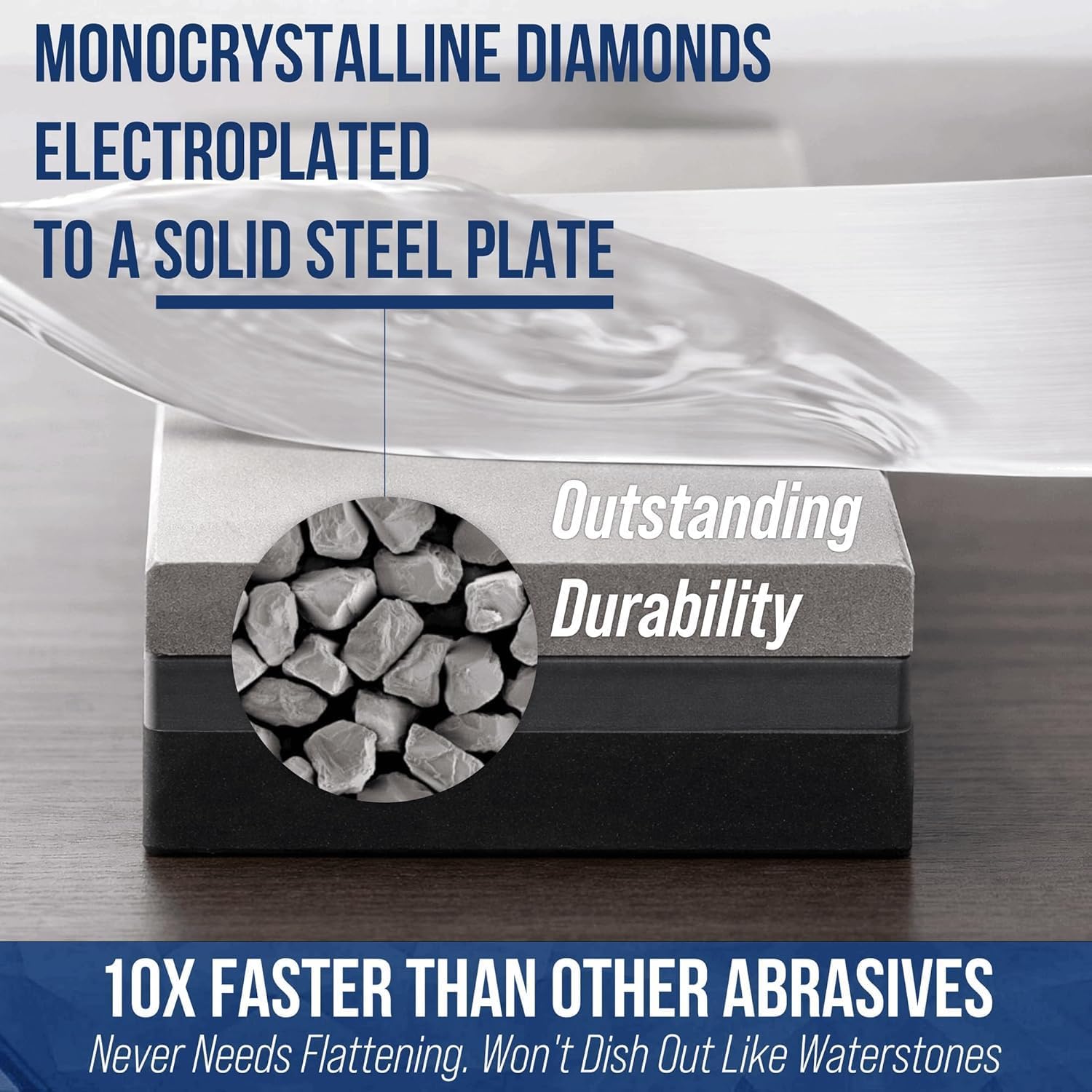
Image: Close-up view illustrating monocrystalline diamonds electroplated onto a solid steel plate, highlighting the durable construction.
Setup
The Ultrasharp II Diamond Sharpening Stone requires minimal setup. It is ready for use directly out of the packaging.
- Unpack the sharpening stone from its packaging.
- Place the stone on a stable, flat surface. For added stability, you may place a damp cloth or non-slip mat underneath the stone.
- Ensure you have a spray bottle with glass cleaner or water nearby for lubrication during sharpening.
Operating Instructions
Follow these steps for effective sharpening with your 300 Grit Coarse diamond stone:
- Prepare the Stone: Lightly spray the surface of the diamond sharpening stone with glass cleaner or water. This acts as a lubricant and helps to float away metal particles.
- Determine Sharpening Angle: Maintain a consistent angle for your blade. For most kitchen knives, an angle between 15-20 degrees per side is common. For woodworking tools, the angle may vary. Using a sharpening guide can help maintain consistency.
- Sharpening Technique:
- Place the blade edge against the stone at your desired angle.
- Apply light, consistent pressure. The diamond abrasive works efficiently with minimal force.
- Push the blade across the stone, leading with the edge, as if trying to slice a thin layer off the stone.
- Repeat this motion several times on one side of the blade.
- Flip the blade and repeat the process on the other side, maintaining the same angle and pressure.
- Continue alternating sides until a burr (a slight wire edge) forms along the entire length of the blade on the opposite side you are sharpening. This indicates you have reached the edge.
- Burr Removal: Once a burr is formed, reduce pressure and make a few very light passes on each side to remove it. You can also strop the blade on a piece of leather or fine abrasive to refine the edge further.
- Clean the Blade: Wipe the sharpened blade clean to remove any metal filings before use.
Note: The 300 Grit stone is coarse and is primarily used for repairing very dull, chipped, or damaged edges. For a finer, sharper edge, follow up with a higher grit sharpening stone (e.g., 600 grit, 1200 grit, or higher).

Image: A person demonstrating the sharpening process of a knife on the diamond sharpening stone, which is secured in a holder.

Image: The diamond sharpening stone being used to sharpen a variety of tools, including a knife, a pocket knife, and a chisel.
Maintenance
Maintaining your Ultrasharp II Diamond Sharpening Stone is simple due to its durable design:
- Cleaning: After each use, spray the stone with glass cleaner or water and wipe it clean with a cloth or paper towel to remove any metal swarf. This prevents clogging and maintains the stone's effectiveness.
- No Flattening Required: Unlike traditional waterstones, diamond stones do not dish or groove, so they never require flattening.
- Storage: Store the sharpening stone in a dry place to prevent rust on the steel base, although the diamond surface itself is highly resistant to corrosion.
Troubleshooting
If you encounter issues while using your sharpening stone, consider the following:
- Stone not sharpening effectively:
- Ensure the stone is clean and free of metal particles.
- Verify you are using the correct sharpening angle for your tool.
- Apply light, consistent pressure. Excessive pressure can hinder effective sharpening.
- Blade not getting sharp:
- Confirm you are forming a burr on the opposite side of the edge you are sharpening. This indicates you have reached the apex of the edge.
- For a truly sharp edge, especially for fine cutting tasks, you will need to progress to higher grit stones after using the 300 grit coarse stone.
For further assistance, please refer to the Warranty & Support section.
Specifications
| Model | 300 Grit (Coarse) |
| Material | Diamonds, Steel |
| Color | Silver |
| Product Dimensions (L x W x H) | 6" x 2" x 0.25" |
| Item Weight | 1.1 Pounds |
| UPC | 617401201181 |
| ASIN | B00SJZ6LM4 |

Image: The Ultrasharp II Diamond Sharpening Stone with its dimensions (6" x 2") indicated.
Warranty & Support
100% Guarantee: Ultrasharp stands by its sharpeners. If this diamond sharpening stone ever fails to perform as expected, it will be replaced or refunded, no questions asked.
For product support, warranty claims, or any inquiries, please contact Ultrasharp customer service through their official channels or visit their brand store: