
1. Product Overview
The Spy TPMS (Tire Pressure Monitoring System) is designed to provide real-time tire pressure and temperature data directly to your smartphone. This system utilizes four internal sensors and a receiver that plugs into your vehicle's cigarette lighter. It communicates via Bluetooth 4.0 with a dedicated app available for iOS devices, offering a convenient way to monitor your tires for enhanced safety and performance.
Key features include:
- Real-time monitoring of tire pressure and temperature for all four wheels.
- Bluetooth 4.0 connectivity with a free iOS smartphone application.
- Four internal sensors for precise and reliable data collection.
- Cigarette lighter receiver with integrated visual and audible alarms.
- Adjustable minimum and maximum alert thresholds for pressure and temperature.
- Reusable sensors, eliminating the need for replacement during tire rotation.
- Suitable for vehicles with tire pressures up to 3.3 bar (47 psi).
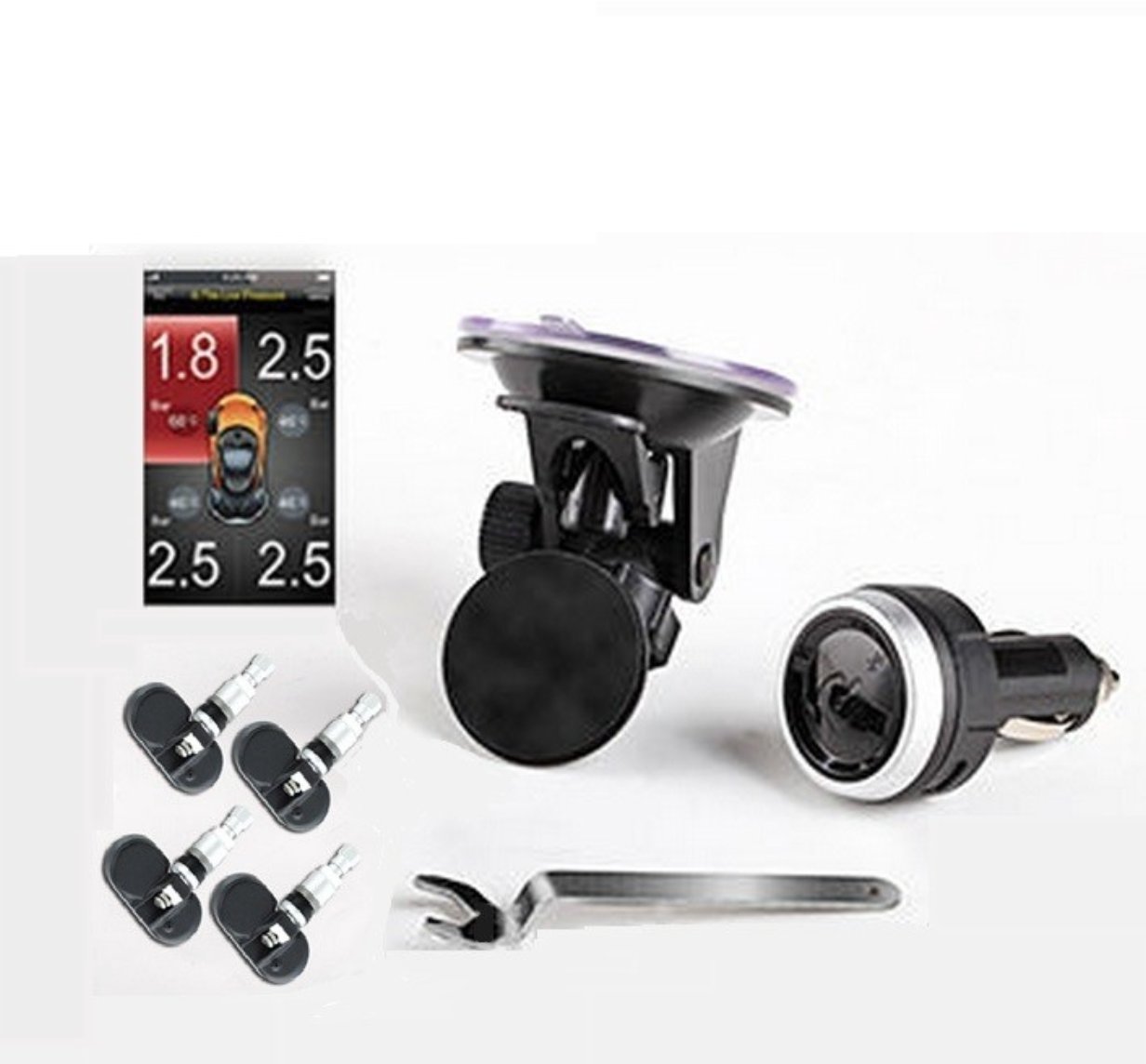
Image 1.1: The Spy TPMS system in a car interior, showing the receiver, gear shift, and a smartphone displaying real-time tire pressure and temperature data via the app interface.
2. Package Contents
Before installation, please ensure all components are present:
- 4 x Internal TPMS Sensors
- 1 x Cigarette Lighter Receiver
- 1 x Suction Cup Mount (for receiver)
- 1 x Installation Tool
- 1 x User Manual (this document)

Image 2.1: All components included in the Spy TPMS kit, featuring four internal tire pressure sensors, a suction cup mount for the receiver, the cigarette lighter power receiver, and a specialized installation tool.
3. Setup and Installation
3.1. Internal Sensor Installation
The internal sensors are installed inside the tire rim. Professional installation by a qualified tire technician is highly recommended to ensure proper mounting, balancing, and sealing of the tire. Incorrect installation can lead to tire damage, sensor malfunction, or safety hazards.
- Deflate the tire completely.
- Remove the tire from the wheel rim.
- Mount the internal sensor onto the valve stem opening from the inside of the rim, ensuring it is securely fastened.
- Re-mount the tire onto the rim and inflate to the recommended pressure.
- Balance the wheel assembly.
- Repeat for all four wheels.
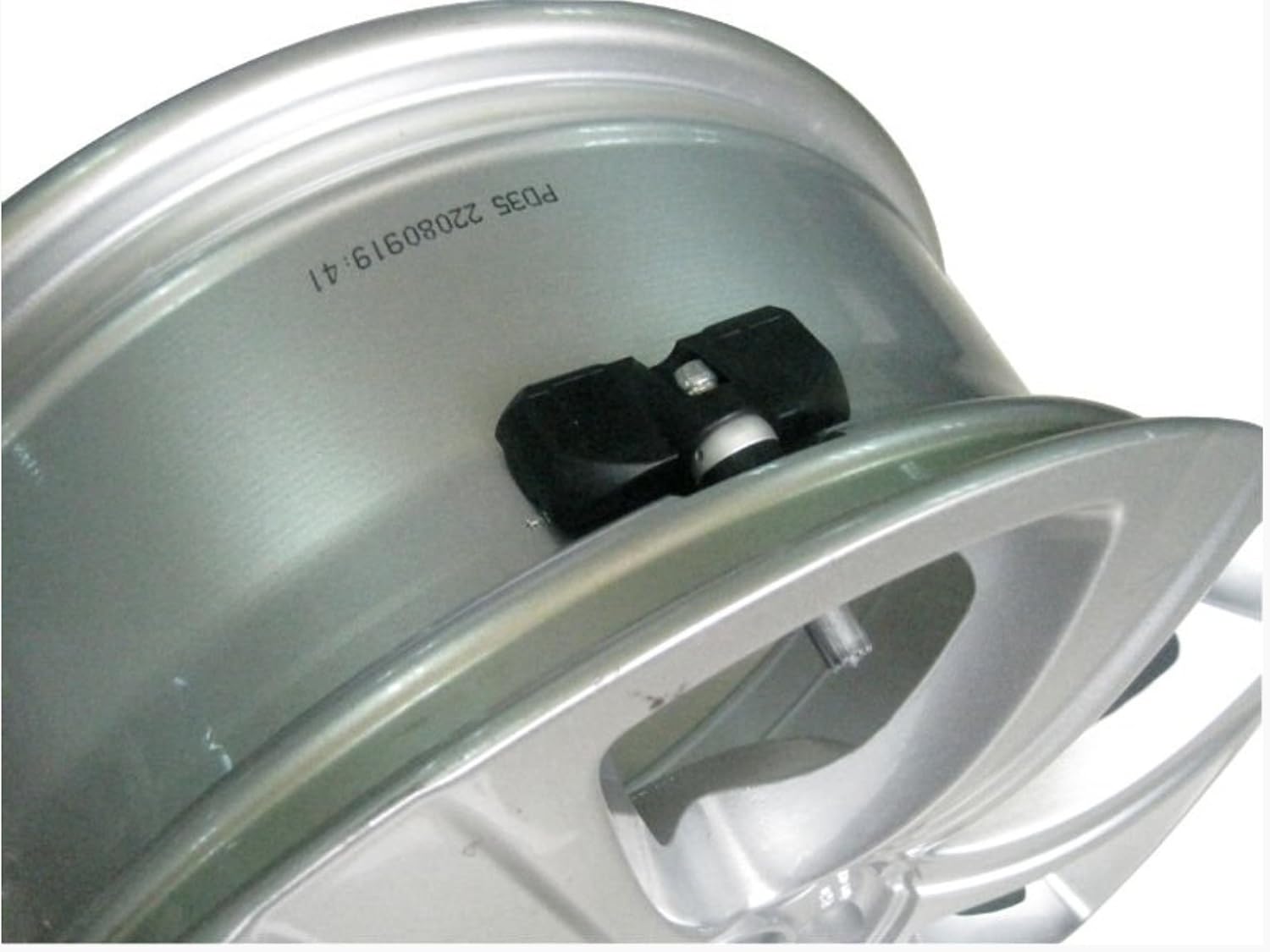
Image 3.1: A close-up view of an internal TPMS sensor correctly mounted inside a vehicle's wheel rim, illustrating its placement relative to the valve stem.

Image 3.2: A diagram illustrating the wireless communication from a tire-mounted sensor and a separate view of an adjustable sensor component, highlighting its adaptability to various tire types.
3.2. Receiver Installation
- Plug the receiver into your vehicle's 12V cigarette lighter socket.
- Ensure the receiver powers on (indicated by an LED light, if present).
- Position the receiver using the provided suction cup mount for optimal visibility and signal reception, if desired.
3.3. Smartphone App Download and Pairing
- Download the "Spy TPMS" application from the Apple App Store on your iOS smartphone.
- Ensure Bluetooth is enabled on your smartphone.
- Open the "Spy TPMS" app.
- Navigate to the "Settings" option within the app.
- The app will automatically search for and connect to the TPMS receiver. Once connected, the system is ready for use.

Image 3.3: A smartphone screen displaying the Spy TPMS application. The left panel shows real-time tire pressure and temperature, while the right panel illustrates the 'Settings' menu where alert thresholds can be configured.
4. Operating Instructions
4.1. Monitoring Tire Data
Once the app is connected to the receiver, the main screen will display the current pressure and temperature for each of your four tires. The data updates in real-time as you drive.
4.2. Understanding Alerts
The system is designed to alert you to abnormal tire conditions. Alerts are triggered by:
- High Pressure: Tire pressure exceeds the set maximum threshold.
- Low Pressure: Tire pressure falls below the set minimum threshold.
- Rapid Air Leak: A sudden and significant drop in tire pressure.
- High Temperature: Tire temperature exceeds the set maximum threshold.
When an alert is triggered, the receiver will emit an audible alarm and display a visual warning. The smartphone app will also show a notification and highlight the affected tire(s).
4.3. Adjusting Alert Thresholds
You can customize the pressure and temperature alert thresholds within the "Settings" menu of the "Spy TPMS" app. This allows you to set parameters that are appropriate for your vehicle's specific requirements.
- Open the "Spy TPMS" app.
- Go to "Settings".
- Select options such as "High Pressure (Bar)", "Low Pressure (Bar)", or "High Temperature (°C)".
- Adjust the values to your desired limits.
- You can also reset to default values if needed.
5. Maintenance
5.1. Sensor Care
The internal sensors are designed for durability. As they are installed inside the tire, they are protected from external elements. These sensors are reusable, meaning they do not need to be replaced when rotating tires.
- Ensure proper tire inflation and balancing after any tire service to prevent damage to the sensors.
- While sensors have a long lifespan, battery life is finite. If a sensor stops transmitting data, it may require replacement. Consult a professional for sensor replacement.
5.2. Receiver Care
Keep the receiver clean and free from dust. Avoid exposing it to extreme temperatures or direct moisture. Ensure it is securely plugged into the cigarette lighter socket to maintain a stable power supply.
6. Troubleshooting
6.1. No Data Displayed on App
- Check Receiver Power: Ensure the receiver is properly plugged into the cigarette lighter and powered on.
- Bluetooth Connection: Verify that Bluetooth is enabled on your smartphone and the app is successfully paired with the receiver. Go to the app's "Settings" to re-establish the connection if necessary.
- App Status: Close and restart the "Spy TPMS" app.
- Sensor Functionality: If only one or some tires are not displaying data, the specific sensor(s) might be malfunctioning or have a depleted battery. Professional inspection is recommended.
6.2. Inaccurate Readings
- Manual Verification: Use a reliable manual tire pressure gauge to verify the readings.
- Sensor Calibration: Ensure sensors were installed correctly and the tires are properly inflated to the manufacturer's recommended pressure.
- Environmental Factors: Tire pressure naturally fluctuates with temperature. Significant temperature changes can affect readings.
6.3. Persistent Alarms
- Check Tire Condition: Immediately check the tire(s) indicated by the alarm for low pressure, rapid leaks, or excessive temperature. Address any issues promptly.
- Adjust Thresholds: If alarms are false or too frequent, review and adjust the alert thresholds in the app's "Settings" to match your vehicle's specifications and driving conditions.
7. Specifications
| Model Number | EL03001 |
| Brand | Spy |
| Connectivity | Bluetooth 4.0 |
| Sensor Type | Internal |
| Number of Sensors | 4 |
| Max Pressure Range | 3.3 bar (47 psi) |
| Compatibility | iOS Smartphones (via "Spy TPMS" app) |
| Power Source (Receiver) | 12V Car Cigarette Lighter |
| ASIN | B00RRX0VM0 |
| First Available Date | November 6, 2018 |

Image 7.1: A detailed view of a single Spy internal TPMS sensor, showing its design and various certification markings such as SPY LP505(TPMS), 433.92MHZ, ISO/TS 16949, CE, and FC.
8. Warranty and Support
For warranty information and technical support, please refer to the documentation provided with your purchase or contact Spy customer service directly. Keep your proof of purchase for warranty claims.