Important Safeguards
When using electrical appliances, basic safety precautions should always be followed to reduce the risk of fire, electric shock, and injury to persons, including the following:
- Read all instructions thoroughly before operating the appliance.
- Do not touch hot surfaces. Always use oven mitts or pot holders when handling hot parts or bread.
- To protect against electric shock, do not immerse the power cord, plugs, or the appliance itself in water or other liquid.
- Close supervision is necessary when any appliance is used by or near children.
- Unplug the bread machine from the outlet when not in use and before cleaning. Allow it to cool completely before attaching or removing parts.
- Do not operate any appliance with a damaged cord or plug, or after the appliance malfunctions or has been damaged in any manner. Contact an authorized service facility for examination, repair, or adjustment.
- The use of accessory attachments not recommended by the appliance manufacturer may cause injuries.
- Do not use outdoors. This appliance is for indoor household use only.
- Do not let the power cord hang over the edge of a table or counter, or touch hot surfaces.
- Do not place the appliance on or near a hot gas or electric burner, or in a heated oven.
- Extreme caution must be used when moving an appliance containing hot oil or other hot liquids.
- To disconnect, turn any control to the "off" position, then remove the plug from the wall outlet.
- Do not use the appliance for other than its intended use.
- This appliance has a polarized plug (one blade is wider than the other). To reduce the risk of electric shock, this plug will fit into a polarized outlet only one way. If the plug does not fit fully in the outlet, reverse the plug. If it still does not fit, contact a qualified electrician. Do not modify the plug in any way.
SAVE THESE INSTRUCTIONS
Product Overview
The Westinghouse Bread Machine Model WBB4500 is designed to simplify the bread-making process, allowing you to enjoy fresh, homemade bread with minimal effort. This section provides an overview of the main components and their functions.
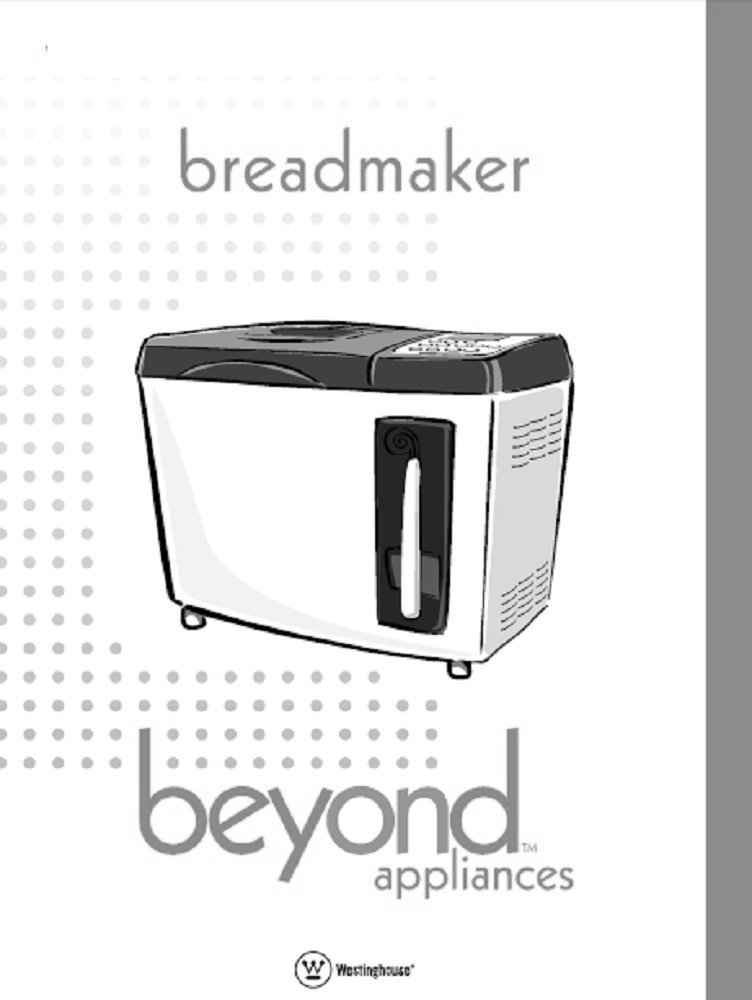
Image: The Westinghouse Bread Machine WBB4500, showcasing its compact design and user-friendly control panel. This image illustrates the general appearance of the bread machine.
Key Components:
- Lid with Viewing Window: Allows you to monitor the bread-making process without opening the lid.
- Control Panel: Features buttons for program selection, start/stop, crust color, and loaf size. Includes an LCD display.
- Baking Pan: Removable non-stick pan for easy bread removal and cleaning.
- Kneading Paddle: Detachable paddle for mixing and kneading dough.
- Measuring Cup and Spoon: Provided for accurate ingredient measurement, crucial for successful bread making.
- Heating Element: Located at the bottom of the machine, responsible for baking the bread.
Setup
Before using your Westinghouse Bread Machine for the first time, please follow these setup steps:
- Unpacking: Carefully remove the bread machine and all accessories from its packaging. Inspect for any damage. Retain the packaging for future storage or transport.
- Initial Cleaning: Before first use, wipe the exterior of the bread machine with a damp cloth. Wash the baking pan and kneading paddle with warm, soapy water, then rinse and dry thoroughly. Do not use abrasive cleaners.
- Placement: Place the bread machine on a stable, flat, heat-resistant surface. Ensure there is adequate ventilation around the appliance and keep it away from direct sunlight and heat sources.
- Power Connection: Plug the power cord into a grounded electrical outlet. The machine will emit a short beep, and the default program will display on the LCD screen, indicating it is ready for use.
Operating Instructions
Basic Bread Making Steps:
- Insert Kneading Paddle: Ensure the kneading paddle is correctly placed onto the shaft inside the baking pan.
- Add Ingredients: Add ingredients to the baking pan in the precise order specified by your recipe. Typically, this means liquids first, followed by dry ingredients, with yeast added last and kept separate from liquids and salt initially. Accurate measurement is critical.
- Place Pan in Machine: Insert the baking pan into the bread machine's baking chamber, pressing down firmly until it clicks securely into place. Close the lid.
- Select Program: Use the "Menu" button on the control panel to cycle through and select the desired program (e.g., Basic, French, Whole Wheat).
- Select Loaf Size and Crust Color: Use the "Loaf Size" and "Crust Color" buttons to adjust these settings according to your preference and recipe requirements.
- Start Baking: Press the "Start/Stop" button to begin the selected program. The machine will automatically perform all necessary cycles: kneading, rising, and baking.
- Remove Bread: Once the program is complete, the machine will beep. Unplug the machine and carefully remove the hot baking pan using oven mitts.
- Cool Bread: Invert the pan to release the bread onto a wire rack. If the kneading paddle remains embedded in the bread, carefully remove it with a non-metallic utensil. Allow the bread to cool for at least 30 minutes before slicing for best results.
Program Settings:
The Westinghouse WBB4500 offers various programs to suit different bread types and preferences:
| Program | Description | Typical Use |
|---|---|---|
| Basic | For white and mixed breads, primarily using basic bread flour. | Everyday white bread, sandwich bread. |
| French | For light breads made from fine flour. Features a longer rising time for a crispier crust. | Crusty French bread, Italian bread. |
| Whole Wheat | Specifically designed for breads containing whole wheat flour. Includes a longer preheating time. | Nutritious whole wheat loaves, multigrain bread. |
| Sweet | For breads with high sugar, fat, and protein content. | Brioche, cinnamon swirl bread, fruit bread. |
| Dough | Prepares dough for rolls, pizza, or pastries that will be baked in a conventional oven. | Pizza dough, dinner rolls, bagels. |
| Bake | For baking only, without kneading or rising. Useful for additional baking time or baking pre-made dough. | Re-baking, baking pre-made dough, cakes. |
| Rapid | For quick bread making, typically for smaller loaves. Reduces overall program time. | Quick white bread when time is limited. |
| Ultra Fast | An even faster option for very quick bread making, usually for smaller loaves. | Emergency bread, very quick white bread. |
| Jam | For making homemade jams and marmalades. | Fruit jams, marmalades. |
| Sandwich | Produces bread with a light texture and a thinner, softer crust, ideal for sandwiches. | Soft sandwich bread. |
| Gluten Free | Optimized for gluten-free recipes, accommodating the unique properties of gluten-free flours. | Gluten-free bread. |
Maintenance and Cleaning
Proper maintenance and regular cleaning will ensure the longevity and optimal performance of your bread machine.
Cleaning the Bread Machine:
- Unplug and Cool: Always unplug the appliance from the power outlet and allow it to cool completely before attempting any cleaning.
- Baking Pan and Kneading Paddle: Remove the baking pan and kneading paddle. Wash them with warm, soapy water using a soft sponge or cloth. Do not use abrasive cleaners, metal scouring pads, or harsh chemicals, as these can damage the non-stick coating. Rinse thoroughly and dry completely.
- Interior: Wipe the interior of the baking chamber with a damp cloth to remove any crumbs or flour residue. Ensure no water enters the heating element area.
- Exterior: Wipe the exterior surface of the bread machine with a damp cloth. Never immerse the main unit in water or any other liquid.
- Lid: Clean the lid, especially the viewing window, with a damp cloth.
Storage:
Ensure the bread machine is completely clean and dry before storing. Store it in a cool, dry place, away from direct sunlight and extreme temperatures. You may keep the kneading paddle inside the baking pan for convenient storage.
Troubleshooting
If you encounter issues with your bread machine, refer to the following table for common problems and their solutions:
| Problem | Possible Cause | Solution |
|---|---|---|
| Bread does not rise. | Expired or inactive yeast, incorrect water temperature, too much salt, or incorrect program selected. | Check yeast expiration date and ensure it is fresh. Use lukewarm water (105-115°F / 40-46°C). Reduce salt amount. Select the appropriate program for your recipe. |
| Bread is too dense or heavy. | Too much flour, too little liquid, or insufficient kneading. | Measure ingredients precisely using the provided measuring cup and spoon. Ensure proper liquid-to-flour ratio. Verify the kneading paddle is correctly installed. |
| Bread collapses during baking. | Too much liquid, too much yeast, or high humidity. | Slightly reduce the amount of liquid or yeast in your recipe. Store ingredients in a cool, dry place. |
| Kneading paddle stuck in bread. | This is a common occurrence with bread machines. | Allow the bread to cool slightly, then carefully remove the paddle with a non-metallic utensil to avoid scratching the pan. |
| Machine does not start or respond. | Not plugged in, power outage, or "Start/Stop" button not pressed firmly. | Check that the power cord is securely plugged into a working electrical outlet. Ensure there is no power outage. Press the "Start/Stop" button firmly until you hear a beep. |
Specifications
Technical specifications for the Westinghouse Bread Machine Model WBB4500:
- Model: WBB4500
- Power Supply: 120V ~ 60Hz
- Power Consumption: 600W
- Loaf Sizes: 1.5 lb, 2.0 lb
- Programs: Basic, French, Whole Wheat, Sweet, Dough, Bake, Rapid, Ultra Fast, Jam, Sandwich, Gluten Free
- Crust Colors: Light, Medium, Dark
- Dimensions (approx.): 14.5 inches (L) x 10.5 inches (W) x 12 inches (H)
- Weight (approx.): 12 lbs
Warranty and Support
This document is a reprint of the instruction manual for the Westinghouse Bread Machine Model WBB4500. For specific warranty information regarding your appliance, please refer to the original documentation provided with your purchase or contact Westinghouse customer support directly. Warranty terms typically cover manufacturing defects for a limited period from the date of purchase.
For technical support, spare parts, or service inquiries, please visit the official Westinghouse website or contact their customer service department. It is recommended to keep your purchase receipt as proof of purchase for any warranty claims.
Note: As this document is a reprint, it does not constitute an official warranty statement. Always refer to the original product warranty card.


