
Introduction
This manual provides essential instructions for the safe and effective use of your Panasonic Lumix DMC-LX100 Digital Camera. Please read this manual thoroughly before using the camera and retain it for future reference.
1. Setup
1.1 Battery Installation and Charging
Insert the battery into the camera's battery compartment. Ensure it clicks into place. Use the provided external battery charger to charge the battery fully before first use. The charging indicator will show the charging status.
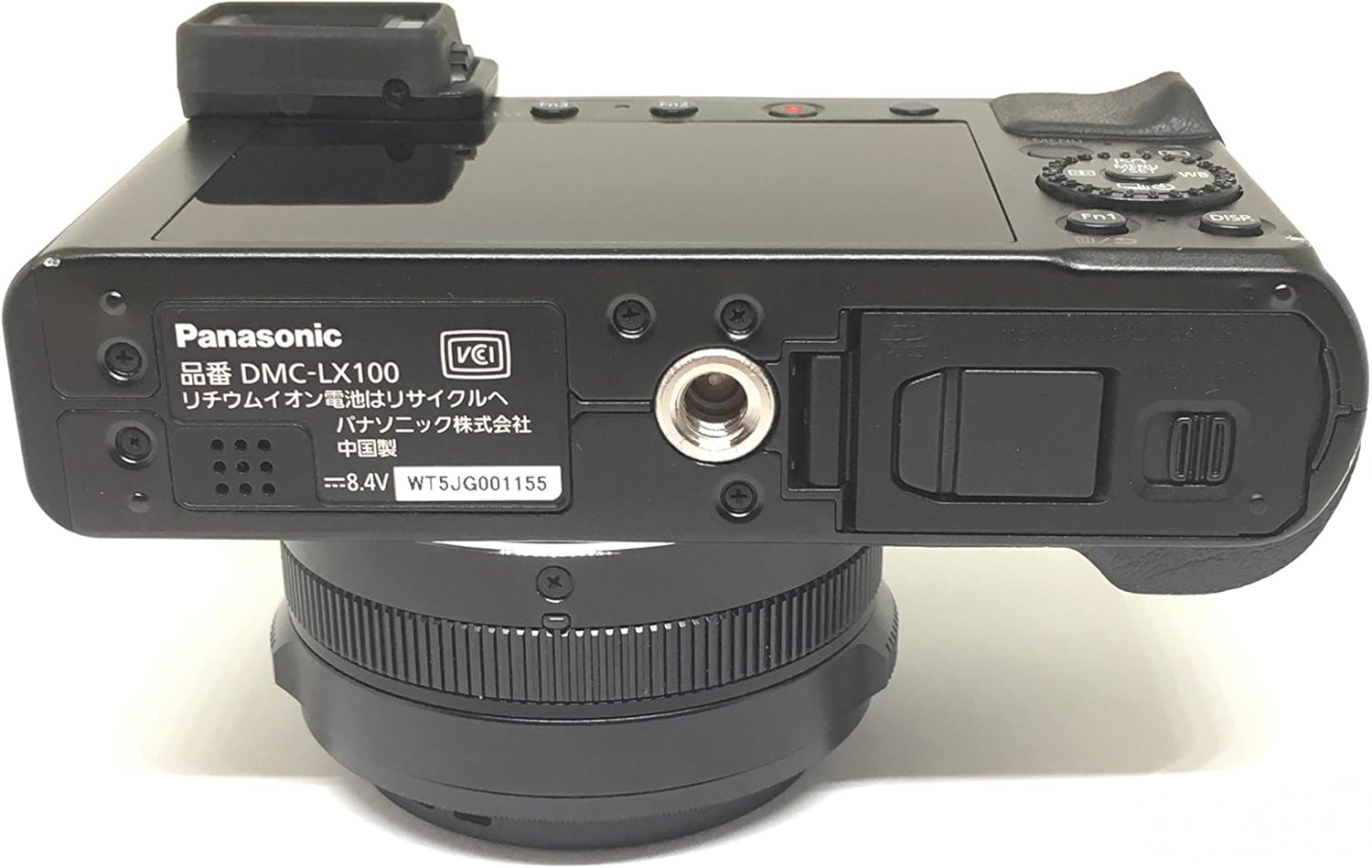
Image: Bottom view of the camera, illustrating the battery compartment and tripod mount location. The battery should be inserted here.
1.2 Initial Power-On and Basic Settings
After installing a charged battery, turn on the camera. The first time you power on, you will be prompted to set the language, time zone, and date. Follow the on-screen instructions to configure these settings.
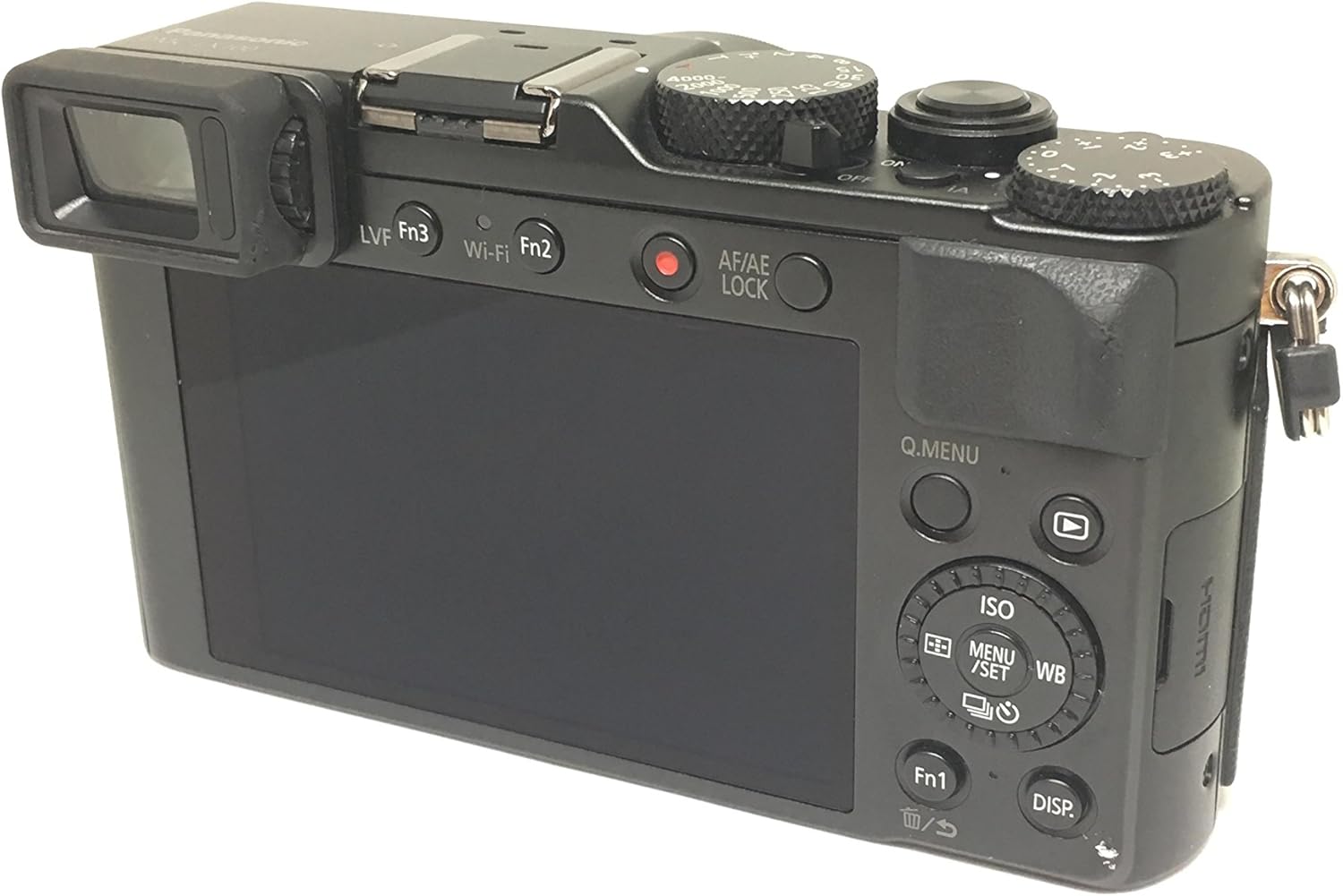
Image: Rear view of the camera, showing the LCD screen and various control buttons used for menu navigation and setting adjustments.
1.3 Memory Card Insertion
Open the memory card slot cover, typically located near the battery compartment. Insert a compatible SDXC memory card (UHS Class 3, V30 recommended for 4K video) with the contacts facing the correct direction until it clicks into place. Close the cover securely.
2. Operating the Camera
2.1 Basic Photography
The DMC-LX100 offers extensive manual controls for photography. Key controls include:
- Shutter Speed Dial: Located on the top plate, adjust this dial to control the exposure time.
- Aperture Ring: Located on the lens, rotate this ring to adjust the lens aperture (f/1.7-f/2.8).
- Exposure Compensation Dial: Also on the top plate, use this to fine-tune exposure.
- Focus Mode Selector: On the lens barrel, switch between AF (Autofocus) and MF (Manual Focus).

Image: Top view of the camera, highlighting the physical dials for shutter speed, exposure compensation, and the aperture ring on the lens, designed for intuitive manual control.
To take a photo, compose your shot using either the electronic viewfinder (EVF) or the 3.0-inch display, then press the shutter button halfway to focus and fully to capture the image.
2.2 4K Ultra HD Video Recording
The camera supports 4K Ultra HD video recording at 30p. To start recording, press the dedicated video record button. Ensure you have a high-speed memory card (UHS Class 3 / V30) for optimal 4K performance.
2.3 Wi-Fi and NFC Connectivity
The DMC-LX100 features built-in Wi-Fi and NFC for wireless image transfer and remote control. Download the Panasonic Image App to your smartphone or tablet. Use NFC to quickly establish a connection with compatible devices, or connect via Wi-Fi through the camera's menu.
3. Maintenance
Proper maintenance ensures the longevity and performance of your camera.
- Lens Cleaning: Use a soft, lint-free cloth specifically designed for camera lenses to clean the front element. Avoid touching the lens surface with your fingers.
- Body Cleaning: Wipe the camera body with a dry, soft cloth. For stubborn dirt, slightly dampen the cloth with water.
- Sensor Dust: The DMC-LX100 has a fixed lens, which can make sensor cleaning challenging if dust accumulates. If you notice dust spots on your images, it is recommended to contact a professional service center for cleaning. Avoid attempting to clean the sensor yourself to prevent damage.
- Storage: When not in use, store the camera in a dry, cool place, away from direct sunlight and extreme temperatures.
4. Troubleshooting
This section addresses common issues you might encounter.
- Lens Not Extending/Retracting: If the lens mechanism appears stuck, first ensure the battery is fully charged. Power the camera off and on again. If the issue persists, avoid forcing the lens and contact customer support.
- Autofocus Hunting: If the camera struggles to achieve focus, try focusing on an area with more contrast. Ensure sufficient lighting. In some situations, switching to manual focus (MF) may be necessary.
- Aperture Dial Not Functioning Correctly: If the aperture ring does not adjust the f-stop beyond a certain point (e.g., F2.5), try powering the camera off and on. If the problem continues, this may indicate a mechanical issue requiring professional service.
- Camera Not Powering On: Check if the battery is correctly inserted and fully charged. Try using a different charged battery if available.
5. Specifications
| Feature | Detail |
|---|---|
| Model Name | DMC-LX100-K |
| Photo Sensor Resolution | 12.8 MP |
| Photo Sensor Size | Micro Four Thirds |
| Lens | 24-75mm Leica DC Vario-Summilux f/1.7-2.8 |
| Optical Zoom | 3.1x |
| Display Type | 3.0-Inch OLED |
| Video Resolution | 4K UHD 2160p |
| Connectivity | Wi-Fi, NFC, HDMI, USB |
| Image Stabilization | Digital, Hybrid |
| ISO Range (Expanded) | 100-25600 |
| Shutter Speed | 1/16000 to 1/4000 seconds |
| Supported File Format | JPEG, RAW |
| Weight | 0.35 Kilograms |
Note: Specifications are subject to change without notice. For the most current information, please refer to the official Panasonic website.
6. Warranty Information
This product may come with a manufacturer's warranty or a seller's warranty, depending on the region of purchase and retailer. Please refer to the warranty documentation included with your product or contact your point of purchase for specific details regarding warranty coverage, terms, and conditions. Keep your proof of purchase for warranty claims.
7. Customer Support
For further assistance, technical support, or service inquiries, please visit the official Panasonic support website or contact their customer service department. You may need your camera's model number (DMC-LX100) and serial number when contacting support.


