
Introduction
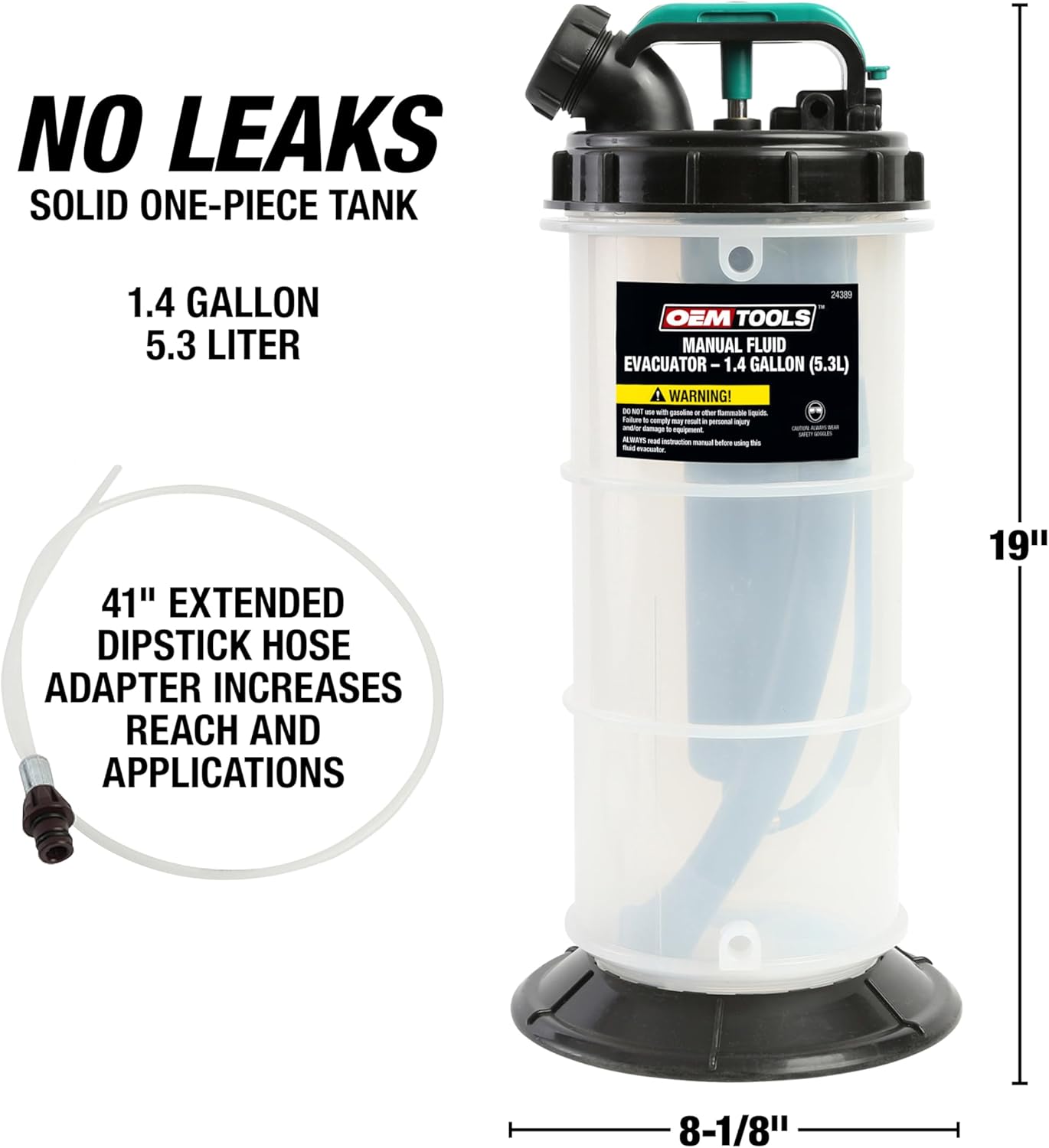
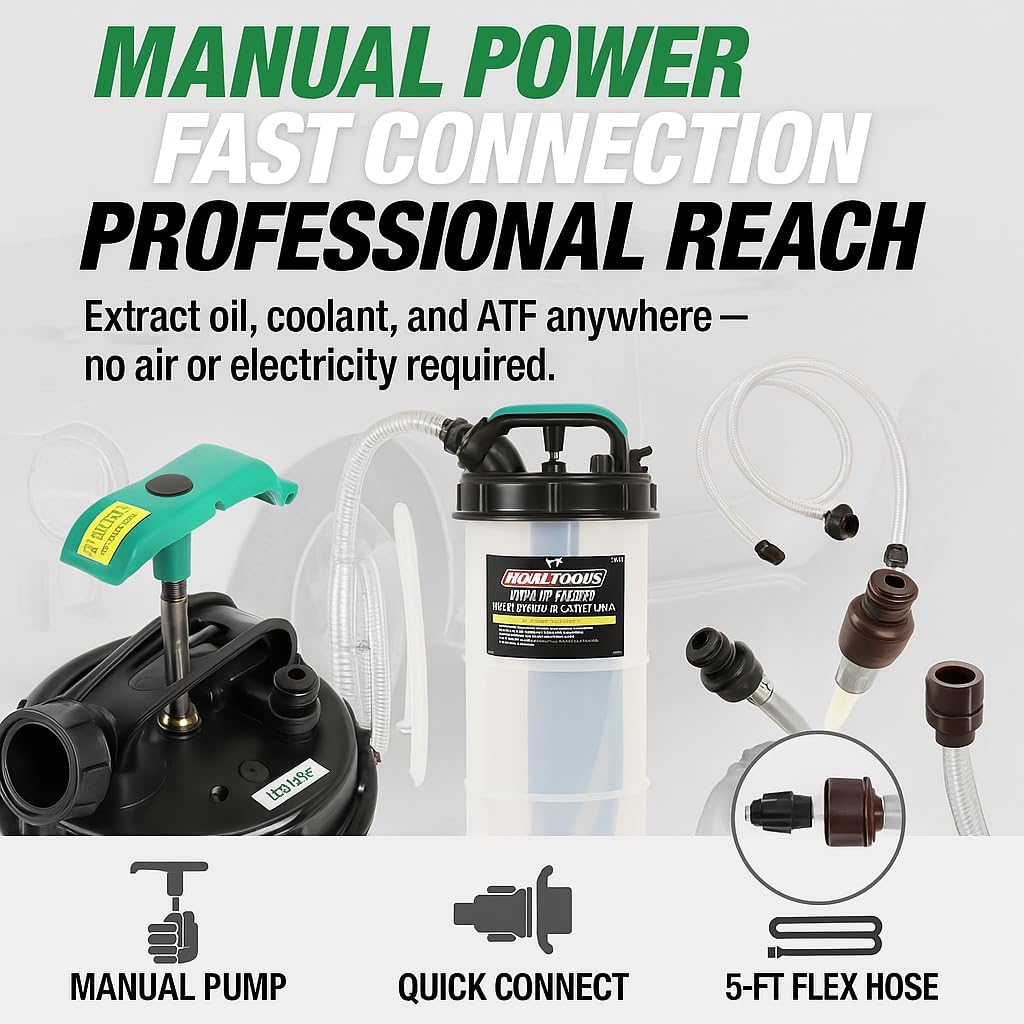
The OEMTOOLS 24389 Manual Fluid Extractor Pump is designed for the clean and efficient removal of various low-viscosity fluids from vehicles and industrial equipment. This device operates using a manual hand pump, eliminating the need for external power sources or compressed air. It is suitable for extracting engine oil, coolant, transmission fluid, gear oil, and water through dipstick tubes and other accessible points.
This manual provides essential information for the safe and effective operation, maintenance, and troubleshooting of your fluid extractor. Please read all instructions and safety warnings carefully before use.
Product Features
- Manual Pump Operation: Designed for fluid extraction using a hand pump, requiring no electricity or air, making it portable for various locations.
- Dipstick Compatibility: Removes fluid through dipstick tubes with included adapters, avoiding the need to remove drain plugs or lift vehicles.
- Wide Fluid Compatibility: Suitable for low-viscosity fluids such as engine oil, transmission fluid, gear oil, coolant, water, and power steering fluid.
- Overflow Shutoff Valve: Features a built-in overflow shutoff valve that automatically stops extraction once capacity is reached, preventing spills.
- Extended Hose Reach: Includes a 41-inch dipstick hose for accessing hard-to-reach reservoirs in various engines and bays.
- Leak-Proof Reservoir: Constructed with a single-piece reservoir to minimize mess and ensure secure fluid containment.


What's in the Box
- 1 x 5.3 Liter Oil Extractor (Main Reservoir Unit)
- 1 x 5 ft. Flex Hose
- 2 x Dipstick Adapters (various sizes for different dipstick tubes)
- Quick Connect Suction Hose
Setup
- Assemble Main Suction Hose: Connect the main suction hose to the designated port on the extractor's head unit. Ensure a secure, leak-resistant connection.
- Attach Dipstick Adapter: Select the appropriate dipstick adapter for your vehicle's dipstick tube. Connect it to the end of the main suction hose.
- Prepare for Fluid Extraction: Ensure the vehicle is on level ground and the engine is at normal operating temperature (warm fluid extracts more easily). Turn off the engine.

Operating Instructions (Manual Pumping)
- Insert Dipstick Tube: Carefully insert the selected dipstick adapter and hose into the vehicle's dipstick fill hole until it reaches the bottom of the oil pan. Do not bend the suction tube during insertion.
- Create Vacuum: Pump the evacuator handle several times to create a vacuum within the reservoir. You will hear a distinct sound as air is drawn out.
- Monitor Fluid Flow: Once a sufficient vacuum is established, fluid will begin to flow from the engine into the extractor's reservoir. Continue to operate the pump intermittently to maintain the vacuum until all the fluid has been drained from the engine crankcase.
- Overflow Prevention: The integrated overflow shutoff valve will automatically stop the suction process once the reservoir reaches its maximum capacity, preventing overfilling and spills.
- Remove Hose: Once extraction is complete, carefully remove the dipstick hose from the vehicle.


Official Product Video: Using OEMTOOLS Manual Fluid Extractors
Video: This official OEMTOOLS video demonstrates the proper use and features of the manual fluid extractors, including hose connection, manual pumping, and the automatic shutoff valve.
Fluid Compatibility
The OEMTOOLS 24389 is designed for a wide range of low-viscosity automotive fluids. This includes:
- Engine Oil
- Transmission Fluid
- Gear Oil
- Coolant
- Water
- Power Steering Fluid
- Brake Fluid
- Windshield Washer Fluid
WARNING: Do not use this equipment with gasoline or other flammable liquids, or with fluids at temperatures above 175° Fahrenheit (80° Celsius). Keep away from open flames or excessive heat.

Emptying the Extractor
To empty the reservoir, disconnect the main suction hose from the extractor. The extractor is designed for easy pouring of collected fluids into a suitable container for responsible disposal. Always dispose of fluids responsibly according to local, state, and federal regulations.
Maintenance
- Cleaning: After each use, clean the hoses and reservoir with an appropriate cleaning solution to prevent contamination and buildup.
- Storage: Store the fluid extractor in a clean, dry place away from direct sunlight and extreme temperatures.
- Hose Inspection: Regularly inspect hoses and adapters for any signs of wear, cracks, or damage. Replace damaged components immediately to ensure proper function and prevent leaks.
Troubleshooting
- No Suction:
- Check all hose connections to ensure they are tight and secure.
- Verify that the dipstick tube is fully inserted and not bent or obstructed.
- Ensure the pump handle is fully extended and depressed during operation to create adequate vacuum.
- If no vacuum can be created after emptying the reservoir, the user may need to remove the Red Vacuum Release Plug below the Pump Handle and reinstall it. This will release vacuum inside the Pump and restore operation.
- Slow Fluid Extraction:
- Ensure the fluid is warm; cold fluids are thicker and extract more slowly.
- Check for any kinks or blockages in the hoses.
- Pump the handle more frequently to maintain a strong vacuum.
- Leaks:
- Inspect all connections for tightness.
- Check hoses and the reservoir for cracks or damage.
Specifications
| Brand: | OEMTOOLS |
| Model: | 24389 |
| Capacity: | 1.4 Gallons (5.3 Liters) |
| Item Weight: | 6.33 pounds |
| Product Dimensions: | 19.5 x 8.75 x 8.75 inches |
| Exterior Material: | Plastic |
Safety Warnings
Proposition 65 Warning: This product contains chemicals known to the State of California to cause cancer and birth defects or other reproductive harm. Always handle with care and follow all safety guidelines.
Always wear safety glasses and gloves when operating this equipment. Do not use this equipment with gasoline or other flammable liquids, or with fluids at temperatures above 175° Fahrenheit (80° Celsius). Keep away from open flames or excessive heat.
Warranty and Support
For warranty information or technical support, please refer to the documentation included with your product or visit the official OEMTOOLS website. Always ensure you are using genuine OEMTOOLS parts for any replacements.


