
1. Introduction
This manual provides essential information for the safe and efficient operation, installation, and maintenance of your HYPRO D50 Diaphragm Pump. The D50 pump is engineered for high-pressure spraying and pumping of various agricultural and industrial fluids. Its design emphasizes durability, reliability, and ease of maintenance, making it suitable for demanding applications.
Please read this manual thoroughly before attempting to install, operate, or service the pump. Retain this manual for future reference.
2. Safety Information
WARNING: Failure to follow these safety instructions could result in serious injury or death.
- Always wear appropriate personal protective equipment (PPE) when operating or servicing the pump, including eye protection, gloves, and protective clothing.
- Ensure the pump is securely mounted and all connections are tight before operation to prevent leaks or disconnections.
- Do not exceed the maximum rated pressure (580 PSI) or flow rate (14 GPM) of the pump.
- Never operate the pump with damaged components. Inspect the pump regularly for wear or damage.
- Disconnect power to the pump and relieve system pressure before performing any maintenance or repairs.
- Handle fluids with caution. Refer to the Material Safety Data Sheets (MSDS) for any chemicals being pumped.
- Keep children and unauthorized personnel away from the pump during operation.
- This product may expose you to chemicals known to the State of California to cause cancer and birth defects or other reproductive harm. For more information go to www.P65Warnings.ca.gov.
3. Product Overview
The HYPRO D50 Diaphragm Pump is a robust unit designed for reliable performance in various spraying applications. Key features include:
- Maximum flow rate of 14 Gallons Per Minute (GPM).
- Maximum operating pressure of 580 Pounds per Square Inch (PSI).
- Maximum rated speed of 550 Revolutions Per Minute (RPM).
- Capable of handling fluids up to 140 degrees Fahrenheit (60 degrees Celsius).
- Equipped with 1-1/4" hose barb inlet and 1/2" hose barb outlet port sizes.
- Features a flanged shaft for versatile mounting.
- Incorporates two durable diaphragms for efficient pumping.
- Self-priming design with a visual oil-level sight glass for easy monitoring.
- Epoxy coated liquid handling components for enhanced durability.
3.1. Pump Components
Refer to the image below for a visual representation of the HYPRO D50 Diaphragm Pump and its main components.
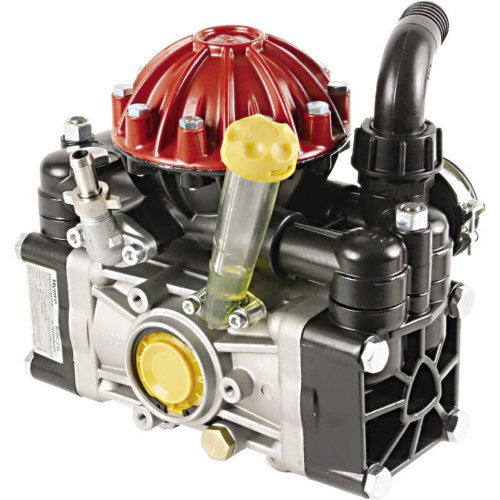
Figure 1: HYPRO D50 Diaphragm Pump. This image shows the pump from an angled perspective, highlighting the red diaphragm housing, the yellow oil sight glass and cap, and the black inlet and outlet connections. The main body is silver-grey with black end plates.
Key components visible include the diaphragm housing (red dome), oil reservoir with sight glass and cap (yellow), and the inlet/outlet ports (black). The robust construction ensures longevity and resistance to various fluids.
4. Specifications
| Attribute | Value |
|---|---|
| Brand | HYPRO |
| Model Number | D50 |
| Maximum Flow Rate | 14 GPM (Gallons Per Minute) |
| Maximum Pressure | 580 PSI (Pounds per Square Inch) |
| Maximum Rated Speed | 550 RPM (Revolutions Per Minute) |
| Maximum Fluid Temperature | 140°F (60°C) |
| Inlet Port Size | 1-1/4" Hose Barb |
| Outlet Port Size | 1/2" Hose Barb |
| Number of Diaphragms | 2 |
| Shaft Type | Flanged |
| Power Source Compatibility | PTO, Hydraulic, Gas Engine Drives |
| Material (Liquid Handling) | Epoxy coated components |
| Color | Black (main body accents) |
| UPC | 073493001670 |
5. Setup & Installation
Proper installation is crucial for the performance and longevity of your D50 pump. Follow these general guidelines:
- Mounting: Securely mount the pump to a stable, level surface capable of supporting its weight and resisting operational vibrations. Ensure adequate clearance for maintenance and ventilation.
- Power Source Connection: The D50 pump is adaptable to PTO, hydraulic, or gas engine drives. Connect the pump to your chosen power source according to the manufacturer's instructions for that specific drive system. Ensure proper alignment and secure coupling.
- Inlet Plumbing: Connect a 1-1/4" hose to the inlet port. Ensure the suction line is free of kinks, obstructions, and air leaks. The pump is self-priming, but a flooded suction setup is always recommended for optimal performance.
- Outlet Plumbing: Connect a 1/2" hose to the outlet port. Install appropriate valves, pressure regulators, and spray nozzles as required by your application. Ensure all connections are leak-free and rated for the maximum operating pressure.
- Fluid Compatibility: Verify that all wetted components of the pump and plumbing are compatible with the fluids being pumped.
- Initial Oil Fill: Before first use, ensure the oil reservoir is filled to the correct level as indicated by the visual oil-level sight glass. Use recommended pump oil.
CAUTION: Incorrect installation can lead to pump damage or system failure. Consult a qualified technician if you are unsure about any installation steps.
6. Operation
Once installed, operating the HYPRO D50 pump involves a few key steps:
- Pre-Operation Check:
- Inspect all hoses and connections for leaks or damage.
- Verify oil level in the sight glass.
- Ensure the suction line is submerged in the fluid.
- Starting the Pump:
- Engage the power source (PTO, hydraulic, or gas engine) gradually.
- Allow the pump to prime. As a self-priming pump, it will draw fluid, but this may take a few moments.
- Once fluid is flowing, adjust the power source to achieve the desired RPM, not exceeding 550 RPM.
- Adjusting Pressure and Flow:
- Use a pressure regulator (if installed) to set the desired operating pressure, staying within the 580 PSI maximum.
- Flow rate will vary with RPM and pressure. Monitor your application's requirements.
- Shutting Down:
- Disengage the power source.
- Relieve any residual system pressure before disconnecting hoses or performing maintenance.
The pump can be run dry for short periods, but prolonged dry running is not recommended and can lead to premature wear.
7. Maintenance
Regular maintenance ensures the longevity and optimal performance of your HYPRO D50 Diaphragm Pump. Always disconnect power and relieve pressure before servicing.
- Oil Level Check: Regularly check the oil level using the visual sight glass. Maintain the oil level within the recommended range. Refer to the pump's specific oil requirements for type and viscosity.
- Oil Changes: Change the pump oil after the first 50 hours of operation, then every 200-300 hours or annually, whichever comes first. Dispose of used oil responsibly.
- Diaphragm Inspection/Replacement: Inspect diaphragms periodically for signs of wear, cracking, or damage. Replace diaphragms as needed, especially if performance degrades or leaks occur. HYPRO offers repair kits for convenient replacement.
- Valve Inspection: Check inlet and outlet valves for debris or wear. Clean or replace as necessary to maintain proper flow and pressure.
- Hose and Connection Inspection: Regularly inspect all hoses, clamps, and fittings for wear, leaks, or damage. Replace any compromised components immediately.
- Winterization: If operating in freezing temperatures, ensure the pump is drained of all fluids or filled with an appropriate antifreeze solution to prevent damage.
For detailed maintenance procedures, refer to the official HYPRO service manual or contact HYPRO support.
8. Troubleshooting
This section provides solutions to common issues encountered with the HYPRO D50 Diaphragm Pump.
| Problem | Possible Cause | Solution |
|---|---|---|
| Pump not priming or low flow | Air leak in suction line; clogged inlet filter; worn diaphragms; low fluid level; incorrect RPM. | Check all suction connections for tightness; clean inlet filter; inspect and replace diaphragms; ensure adequate fluid supply; verify correct operating RPM. |
| Low pressure | Worn diaphragms; faulty pressure regulator; clogged outlet nozzle; air in system; worn valves. | Inspect and replace diaphragms; check/adjust pressure regulator; clean or replace nozzle; bleed air from system; inspect and replace valves. |
| Oil leaking from pump | Damaged oil seals; cracked housing; overfilled oil reservoir. | Inspect and replace oil seals; check housing for damage; ensure correct oil level. |
| Excessive vibration or noise | Misalignment with power source; loose mounting; cavitation (air in fluid); worn bearings. | Check and correct alignment; tighten mounting bolts; ensure proper fluid supply and no air leaks; inspect bearings. |
If you encounter issues not listed here or if solutions do not resolve the problem, contact HYPRO customer support or a certified service technician.
9. Warranty & Support
For specific warranty terms and conditions, please refer to the documentation provided with your purchase or visit the official HYPRO website. HYPRO stands behind the quality of its products and offers support for technical inquiries and service needs.
For assistance, please contact HYPRO customer service through their official website or authorized distributors. When contacting support, please have your pump model number (D50) and serial number (if applicable) ready.


