
Introduction
This manual provides comprehensive instructions for the safe and efficient operation, setup, and maintenance of your King Canada KC-163SSC-V-6 16-Inch Variable Speed Scroll Saw. Please read this manual thoroughly before using the tool to ensure proper handling and to prevent injury or damage.
General Safety Instructions
Always follow basic safety precautions when using electrical tools to reduce the risk of fire, electric shock, and personal injury. Keep this manual for future reference.
- Work Area Safety: Keep the work area clean and well-lit. Cluttered or dark areas invite accidents. Do not operate power tools in explosive atmospheres, such as in the presence of flammable liquids, gases, or dust.
- Electrical Safety: Power tool plugs must match the outlet. Never modify the plug in any way. Avoid body contact with earthed or grounded surfaces.
- Personal Safety: Always wear eye protection. Use hearing protection when operating noisy tools. Dress properly; avoid loose clothing or jewelry. Keep hair, clothing, and gloves away from moving parts.
- Tool Use and Care: Do not force the power tool. Use the correct power tool for your application. Disconnect the plug from the power source before making any adjustments, changing accessories, or storing power tools.
- Maintenance: Maintain power tools. Check for misalignment or binding of moving parts, breakage of parts, and any other condition that may affect the power tool’s operation.
Product Overview
The King Canada KC-163SSC-V-6 is a 16-inch variable speed scroll saw designed for precision cutting in various materials. Key features include:
- Variable speed control for optimal cutting performance across different materials.
- Integrated dust blower system to keep the cutting line clear.
- Table that tilts up to 45 degrees for accurate angle cuts.
- Blade holders compatible with standard 5-inch pinless and pin-type blades.
- Portable and versatile design.
- Adjustable blade tension knob.
- Tool-free blade change system for quick and easy blade replacement.

Figure 1: Overall view of the King Canada KC-163SSC-V-6 16-Inch Variable Speed Scroll Saw.
Setup
1. Unpacking and Inspection
Carefully remove the scroll saw from its packaging. Inspect the tool for any damage that may have occurred during shipping. Report any damage to your dealer immediately. Ensure all components listed in the packing list are present.
2. Workbench Mounting
For stable operation, it is recommended to mount the scroll saw securely to a workbench. Use appropriate bolts and washers (not included) to fasten the saw through the mounting holes in its base.
3. Blade Installation
The KC-163SSC-V-6 accepts standard 5-inch pinless and pin-type blades. Refer to the following steps for blade installation:
- Ensure the saw is unplugged from the power source.
- Loosen the blade tension knob (see Figure 3) to release tension.
- For pin-type blades, insert the bottom pin into the lower blade holder, then gently pull down the upper arm and insert the top pin into the upper blade holder.
- For pinless blades, use the tool-free blade change system. Open the blade clamps on both the upper and lower arms, insert the blade, and secure the clamps.
- Adjust the blade tension knob until the blade is taut but not overly tight. A properly tensioned blade will produce a clear "ping" sound when plucked.

Figure 2: Close-up of the blade area, showing the tool-free blade change system and dust blower nozzle.

Figure 3: Location of the blade tension knob on the scroll saw.
4. Dust Blower System
The integrated dust blower system helps keep your cutting line clear of sawdust. Ensure the nozzle is positioned correctly to direct airflow towards the blade. For enhanced dust collection, connect a shop vacuum to the dust port located on the side of the saw (see Figure 4).

Figure 4: Control panel with ON/OFF switch, variable speed dial, and dust port.
Operating Instructions
1. Power Connection
Connect the scroll saw to a standard 110V AC power outlet. Ensure the ON/OFF switch is in the "OFF" position before plugging in the tool.
2. Variable Speed Control
The scroll saw features variable speed control. Turn the variable speed dial (see Figure 4) to adjust the blade speed. Lower speeds are suitable for cutting plastics and non-ferrous metals, while higher speeds are ideal for wood and softer materials. Always test on scrap material to find the optimal speed for your project.
3. Table Tilt Adjustment
The work table can be tilted up to 45 degrees for bevel cuts. Loosen the table locking knob located beneath the table (see Figure 5), adjust the table to the desired angle using the angle scale, and then securely tighten the knob.
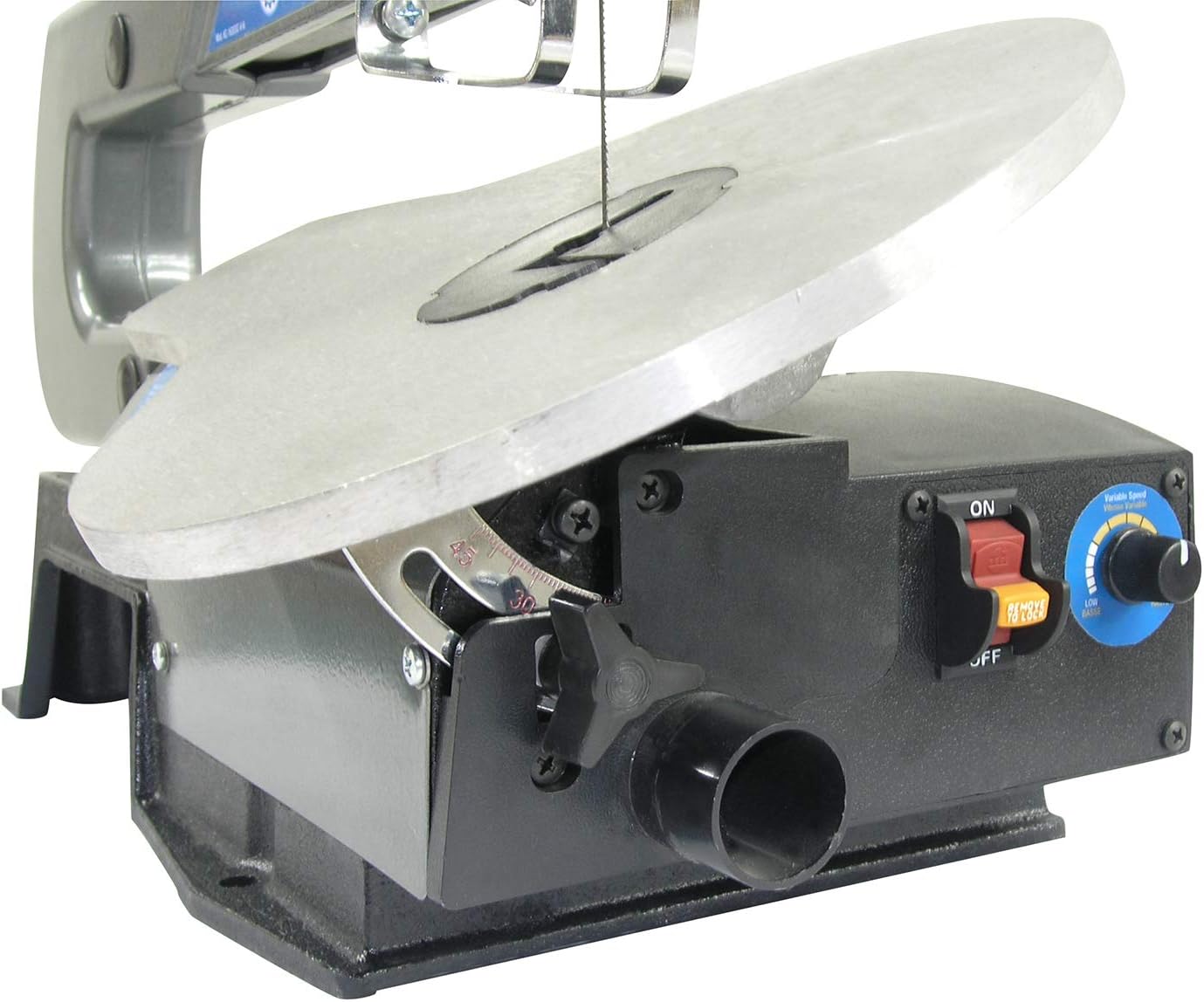
Figure 5: Scroll saw table tilted to an angle, showing the angle scale and locking knob.
4. Cutting Operation
- Place your workpiece flat on the table, ensuring it is stable.
- Turn on the scroll saw using the ON/OFF switch.
- Gently feed the workpiece into the blade. Do not force the material; allow the blade to cut at its own pace.
- Maintain a firm grip on the workpiece and keep your hands clear of the blade path.
- For intricate cuts, guide the material slowly and make small, controlled movements.
- When finished, turn off the saw and wait for the blade to come to a complete stop before removing the workpiece.
Maintenance
Regular maintenance ensures the longevity and safe operation of your scroll saw.
- Cleaning: After each use, unplug the saw and use a brush or compressed air to remove sawdust and debris from the table, blade area, and motor vents.
- Blade Replacement: Replace dull or broken blades promptly. Refer to the "Blade Installation" section for proper replacement procedures.
- Lubrication: Periodically apply a small amount of light machine oil to pivot points and moving parts as indicated in the saw's diagram (if available, otherwise general guidance).
- Inspection: Regularly check all nuts, bolts, and screws for tightness. Inspect the power cord for damage. Ensure the dust blower system is free of obstructions.
Troubleshooting
This section addresses common issues you might encounter with your scroll saw.
| Problem | Possible Cause | Solution |
|---|---|---|
| Saw does not start | No power supply; ON/OFF switch not engaged; faulty power cord. | Check power connection and outlet. Ensure switch is fully engaged. Inspect power cord for damage. |
| Blade breaks frequently | Incorrect blade tension; dull blade; forcing workpiece; wrong blade type for material. | Adjust blade tension. Replace with a sharp blade. Do not force cuts. Use appropriate blade for material. |
| Excessive vibration | Saw not securely mounted; loose components; unbalanced blade. | Ensure saw is securely mounted to a stable surface. Check all fasteners for tightness. Replace blade if bent or damaged. |
| Dust accumulation on cut line | Dust blower nozzle obstructed or misaligned; dust port clogged. | Clear dust blower nozzle. Adjust nozzle direction. Clear dust port and connected vacuum hose. |
Specifications
Technical specifications for the King Canada KC-163SSC-V-6 16-Inch Variable Speed Scroll Saw:
| Feature | Detail |
|---|---|
| Model Number | KC-163SSC-V-6 |
| Blade Length | 16 Inches (accepts 5-inch pinless and pin type blades) |
| Power Source | AC |
| Voltage | 110 Volts |
| Wattage | 144 watts |
| Horsepower | 1 HP |
| Table Tilt | Up to 45 degrees |
| Product Dimensions | 62.23 x 27.94 x 33.02 cm (24.5 x 11 x 13 inches) |
| Item Weight | 10.4 kg (23 Pounds) |
| Special Features | Variable Speed, Built-in Dust Blower, Tool-free blade change system |
| Manufacturer | King Canada |
| Country of Origin | China |
Warranty and Support
For warranty information, technical support, or service inquiries regarding your King Canada KC-163SSC-V-6 scroll saw, please contact King Canada customer service directly. Refer to the product packaging or the official King Canada website for the most current contact details and warranty terms.
King Canada Website: www.kingcanada.com


