
Lisle 44220
Lisle 44220 Emergency Brake Cable Release Tool User Manual
Introduction
The Lisle 44220 Emergency Brake Cable Release Tool is a specialized device designed to assist in the efficient and safe disconnection of emergency brake cables from their connectors. This tool is essential for performing rear brake service or replacement on a wide range of domestic and import vehicles, including those with both drum and disc brake applications. Its purpose is to simplify the process of pushing the emergency brake cable out of its connector, reducing effort and potential damage.
Safety Information
- Always wear appropriate personal protective equipment, including safety glasses and gloves, when working on vehicles.
- Ensure the vehicle is securely supported on jack stands before beginning any work. Never rely solely on a jack.
- Confirm the vehicle's transmission is in "Park" (automatic) or "Neutral" with the parking brake disengaged (if possible) and wheels chocked.
- Read the vehicle's service manual for specific instructions regarding emergency brake cable removal and installation.
- Keep hands and fingers clear of pinch points when operating the tool.
- Do not use excessive force. If the cable does not release, re-evaluate the situation and consult the vehicle's service manual.
Tool Overview
The Lisle 44220 tool is designed with a specific jaw configuration to engage the emergency brake cable connector effectively. It features comfortable handles for grip and leverage.

Figure 1: The Lisle 44220 Emergency Brake Cable Release Tool. This image shows the tool's overall design, including its handles, pivot point, and specialized jaws for engaging the cable connector.
Operating Instructions
- Prepare the Vehicle: Safely lift and support the vehicle. Remove the wheel and any necessary brake components to access the emergency brake cable connector.
- Locate the Cable Connector: Identify the emergency brake cable connector, typically found near the rear brake assembly (drum or disc). The tool is designed to work on the connection point where the cable enters the brake assembly.
- Position the Tool: Place the jaws of the Lisle 44220 tool around the emergency brake cable connector. One jaw should brace against the fixed part of the connector, while the other jaw engages the end of the cable that needs to be pushed out.
- Apply Pressure: Slowly and firmly squeeze the handles of the tool. This action will push the emergency brake cable out of its connector. The tool is designed to provide the necessary leverage for this task.
- Release the Cable: Once the cable is sufficiently pushed out, it should disengage from the connector, allowing for removal and subsequent brake service.
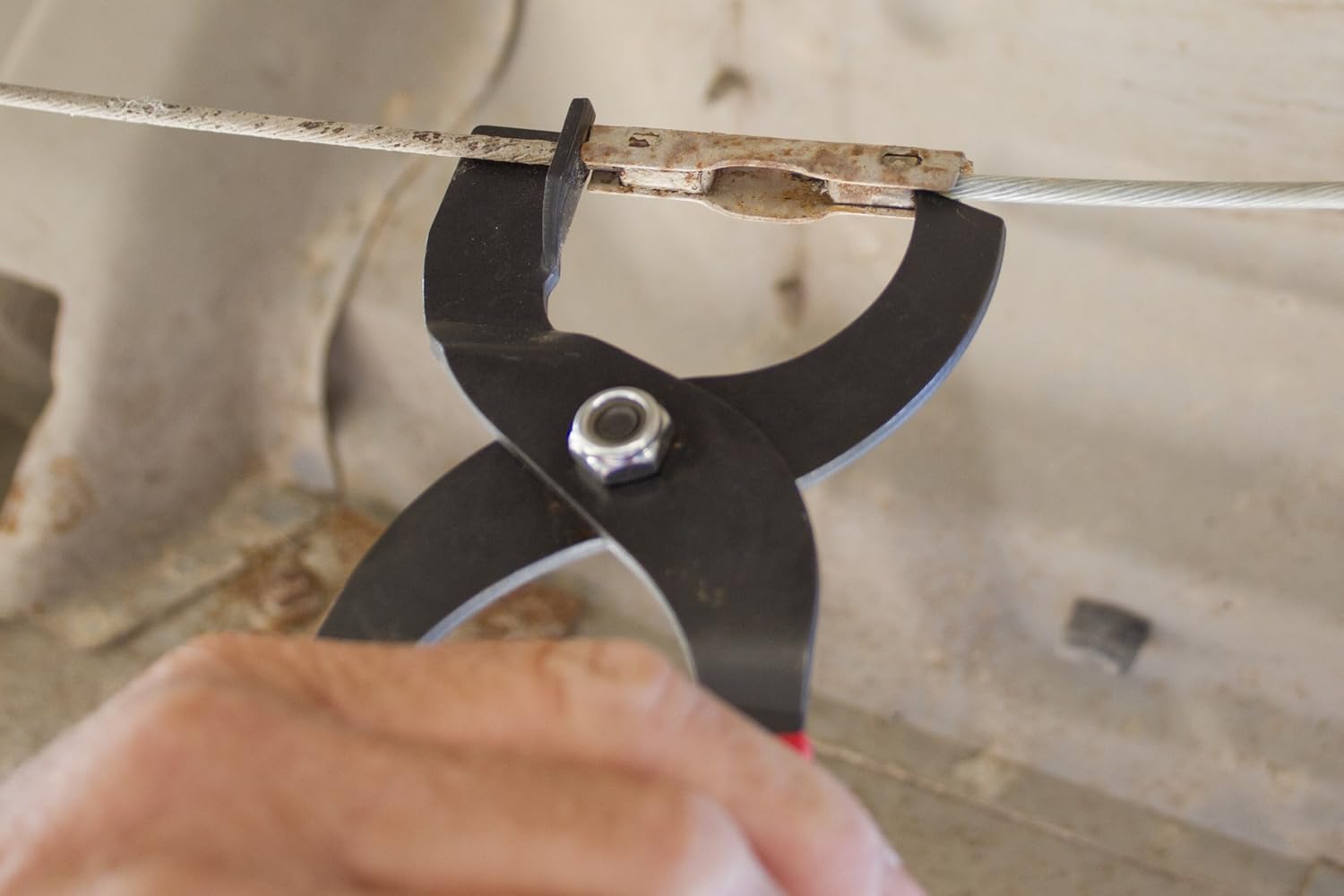
Figure 2: The Lisle 44220 tool positioned on an emergency brake cable connector. This image illustrates how the tool's jaws engage the cable and connector to facilitate separation.
Maintenance
- Cleaning: After each use, wipe the tool clean with a dry cloth to remove any grease, dirt, or debris.
- Lubrication: Periodically apply a light coat of oil to the pivot point to ensure smooth operation and prevent rust.
- Storage: Store the tool in a dry environment to prevent corrosion.
- Inspection: Regularly inspect the tool for any signs of wear, damage, or deformation. Do not use a damaged tool.
Troubleshooting and Tips
- Cable Not Releasing: Ensure the tool is correctly positioned on the cable connector. Some connectors may be seized due to rust or corrosion. Applying a penetrating lubricant and allowing it to soak may help.
- Limited Leverage: If you find it difficult to apply enough force, double-check the tool's positioning. The design is intended to provide optimal leverage for most applications.
- Vehicle Specifics: Always consult the specific vehicle's repair manual, as some manufacturers may have unique emergency brake cable designs or release procedures.
Specifications
| Brand | Lisle |
| Model Number | 44220 |
| Item Weight | 7.2 ounces |
| Product Dimensions | 14.5 x 4.75 x 1.38 inches |
| Manufacturer Part Number | 44220 |
Support
For further assistance, technical support, or inquiries regarding the Lisle 44220 Emergency Brake Cable Release Tool, please refer to the official Lisle website or contact Lisle customer service directly. Contact information can typically be found on the manufacturer's packaging or website.
You can visit the Lisle Store on Amazon for more product information.
Related documents44220


Ask a question about this manual
Ask about setup, troubleshooting, compatibility, parts, safety, or missing instructions. Manuals+ will review the question and use this page’s manual context to help answer it.