
Introduction
This instruction manual provides essential information for the safe and effective use of your sourcing map 10mm 4 Flute HSS Square Nose End Mill. Please read this manual thoroughly before operation and retain it for future reference. This tool is designed for precision milling applications in various materials.
Product Overview and Features
The sourcing map 10mm 4 Flute HSS Square Nose End Mill is a high-speed steel cutting tool designed for general-purpose milling operations. Its robust construction and specific geometry make it suitable for creating steps, recesses, and vertical flat surfaces in various workpieces.
- Product Name: 4 Flute End Mill
- Material: High-Speed Steel (HSS)
- Cutting Diameter: 10 mm (approximately 25/64 inch)
- Cutting Depth: 22 mm (approximately 0.87 inch)
- Shank Diameter: 10 mm (approximately 25/64 inch)
- Total Length: 72 mm (approximately 2.83 inch)
- Color: Gray
- Weight: 34 grams
- Flutes: 4, helical design for efficient chip evacuation.
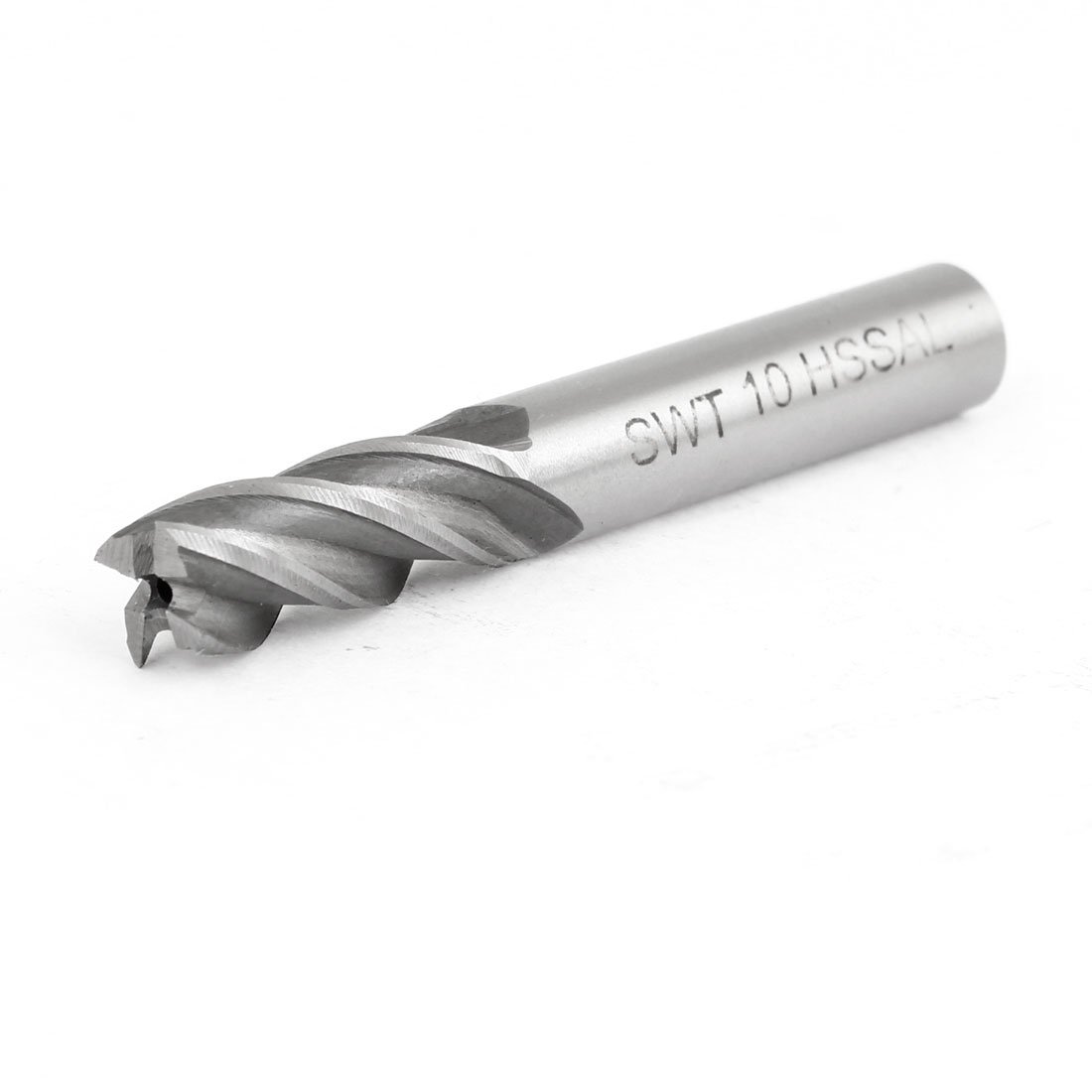
Image: The sourcing map 10mm 4 Flute HSS Square Nose End Mill, showcasing its four helical flutes and straight shank. The tool is made from High-Speed Steel (HSS) and is gray in color.
Setup
- Safety First: Always wear appropriate personal protective equipment (PPE), including safety glasses, gloves, and hearing protection, before handling or operating milling tools.
- Machine Preparation: Ensure your milling machine is clean, well-maintained, and powered off before installing the end mill.
- Tool Holder Selection: Select a suitable tool holder (e.g., collet chuck, end mill holder) that matches the 10mm shank diameter of the end mill. Ensure the holder is clean and free from debris.
- Installation: Insert the end mill into the tool holder, ensuring it is seated firmly and to the correct depth. Tighten the holder securely according to the manufacturer's specifications to prevent slippage during operation. Insufficient tightening can lead to tool damage or injury.
- Workpiece Securing: Secure the workpiece firmly in a vise or clamping system on the milling machine table. Ensure there is no movement during machining.
- Alignment: Verify that the end mill is properly aligned with the workpiece and that there is sufficient clearance for the cutting path.
Operating Instructions
Proper operation is crucial for achieving desired results and ensuring tool longevity. Always refer to your milling machine's manual for specific operating procedures.
- Speed and Feed Rates: Determine appropriate spindle speeds (RPM) and feed rates (IPM/mm/min) based on the workpiece material, end mill diameter, number of flutes, and desired surface finish. Consult machining handbooks or online resources for recommended parameters. Starting with conservative settings and gradually increasing them is advisable.
- Depth of Cut: Avoid taking excessively deep cuts, especially in harder materials, as this can lead to tool deflection, breakage, and poor surface finish. Take multiple shallow passes if necessary.
- Coolant/Lubrication: Apply appropriate cutting fluid or coolant during operation, especially when machining metals, to reduce heat, lubricate the cutting edge, and aid in chip evacuation. This extends tool life and improves surface quality.
- Chip Evacuation: Ensure chips are effectively evacuated from the cutting zone. Poor chip evacuation can lead to chip recutting, heat buildup, and tool damage.
- Monitoring: Continuously monitor the cutting process for unusual noises, vibrations, or excessive heat. Adjust parameters as needed.
- Finishing Passes: For a finer surface finish, consider taking a light finishing pass with reduced depth of cut and increased spindle speed.
Note: High-Speed Steel (HSS) end mills are generally suitable for softer materials like aluminum, brass, and some steels. For harder materials or higher production rates, carbide end mills may be more appropriate.
Maintenance
Proper maintenance ensures the longevity and performance of your end mill.
- Cleaning: After each use, clean the end mill thoroughly to remove all chips, coolant residue, and debris. Use a brush and appropriate cleaning solution.
- Inspection: Regularly inspect the cutting edges for signs of wear, chipping, or damage. A dull or damaged tool will produce poor results and can lead to machine strain.
- Storage: Store the end mill in a protective case or holder to prevent damage to the cutting edges. Keep it in a dry environment to prevent corrosion.
- Sharpening: If the end mill becomes dull, it can be professionally resharpened. Attempting to sharpen it without proper equipment and expertise can damage the tool geometry.
Troubleshooting
| Problem | Possible Cause | Solution |
|---|---|---|
| Poor Surface Finish | Dull tool, incorrect speed/feed, insufficient coolant, machine vibration, excessive depth of cut. | Replace/sharpen tool, adjust speed/feed, increase coolant flow, check machine rigidity, reduce depth of cut. |
| Excessive Tool Wear/Breakage | Too high feed rate, too low spindle speed, insufficient coolant, wrong tool for material, excessive depth of cut, tool runout. | Reduce feed rate, increase spindle speed, ensure adequate coolant, verify tool material suitability, reduce depth of cut, check tool holder and machine for runout. |
| Chatter/Vibration | Incorrect speed/feed, loose workpiece, tool overhang too long, machine rigidity issues. | Adjust speed/feed, secure workpiece firmly, reduce tool overhang, inspect machine for loose components. |
Specifications
| Attribute | Value |
|---|---|
| Brand | sourcing map |
| Model Number | a13080500ux0357 |
| Material | High-Speed Steel (HSS) |
| Number of Flutes | 4 |
| Cutting Diameter | 10 mm |
| Cutting Depth | 22 mm |
| Shank Diameter | 10 mm |
| Total Length | 72 mm |
| Item Weight | 10 grams (approx.) |
| UPC | 700724189035 |
| ASIN | B00H513A7M |
Warranty and Support
Specific warranty information for this product is not provided in the available data. For any questions regarding product performance, technical support, or warranty claims, please contact your retailer or the manufacturer, sourcing map, directly. Retain your proof of purchase for any warranty-related inquiries.
For general inquiries, you may visit the sourcing map brand page on Amazon.