
1. Introduction
The MOOG MiniFooger Analog Delay is a high-quality effects pedal designed for guitar and bass, delivering over 650ms of rich, blooming analog delay. As part of the Minifooger family, this pedal embodies legendary Moog quality, tone, and versatility in a compact, rugged housing built for reliable performance.
This pedal features a 100% analog signal path, true bypass switching, and an extremely low-noise design, ensuring no negative impact on your instrument's tone. Its meticulous design incorporates premium components, a discrete JFET input stage, and a vintage compander circuit for superior delay tone. A dedicated expression input further expands the pedal's capabilities, allowing for dynamic control over key parameters.
2. Setup
Follow these steps to properly set up your MiniFooger Analog Delay pedal:
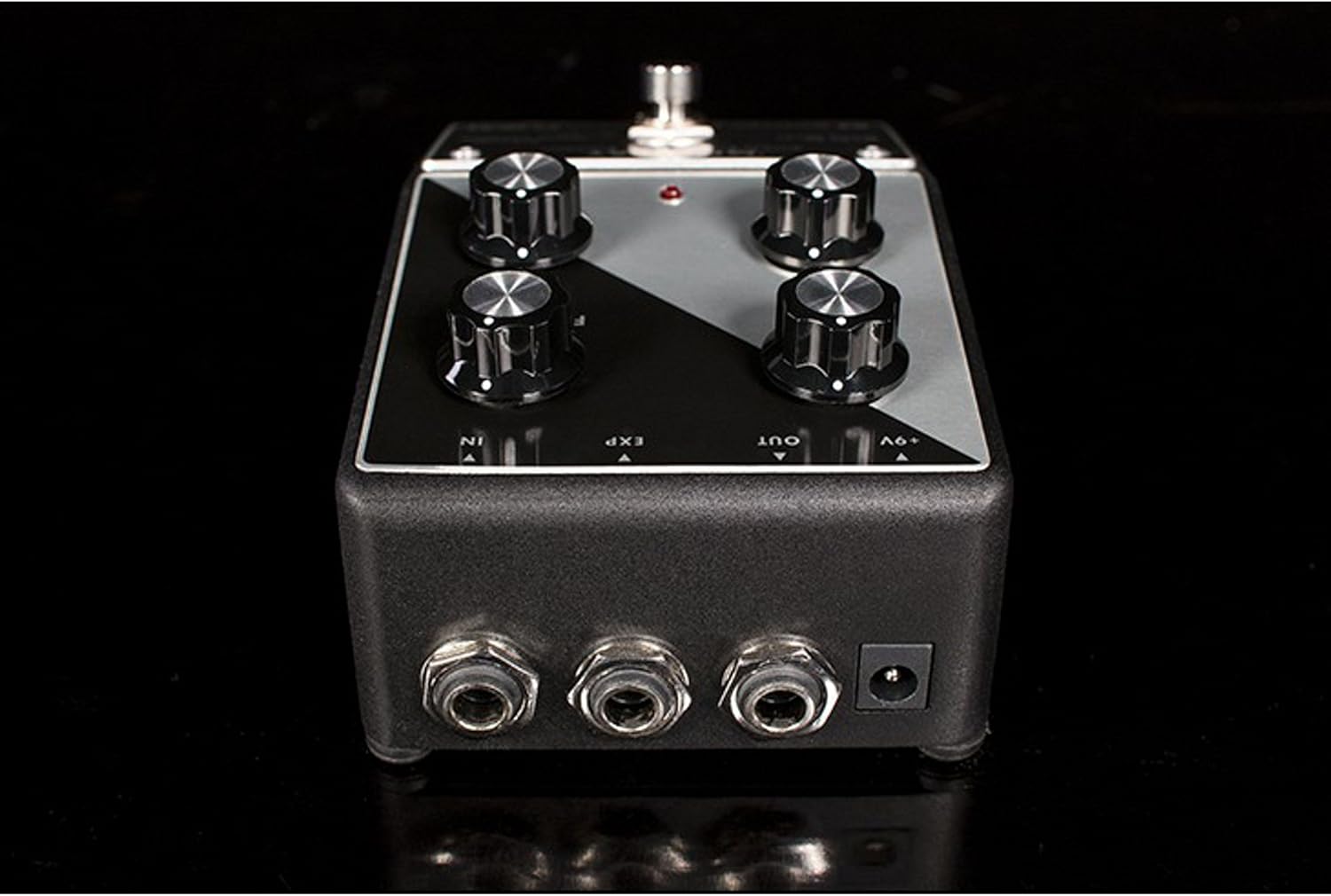
- Power Connection: Connect a 9V DC power supply (center negative) to the '+9V' jack on the rear of the pedal. The pedal can also be powered by a 9V battery (included), which can be accessed by removing the bottom plate.
- Audio Input: Connect your instrument (guitar or bass) to the 'IN' jack on the rear of the pedal using a standard 1/4-inch instrument cable.
- Audio Output: Connect the 'OUT' jack on the rear of the pedal to your amplifier or the next pedal in your signal chain using a standard 1/4-inch instrument cable.
- Expression Pedal (Optional): For dynamic control, connect a Moog EP-3 or similar expression pedal to the 'EXP' jack on the rear of the pedal.
3. Operating Instructions
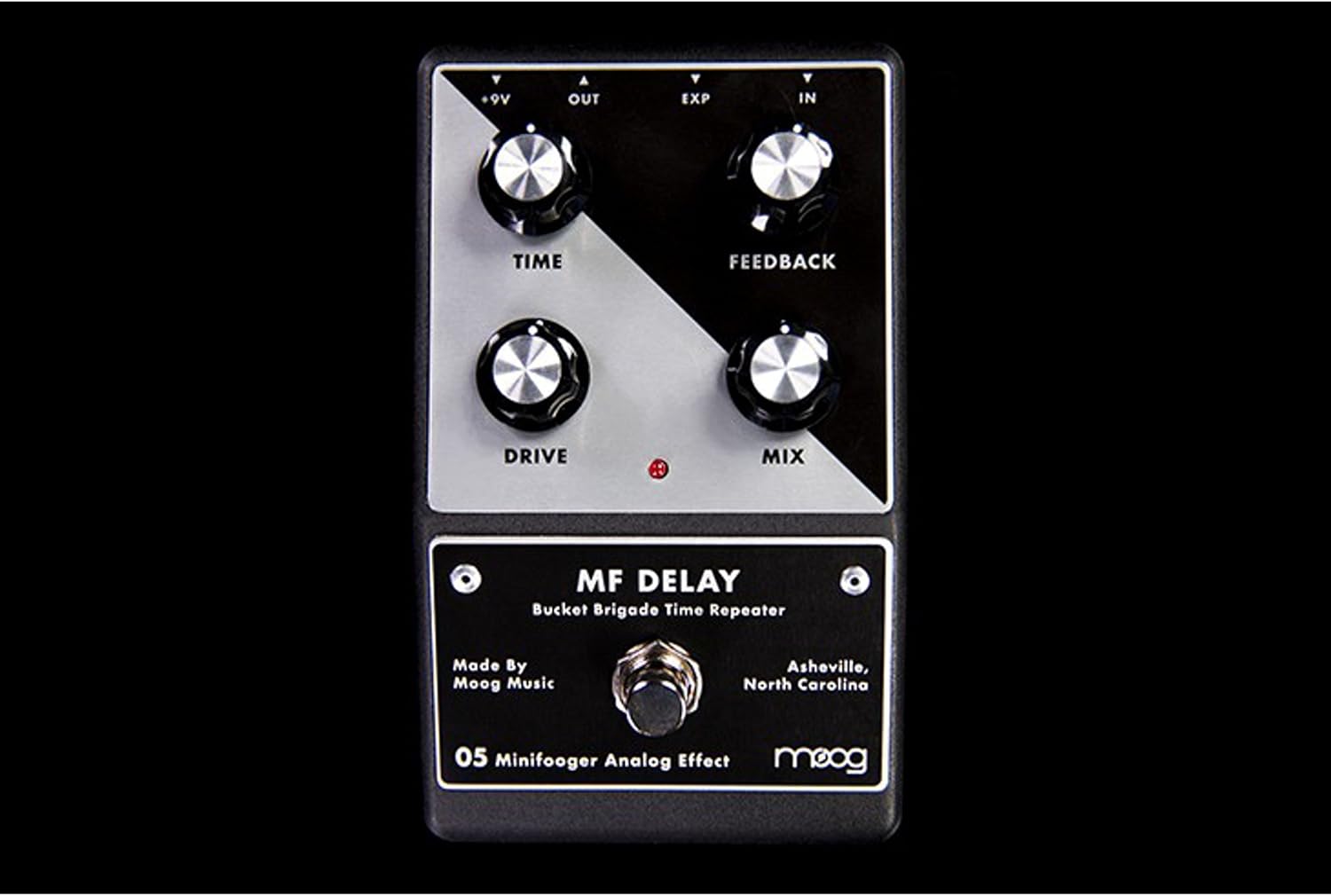
The MiniFooger Analog Delay features four primary control knobs and a footswitch for intuitive operation:
- TIME: This knob controls the delay time, ranging from very short slap-back echoes to over 650 milliseconds of rich, sustained delay.
- FEEDBACK: Adjusts the number of repeats. Turning this knob clockwise increases the number of echoes, allowing for long, decaying trails or even self-oscillation at higher settings.
- DRIVE: This control adds a wide range of classic drive, boost, and color to your signal. It can be used to add warmth, grit, or a significant boost to the delayed signal.
- MIX: Blends the dry (unaffected) signal with the wet (delayed) signal. Turn counter-clockwise for more dry signal, and clockwise for more wet signal. The mix control allows the dry signal to be completely eliminated if desired.
- Footswitch: Engages or bypasses the delay effect. The MiniFooger Analog Delay features true bypass, ensuring your signal remains unaffected when the pedal is disengaged.
Expression Pedal Functionality
The expression pedal input allows for hands-free control over either the TIME or FEEDBACK parameter. By default, the expression pedal controls the delay TIME. To switch the expression pedal's function to control FEEDBACK, an internal switch needs to be adjusted.
To change Expression Pedal Control:
- Ensure the pedal is disconnected from power and your instrument.
- Carefully remove the screws from the bottom plate of the pedal.
- Locate the small switch inside the pedal, typically labeled for expression control.
- Toggle the switch to the desired position (TIME or FEEDBACK).
- Carefully reattach the bottom plate and secure the screws.
Note: If you are uncomfortable performing this internal adjustment, please consult a qualified technician.
4. Maintenance
To ensure the longevity and optimal performance of your MiniFooger Analog Delay pedal, follow these maintenance guidelines:
- Cleaning: Use a soft, dry cloth to clean the exterior of the pedal. Avoid using abrasive cleaners or solvents, as these can damage the finish and internal components.
- Storage: Store the pedal in a dry, temperate environment away from direct sunlight, extreme temperatures, and excessive humidity.
- Battery Replacement: If using battery power, replace the 9V battery when the pedal's performance degrades or the indicator light dims. To replace, carefully remove the bottom plate, disconnect the old battery, and connect a new 9V battery, ensuring correct polarity.
- Cable Connections: Periodically check all cable connections for wear and tear. Loose or damaged cables can lead to signal loss or noise.
5. Troubleshooting
If you encounter issues with your MiniFooger Analog Delay, refer to the following troubleshooting tips:
- No Sound or Weak Signal:
- Ensure the power supply is correctly connected and functioning.
- Check all instrument cables for proper connection and integrity.
- Verify that your instrument and amplifier are working correctly.
- Check the 'MIX' knob setting; if set fully counter-clockwise, only the dry signal will pass.
- Unwanted Noise or Hum:
- Ensure you are using a regulated 9V DC power supply.
- Check for faulty cables or connections.
- Test the pedal in a different power outlet or with a different power supply.
- Delay Not Functioning Correctly:
- Check the 'TIME' and 'FEEDBACK' knob settings.
- If using an expression pedal, ensure it is connected correctly and the internal switch is set to the desired parameter.
If these steps do not resolve the issue, please contact MOOG customer support for further assistance.
6. Specifications
| Feature | Detail |
|---|---|
| Brand | MOOG |
| Model Number | MFS-DELAY-02 |
| Manufacturer Part Number | MOOGMFDELAY |
| Audio Output Effects | Delay |
| Signal Format | Analog |
| Delay Time | Over 650ms (Bucket Brigade) |
| Power | 9V DC (center negative), 35mA |
| Controls Type | Knob (TIME, FEEDBACK, DRIVE, MIX) |
| Bypass | True Bypass |
| Item Dimensions | Approximately 7 x 7 x 7 inches (packaging dimensions, actual pedal is smaller) |
| UPC | 094922450074, 040232216664 |
| GTIN | 00094922450074, 094922450074 040232216664 |
7. Warranty and Support
MOOG products are manufactured to high standards and come with a limited warranty. For specific warranty terms and conditions, please refer to the warranty card included with your product or visit the official MOOG website.
For technical support, service, or any questions regarding your MiniFooger Analog Delay pedal, please contact MOOG customer support through their official website or the contact information provided in your product packaging.


