1. Introduction
This manual provides essential information for the safe and effective installation, operation, and maintenance of the DAIKIN DM04-3T03-2C Manual Directional Control Valve. Please read this manual thoroughly before using the product and keep it for future reference.
The DAIKIN DM04-3T03-2C is a manual directional control valve designed to switch the direction of oil flow by directly manipulating the spool with a manual lever. It features easy handle operation even under high pressure conditions.
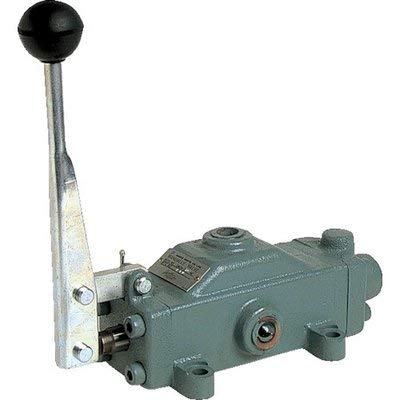
Image of the DAIKIN DM04-3T03-2C Manual Directional Control Valve, showing its compact design and manual lever.
2. Safety Information
Always observe the following safety precautions to prevent injury to personnel and damage to equipment.
- Ensure all hydraulic systems are depressurized before installation, maintenance, or inspection.
- Wear appropriate personal protective equipment (PPE) such as safety glasses and gloves.
- Do not exceed the maximum operating pressure or flow rate specified for this valve.
- Verify that all connections are secure and free from leaks before operating the system.
- Only qualified personnel should perform installation and maintenance procedures.
3. Product Overview
The DAIKIN DM04-3T03-2C is a high-performance manual directional control valve. Its primary function is to control the direction of hydraulic fluid flow within a system, enabling precise control over hydraulic actuators.
Key Features:
- Manual Lever Operation: Allows for direct and immediate control over the spool position.
- Spring Center Type: The spool returns to a neutral (center) position when the lever is released.
- High Pressure Capability: Designed for reliable operation even under elevated system pressures.
- Compact Design: Facilitates integration into various hydraulic circuits.
4. Specifications
| Parameter | Value |
|---|---|
| Brand | DAIKIN |
| Model Number | DM04-3T03-2C |
| Mounting Type | Gasket |
| Nominal Size | 3/8 inch |
| Maximum Operating Pressure | 13.7 MPa |
| Maximum Flow Rate | 25 L/min |
| Connection Type | Screw connection |
| Spool Actuation Method | Spring Center Type |
| Product Weight | 4.2 kg |
5. Installation and Setup
Proper installation is crucial for the performance and longevity of the valve. Follow these general guidelines:
- Preparation: Ensure the mounting surface is clean, flat, and free from debris.
- Mounting: Securely attach the valve to the manifold or mounting plate using appropriate bolts and torque specifications. Ensure the gasket is correctly seated to prevent leaks.
- Hydraulic Connections: Connect the hydraulic lines (pressure, tank, and work ports) to the corresponding ports on the valve. Use appropriate fittings and ensure all connections are tightened to prevent leaks. Refer to system schematics for correct port identification.
- System Flush: Before initial operation, ensure the hydraulic system is properly flushed to remove any contaminants that could damage the valve.
- Initial Check: After installation, slowly pressurize the system and check for any leaks or abnormal operation.
6. Operation
The DM04-3T03-2C valve is operated manually using its lever. The spool will return to the center position when the lever is released.
- Neutral Position: When the lever is in the center position, the valve is typically in a neutral state, blocking or connecting ports as per its specific spool configuration.
- Actuation: Move the lever to one side to shift the spool and direct hydraulic fluid to the desired work port (e.g., extend a cylinder).
- Return: Move the lever to the opposite side to shift the spool and direct hydraulic fluid for the return action (e.g., retract a cylinder).
- Release: Releasing the lever will cause the spool to return to the neutral position due to the internal spring mechanism.
Always operate the lever smoothly and avoid sudden, forceful movements to prevent hydraulic shock.
7. Maintenance
Regular maintenance ensures optimal performance and extends the lifespan of your valve.
- Fluid Quality: Ensure the hydraulic fluid is clean and maintained to the manufacturer's specifications. Contaminated fluid is a leading cause of valve failure.
- Leak Inspection: Periodically inspect all connections for leaks. Tighten fittings as necessary, but do not overtighten.
- Visual Inspection: Check the valve body and lever for any signs of damage, corrosion, or wear.
- Functionality Check: Test the lever operation to ensure smooth movement and proper spool return.
- Cleaning: Keep the exterior of the valve clean to prevent dirt and debris from entering the system.
8. Troubleshooting
If you encounter issues with your DAIKIN DM04-3T03-2C valve, consider the following common problems and solutions:
| Problem | Possible Cause | Solution |
|---|---|---|
| Valve not shifting or sluggish operation | Contaminated fluid, low system pressure, mechanical obstruction, worn spool/bore | Check fluid quality and filter, verify system pressure, inspect for obstructions, consider valve replacement if worn. |
| External leaks | Loose fittings, damaged seals/gaskets, cracked housing | Tighten fittings, replace damaged seals/gaskets, replace valve if housing is cracked. |
| Spool does not return to center | Damaged return spring, internal contamination, mechanical binding | Inspect/replace return spring, flush system, check for internal obstructions. |
For issues not listed or if solutions do not resolve the problem, contact a qualified hydraulic technician or DAIKIN customer support.
9. Warranty and Support
For information regarding product warranty, technical support, or spare parts, please refer to the official DAIKIN website or contact your authorized DAIKIN distributor.
DAIKIN Industries, Ltd.
Official Website: www.daikin.com