
1. Product Overview
The Enginetech P3073(6).50 Piston is a dish top engine piston set designed for the Impala 3.4L 2004 and similar GM 3.4L 207 VIN E applications. These pistons are manufactured with state-of-the-art materials to meet or exceed OE requirements, offering superior size and weight grading within each set. Many Enginetech pistons are decked 0.010" to 0.020" to compensate for oversized bores and head/deck milling. The product may feature treatments such as skirt coatings, anodized heads, and Ni-resist inserts as required for optimal performance and durability.
- Designed to deliver trouble-free, consistent performance.
- Right for your vehicle and lifestyle.
- Made from high-quality materials for ultimate durability.
- Manufactured to meet or exceed strict quality requirements.
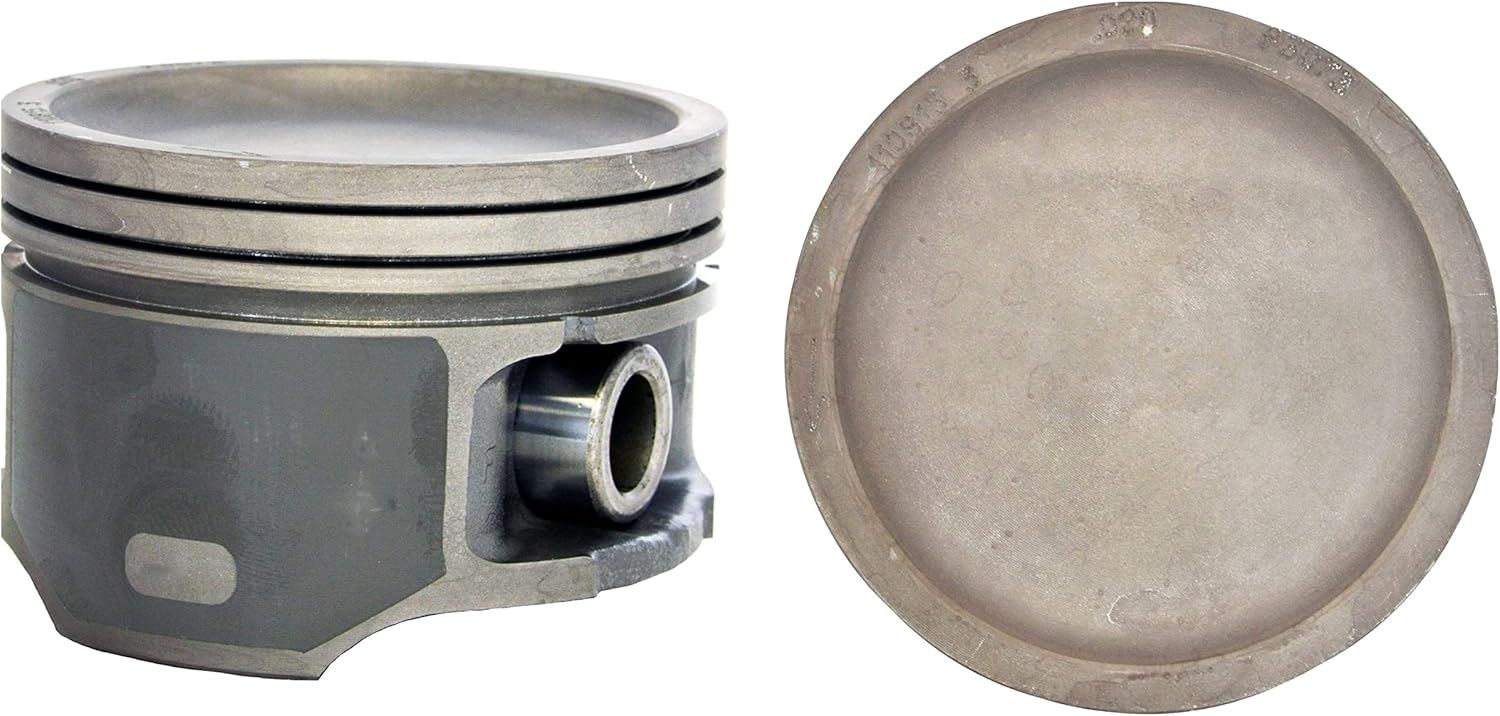
This image displays two views of the Enginetech P3073(6).50 Piston. On the left, a side profile shows the piston skirt, pin bore, and the three ring grooves. On the right, a top-down view reveals the dish-shaped crown of the piston, designed for specific engine combustion characteristics.
2. Setup and Installation Preparation
Proper preparation is crucial for the successful installation of engine pistons. This section outlines general steps and considerations before physical installation.
2.1 Pre-Installation Checks
- Verify Compatibility: Ensure the piston set (P3073(6).50) is correct for your specific engine application (e.g., GM 3.4L 207 VIN E, Impala 2004).
- Inspect Components: Carefully inspect each piston for any signs of damage, manufacturing defects, or shipping damage. Check ring grooves, pin bores, and skirt coatings.
- Measure Bore Clearance: Measure cylinder bore diameters and compare them to piston skirt diameters to ensure proper piston-to-bore clearance. Account for any decking or oversized bore compensation.
- Piston Ring Fitment: Ensure piston rings (sold separately) are correctly sized and fit properly in their respective grooves. Check ring end gap according to engine manufacturer specifications.
- Cleanliness: Thoroughly clean all engine components, including cylinder bores, connecting rods, and crankshaft, to remove any debris, old oil, or contaminants.
2.2 Preparation Steps
- Lubrication: Apply a thin coat of clean engine oil or assembly lubricant to the piston skirts, piston pin bores, and cylinder walls before installation.
- Piston Orientation: Note any directional markings on the piston crown (e.g., 'FRONT' or an arrow) and ensure correct orientation towards the front of the engine.
- Piston Pin Installation: Install piston pins into the connecting rods and pistons, ensuring proper retention (e.g., circlips or press-fit).
- Ring Compressor: Use an appropriate piston ring compressor to carefully guide the piston and ring assembly into the cylinder bore, preventing ring damage.
Note: Professional installation is recommended for engine components. Always refer to the specific vehicle service manual for detailed, step-by-step installation procedures and torque specifications.
3. Operating Principles
The Enginetech P3073(6).50 Piston is a critical component within the internal combustion engine, designed to convert the energy from combustion into mechanical motion.
3.1 Function in the Engine Cycle
- Intake Stroke: As the piston moves downward, it creates a vacuum, drawing the air-fuel mixture into the cylinder.
- Compression Stroke: The piston moves upward, compressing the air-fuel mixture, which increases its temperature and pressure.
- Power (Combustion) Stroke: The spark plug ignites the compressed mixture, causing a rapid expansion of gases. This forces the piston downward, transferring power to the crankshaft via the connecting rod.
- Exhaust Stroke: The piston moves upward again, expelling the burnt gases from the cylinder through the exhaust valve.
3.2 Design Features
The dish-top design of the P3073(6).50 piston is engineered to achieve specific compression ratios and combustion chamber characteristics for the GM 3.4L engine. The coated skirt helps reduce friction and wear, contributing to improved durability and efficiency. Precision manufacturing ensures consistent performance and proper fit within the engine's cylinders.
4. Maintenance Considerations
While pistons themselves are not typically subject to routine user maintenance, their longevity and performance are directly tied to overall engine health and proper maintenance practices.
- Regular Oil Changes: Adhere to the vehicle manufacturer's recommended oil change intervals using the specified oil type and viscosity. Clean engine oil is vital for lubricating piston skirts, rings, and pins, and for dissipating heat.
- Maintain Proper Cooling System: Ensure the engine's cooling system is functioning correctly to prevent overheating, which can lead to piston damage (e.g., scuffing, seizing).
- Fuel System Health: A properly functioning fuel system ensures correct air-fuel mixture, preventing issues like detonation or pre-ignition that can stress pistons.
- Air Filtration: Regularly replace the engine air filter to prevent abrasive particles from entering the combustion chamber, which can cause wear on cylinder walls and piston rings.
- Avoid Excessive Engine Load/RPM: Operating the engine within its designed parameters helps reduce stress on internal components, including pistons.
5. Troubleshooting Common Piston-Related Issues
This section outlines common symptoms that may indicate piston-related issues and general troubleshooting approaches. Diagnosis of internal engine problems typically requires professional expertise.
5.1 Symptoms and Potential Causes
| Symptom | Potential Piston-Related Cause |
|---|---|
| Excessive Oil Consumption | Worn or broken piston rings, damaged piston skirts, incorrect piston-to-bore clearance. |
| Blue/Gray Exhaust Smoke | Oil burning due to worn piston rings or cylinder walls. |
| Loss of Engine Power/Compression | Damaged piston rings, cracked piston, excessive piston-to-bore clearance. |
| Engine Knocking/Tapping Noise | Piston slap (excessive clearance), damaged piston pin, connecting rod issues. |
| Overheating | Severe piston damage leading to increased friction or combustion issues. |
5.2 General Troubleshooting Steps
- Compression Test: Perform a cylinder compression test to identify cylinders with low or no compression, indicating potential piston ring or valve issues.
- Leak-Down Test: A leak-down test can pinpoint where compression is being lost (e.g., past rings, valves).
- Borescope Inspection: Use a borescope to visually inspect cylinder walls and piston crowns for damage without disassembling the engine.
- Professional Diagnosis: For any suspected internal engine issues, it is highly recommended to consult a qualified automotive technician.
6. Specifications
| Attribute | Detail |
|---|---|
| Manufacturer | Enginetech |
| Brand | Enginetech |
| Model Number | P3073(6).50 |
| Product Dimensions | 9 x 14 x 4 inches (packaging) |
| Application | GM 3.4L 207 VIN E (e.g., Impala 2004) |
| Piston Type | Dish Top, Coated Skirt |
| ASIN | B00CLX2N4K |
| Date First Available | August 14, 2013 |
7. Warranty and Support
Enginetech products are manufactured to high-quality standards. For specific warranty information regarding the P3073(6).50 Piston set, please refer to the warranty documentation provided with your purchase or visit the official Enginetech website.
If you have any questions, require fitment information for your vehicle, or need technical assistance, please contact Enginetech customer support directly. Contact details can typically be found on the product packaging or the manufacturer's official website.
For purchases made through Amazon, you may also contact the seller, Titan Engines, for support related to your order.