
1. Introduction
This manual provides essential information for the proper use, installation, and maintenance of SCHMETZ Universal Machine Needles, Size 80/12. These needles are designed for general sewing applications across a wide range of woven and knit materials, making them a versatile choice for household sewing machines.
2. Product Overview
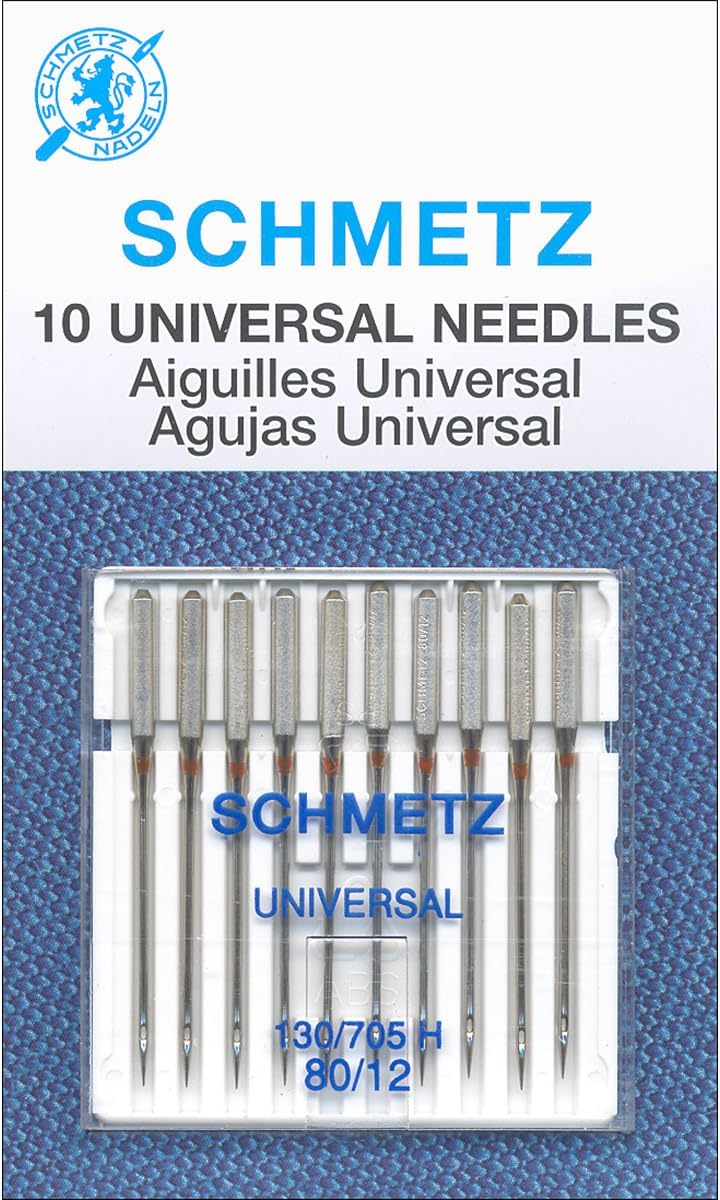
The SCHMETZ Universal Machine Needles package contains ten (10) needles of size 80/12. This size is suitable for general sewing tasks on light to medium weight fabrics. The needles feature a slightly rounded point, allowing them to penetrate woven fabrics without damaging threads and to push aside knit fibers without breaking them.

Each needle is precisely manufactured to ensure consistent quality and performance. The shank of the needle is flat on one side, ensuring correct insertion into household sewing machines. The needle size (80/12) is typically marked on the needle shank for easy identification.
3. Specifications
| Feature | Detail |
|---|---|
| Brand | SCHMETZ |
| Model Number | 71446 |
| Needle Type | Universal Point |
| Size | 80/12 |
| Quantity | 10 needles per package |
| Compatible Devices | Domestic Sewing Machines |
| Compatible Material | Wovens, Knits |
| Item Weight | 0.32 ounces |
| Product Dimensions | 0.2 x 2.25 x 3.75 inches (package) |
4. Installation Guide
Proper needle installation is crucial for optimal sewing performance and to prevent damage to your machine or fabric. Always refer to your sewing machine's specific instruction manual for detailed steps, as procedures may vary slightly between models.
- Power Off: Ensure your sewing machine is turned off and unplugged from the power outlet before changing the needle. This prevents accidental operation and potential injury.
- Lower Presser Foot: Lower the presser foot to provide better access to the needle clamp area.
- Loosen Needle Clamp Screw: Locate the needle clamp screw on the needle bar. Use the screwdriver provided with your machine (or a suitable small screwdriver) to loosen this screw. Do not remove it completely.
- Remove Old Needle: Carefully pull the old needle downwards and out of the needle clamp. Dispose of used needles safely in a sharps container or a dedicated needle disposal box.
- Insert New Needle: Take a new SCHMETZ Universal Needle. The needle has a flat side on the shank. Insert the needle into the needle clamp with the flat side facing the back of the machine (or as specified by your machine's manual). Push the needle up as far as it will go into the clamp.
- Tighten Needle Clamp Screw: While holding the needle firmly in place, tighten the needle clamp screw securely. Do not overtighten, as this can damage the screw or the needle.
- Test: Plug in and turn on your machine. Manually turn the handwheel a few times to ensure the needle moves freely and does not strike any part of the machine.
5. Usage Guidelines
SCHMETZ Universal Needles are highly versatile, but understanding their optimal use can enhance your sewing results.
- Fabric Compatibility: These needles are suitable for a wide range of woven fabrics such as cotton, linen, broadcloth, and poplin, as well as knits like jersey and interlock. For very delicate or very heavy fabrics, specialized needles (e.g., Microtex, Denim) may yield better results.
- Needle Size Selection: The 80/12 size is a good all-purpose choice for medium-weight fabrics and threads. For finer fabrics or threads, a smaller needle size (e.g., 70/10) might be preferred. For heavier fabrics or threads, a larger size (e.g., 90/14) would be more appropriate.
- Regular Replacement: Needles dull and bend over time, even if not visibly damaged. A general rule of thumb is to change your needle after every 8 hours of sewing or at the start of a new project. A dull or bent needle can cause skipped stitches, fabric damage, or even needle breakage.
- Matching Thread: Always use a thread size appropriate for your needle size. Thread that is too thick for the needle eye can cause friction, shredding, and breakage.
6. Maintenance and Storage
Proper care and storage will extend the life of your needles and ensure they are ready for your next project.
- Cleanliness: Keep needles clean and free from lint and adhesive residue. A small brush can be used to gently clean the needle eye and shaft.
- Dry Storage: Store needles in a dry environment to prevent rust. The original plastic case is ideal for this purpose.
- Safe Disposal: Never dispose of used needles directly into household trash. Use a dedicated sharps container, a hard plastic bottle with a secure lid, or a commercial needle disposal box.
- Inspection: Before each use, quickly inspect the needle for any signs of bending, burrs, or a dull point. Run your fingernail gently down the point; if it snags, the needle is dull and should be replaced.
7. Troubleshooting Common Issues
Many common sewing problems can be attributed to the needle. Here are some issues and their potential needle-related causes:
| Problem | Possible Needle-Related Cause |
|---|---|
| Skipped Stitches | Dull, bent, or incorrectly inserted needle; wrong needle type for fabric. |
| Fabric Snagging/Damage | Dull or burred needle; wrong needle type (e.g., universal on delicate knit). |
| Thread Breakage | Dull or burred needle; needle eye too small for thread; incorrectly inserted needle. |
| Loud Thumping Noise | Bent needle hitting the bobbin case or needle plate. Immediately stop sewing and replace the needle. |
| Needle Breakage | Bent needle; pulling fabric while sewing; wrong needle size for fabric thickness; hitting a pin. |
If you experience any of these issues, the first step is often to replace the needle with a new, correct type and size SCHMETZ Universal Needle.
8. Safety Precautions
Sewing machine needles are sharp and can cause injury if not handled properly.
- Always turn off and unplug your sewing machine before changing needles or performing any maintenance.
- Handle needles by the shank whenever possible to avoid pricking your fingers.
- Keep needles out of reach of children and pets.
- Dispose of used or broken needles safely in a puncture-proof container.
- Never sew over pins, as this can cause the needle to break and potentially send fragments flying.
9. Support
For further assistance or information regarding SCHMETZ products, please visit the official SCHMETZ website or consult your sewing machine's manual for specific needle compatibility and installation instructions.
You can also visit the SCHMETZ Store on Amazon for more products and resources.