
1. Introduction
This manual provides essential information for the safe and efficient operation, maintenance, and troubleshooting of your BOUDECH RAGAJI 52 Chainsaw. Please read this manual thoroughly before using the chainsaw to ensure your safety and prolong the life of the product. Keep this manual in a safe place for future reference.
2. Safety Information
Operating a chainsaw can be dangerous if proper safety precautions are not followed. Always prioritize safety to prevent serious injury or death.
2.1 Personal Protective Equipment (PPE)
- Head Protection: Wear a safety helmet to protect against falling branches.
- Eye Protection: Always wear safety glasses or a face shield to protect against flying debris.
- Hearing Protection: Use earplugs or earmuffs to prevent hearing damage from engine noise.
- Hand Protection: Wear heavy-duty work gloves for grip and protection.
- Leg Protection: Chainsaw protective trousers (chaps) are highly recommended to prevent cuts.
- Foot Protection: Wear steel-toed safety boots with good ankle support and non-slip soles.
2.2 General Safety Rules
- Read and understand the entire manual before operation.
- Never operate the chainsaw when fatigued, ill, or under the influence of alcohol or drugs.
- Ensure the work area is clear of other people, children, and pets.
- Inspect the chainsaw before each use for loose parts, damage, or wear.
- Maintain a firm grip with both hands on the chainsaw handles.
- Be aware of kickback and how to avoid it.
- Do not overreach or cut above shoulder height.
- Always turn off the engine before making adjustments, refueling, or clearing debris.
- Refuel in a well-ventilated area with the engine off and cool.
3. Setup and Assembly
Proper assembly is crucial for safe and effective operation.
3.1 Unpacking and Components
Carefully remove all components from the packaging. Verify that all parts listed in the packing list are present. The package typically includes the chainsaw unit, guide bar, saw chain, and a bar cover.

Figure 1: Main Chainsaw Unit. This image shows the complete BOUDECH RAGAJI 52 Chainsaw with the bar and chain attached, ready for use.

Figure 2: Side View of Chainsaw. A side view of the BOUDECH RAGAJI 52 Chainsaw, highlighting its compact design and controls.
3.2 Installing the Guide Bar and Chain
- Ensure the chainsaw is unplugged and the chain brake is disengaged.
- Remove the side cover by loosening the retaining knob.
- Place the guide bar onto the mounting studs.
- Carefully loop the saw chain around the drive sprocket and then into the guide bar groove. Ensure the cutting edges of the chain are facing the correct direction (refer to the arrow on the guide bar).
- Reinstall the side cover, ensuring the chain tensioning pin engages with the hole in the guide bar.
- Lightly tighten the retaining knob.
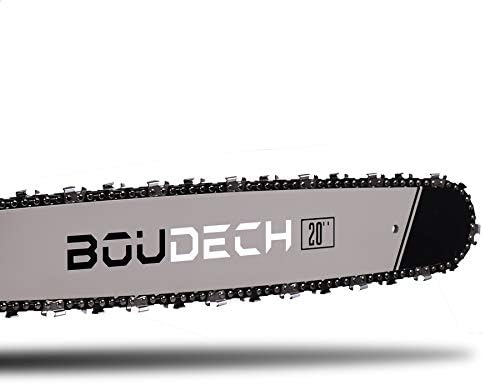
Figure 3: Guide Bar and Chain. A close-up of the Oregon guide bar and chain, showing the cutting teeth and the brand markings.
3.3 Adjusting Chain Tension
Correct chain tension is vital for safe operation and optimal cutting performance. A loose chain can derail, and a too-tight chain can cause excessive wear and damage.
- With the side cover lightly tightened, use the chain tensioning knob (usually yellow and circular) to adjust the chain tension.
- The chain should be snug against the guide bar, but still able to be pulled freely by hand. There should be no slack on the underside of the guide bar.
- Once the tension is correct, fully tighten the side cover retaining knob.

Figure 4: Chain Tensioning Knob. A close-up of the chainsaw's side, showing the yellow knob used for adjusting chain tension.
3.4 Filling the Chain Oil Reservoir
The chainsaw features an automatic oiling system. Ensure the oil reservoir is filled with appropriate chain lubricant before each use.
- Locate the oil cap (often yellow) on the top of the chainsaw.
- Unscrew the cap and fill the reservoir with high-quality chainsaw bar and chain oil.
- Do not overfill. Replace the cap securely.
- Regularly check the oil level during operation.
4. Operating Instructions
Familiarize yourself with the controls and proper cutting techniques.
4.1 Starting the Chainsaw
- Ensure the chain brake is disengaged (pulled back towards the front handle).
- For cold starts, engage the choke (if applicable) and prime the engine (if applicable).
- Place the chainsaw on a firm, flat surface.
- Hold the front handle firmly with one hand and pull the starter cord with the other until the engine starts.
- Once started, disengage the choke (if applicable) and allow the engine to warm up for a few moments.
- The "Quick & Easy Start" feature facilitates starting the engine.

Figure 5: Handles and Controls. This image highlights the ergonomic handles and accessible controls, including the chain brake lever.
4.2 Cutting Techniques
- Always maintain a balanced stance and firm grip.
- Let the chain reach full speed before contacting the wood.
- Use the bumper spikes (if present) to pivot the chainsaw for easier cutting.
- Be aware of the wood's tension to avoid pinching the bar or kickback.
- The "Silent Block" system significantly reduces vibrations during use, improving comfort and control.
- The "Auto Brake" system provides automatic chain braking, enhancing user safety.
5. Maintenance
Regular maintenance ensures optimal performance and extends the life of your chainsaw.
- Chain Sharpening: A sharp chain is essential for safe and efficient cutting. Sharpen the chain regularly or replace it when dull.
- Guide Bar Maintenance: Clean the guide bar groove and oil holes regularly. Flip the guide bar periodically to ensure even wear.
- Cleaning: After each use, clean sawdust and debris from the air filter, cooling fins, and around the chain and bar.
- Spark Plug: Inspect and clean the spark plug periodically. Replace if worn or fouled.
- Fuel Filter: Check and replace the fuel filter as needed to ensure proper fuel flow.
6. Troubleshooting
This section addresses common issues you might encounter with your chainsaw.
| Problem | Possible Cause | Solution |
|---|---|---|
| Engine does not start | No fuel, incorrect choke setting, fouled spark plug, chain brake engaged. | Fill fuel tank, adjust choke, clean/replace spark plug, disengage chain brake. |
| Chain does not cut efficiently | Dull chain, incorrect chain tension, worn guide bar. | Sharpen or replace chain, adjust chain tension, inspect/replace guide bar. |
| Chainsaw overheats | Clogged cooling fins, improper fuel mixture, prolonged heavy use. | Clean cooling fins, use correct fuel mixture, allow chainsaw to cool. |
| No chain oil flow | Empty oil reservoir, clogged oil port, damaged oil pump. | Fill oil reservoir, clean oil port, contact service for oil pump repair. |
7. Specifications
- Model: BOUDECH RAGAJI 52
- Engine Displacement: 52cc
- Horsepower: 2.1 HP
- Guide Bar Length: 20 inches (approx. 50.8 cm)
- Chain Pitch: 0.325 inches
- Power Source: Gasoline
- Product Dimensions: 90 x 25 x 29 cm
- Item Weight: 8 kg
- Special Features: Quick & Easy Start, Silent Block (vibration reduction), Auto Brake (automatic chain braking).

Figure 6: Product Dimensions. A diagram illustrating the dimensions of the chainsaw, including length, width, and height.
8. Warranty and Support
For warranty information, technical support, or service inquiries, please refer to the documentation included with your purchase or contact BOUDECH customer service. Keep your proof of purchase for warranty claims.
Visit the official BOUDECH store for more products and information: BOUDECH Store