
1. Important Safety Information
WARNING: This instruction manual contains important information for the safe installation, operation, and maintenance of the FPE NA115 circuit breaker. Failure to follow these instructions can result in electrical shock, fire, serious injury, or death. All electrical work should be performed by a qualified electrician in accordance with all national and local electrical codes and regulations.
- Always disconnect power at the main service panel before working on or near electrical equipment.
- Verify that the power is off using a voltage tester before proceeding with any installation or maintenance.
- Do not use this circuit breaker if it appears damaged or has been dropped.
- Ensure the circuit breaker rating (amperage and voltage) matches the requirements of the circuit and electrical panel.
- This device is designed for use only in listed enclosures.
2. Product Overview
The FPE NA115 is a 15 Amp, 120 Volt, 1-Pole STAB-LOK circuit breaker designed to provide overcurrent protection for electrical circuits. It is a thermal-magnetic type breaker that protects against both overloads and short circuits, automatically interrupting the flow of electricity when a fault is detected to prevent damage to wiring and appliances.

Figure 2.1: Front view of the FPE NA115 circuit breaker, showing the '15' amperage rating and 'ON' indicator.
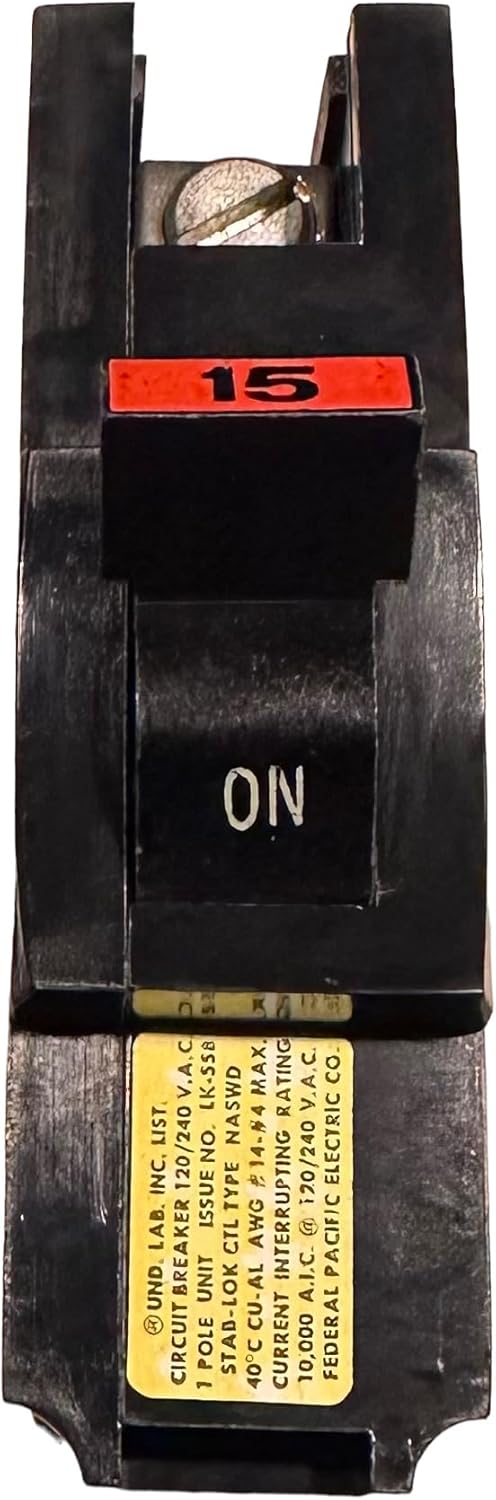
Figure 2.2: Top view of the FPE NA115 circuit breaker, highlighting the product label with specifications.
3. Installation (Setup)
Installation of circuit breakers must be performed by a qualified electrician. Incorrect installation can lead to severe hazards.
Installation Steps:
- Power Disconnection: Locate the main service panel and turn off the main circuit breaker to completely de-energize the panel.
- Verify Power Off: Use a non-contact voltage tester to confirm that all circuits in the panel are de-energized.
- Identify Slot: Select an appropriate vacant slot in the STAB-LOK electrical panel for the 1-pole breaker.
- Connect Load Wire: Connect the circuit's hot (load) wire to the terminal screw on the circuit breaker. Ensure the wire is stripped to the correct length and the screw is tightened to the manufacturer's specified torque.
- Mount Breaker: Position the circuit breaker onto the bus bar stab in the electrical panel. Apply firm, even pressure until the breaker is securely seated.
- Restore Power: Once the breaker is securely installed and all connections are verified, close the electrical panel cover. Turn the main circuit breaker back on, then turn the newly installed NA115 breaker to the 'ON' position.

Figure 3.1: Side view of the FPE NA115 circuit breaker, illustrating the connection terminal and mounting mechanism.
4. Operation
The FPE NA115 circuit breaker has a simple toggle switch for operation.
- ON Position: When the toggle is pushed fully to the 'ON' position, power is supplied to the circuit.
- OFF Position: When the toggle is pushed fully to the 'OFF' position, power to the circuit is disconnected. This is used for manual circuit interruption.
- TRIPPED Position: If an overload or short circuit occurs, the breaker will automatically move to a central, 'TRIPPED' position (often indicated by the handle being between ON and OFF, or slightly past OFF). This indicates that the breaker has interrupted the circuit to prevent damage.
Resetting a Tripped Breaker:
- Identify Cause: Before resetting, try to identify and correct the cause of the trip (e.g., unplug overloaded appliances, fix a short circuit).
- Turn OFF: Firmly push the breaker handle all the way to the 'OFF' position. You may hear a click.
- Turn ON: Firmly push the breaker handle all the way to the 'ON' position.
- If the breaker immediately trips again, do not attempt to reset it further. Contact a qualified electrician.
5. Maintenance
The FPE NA115 circuit breaker is designed for minimal maintenance. There are no user-serviceable parts inside the breaker.
- Regular Inspection: Periodically inspect the circuit breaker and the electrical panel for any signs of damage, discoloration, or loose connections. Any such findings should be addressed by a qualified electrician.
- Cleaning: If cleaning is necessary, ensure the main power to the panel is OFF. Use a dry, soft cloth to gently wipe the exterior of the breaker. Do not use liquids or abrasive cleaners.
- Testing: While not typically required for residential breakers, some commercial or industrial applications may require periodic testing. Consult local codes and a qualified electrician for such requirements.
6. Troubleshooting
If you experience issues with your FPE NA115 circuit breaker, consider the following common scenarios:
- Breaker Trips Frequently:
- Overload: Too many devices are drawing power from the circuit. Unplug some devices or redistribute loads to other circuits.
- Short Circuit: A direct connection between hot and neutral/ground wires. This is a serious issue; immediately unplug all devices on the circuit and contact an electrician.
- Ground Fault: Current leaking to the ground. Similar to a short circuit, this requires immediate attention from an electrician.
- Breaker Will Not Reset: If the breaker immediately trips after being reset, or if it cannot be moved to the 'ON' position, there is likely a persistent fault (overload, short circuit, or ground fault) on the circuit. Do not force the breaker. Contact a qualified electrician for diagnosis and repair.
- No Power to Circuit (Breaker ON): Check the main breaker in the service panel to ensure it is not tripped. If other circuits are working, the issue might be with the wiring to the specific circuit or the breaker itself. Contact an electrician.
7. Specifications
| Feature | Specification |
|---|---|
| Brand | FPE (Federal Pacific Electric) |
| Model Number | NA115 |
| Amperage Rating | 15 Amps |
| Voltage Rating | 120 Volts |
| Poles | 1-Pole |
| Mounting Type | Plug-In Mount (STAB-LOK) |
| Item Weight | Approximately 1 pound |
| Package Dimensions | Approximately 5 x 3 x 1 inches |
8. Warranty and Support
For specific warranty information, please refer to the documentation provided at the time of purchase or contact the seller directly. For technical support or assistance with installation and troubleshooting, it is recommended to consult a qualified and licensed electrician.