
Bosch 67785
BOSCH 67785 Fuel Pump Module Assembly
Instruction Manual
1. Product Overview
The Bosch 67785 Fuel Pump Module Assembly is an aftermarket component designed to meet or exceed Original Equipment (OE) quality standards. This assembly is engineered for reliable fuel delivery and long service life in compatible vehicles.
Key features include:
- Bosch Quality: Built and tested to rigorous OE quality standards.
- Innovative Technology: Patented Turbine Pump technology minimizes fuel pulsation, noise, and hot-start issues.
- Optimal Performance: Designed for reliable operation in extreme temperatures and low fuel conditions.
- Factory Tested: Each unit undergoes end-of-line function testing for quality assurance.
- Ready to Install: Includes necessary instructions and a fuel strainer to prevent debris.
This fuel pump module assembly is compatible with select vehicles, including: CHRYSLER: 2005-07 Town & Country; DODGE: 2005-07 Grand Caravan. Always verify specific vehicle fitment.
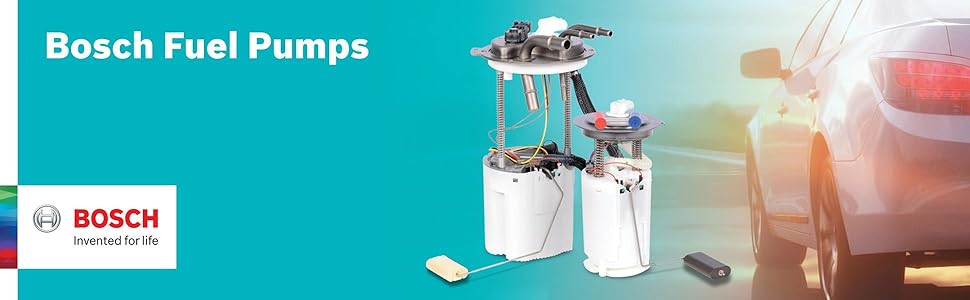
Image: Overview of Bosch Fuel Pumps, highlighting the brand's commitment to quality.
2. Important Safety Information
WARNING: This product can expose you to chemicals including lead, which is known to the State of California to cause cancer and birth defects or other reproductive harm. For more information go to www.P65Warnings.ca.gov.
- Always disconnect the vehicle's battery before beginning any installation or maintenance work on the fuel system.
- Fuel is highly flammable. Work in a well-ventilated area, away from open flames, sparks, or any ignition sources.
- Wear appropriate personal protective equipment (PPE), including safety glasses and gloves.
- Ensure the vehicle is properly supported on jack stands or a lift before working underneath it.
- Relieve fuel system pressure before disconnecting any fuel lines. Refer to your vehicle's service manual for specific procedures.
- Dispose of old fuel and components according to local environmental regulations.
- If you are not confident in performing the installation, seek assistance from a qualified automotive technician.
3. Setup and Installation
This Bosch fuel pump module assembly is designed for straightforward installation. However, due to the complexity of fuel system components, careful attention to detail and adherence to vehicle-specific service procedures are crucial.
General Installation Steps (Consult Vehicle Service Manual for Specifics):
- Preparation: Park the vehicle on a level surface. Engage the parking brake. Disconnect the negative battery terminal.
- Access Fuel Tank: Depending on the vehicle model, access to the fuel pump module may require lowering or removing the fuel tank. Refer to your vehicle's service manual for the exact procedure.
- Relieve Fuel Pressure: Safely relieve fuel system pressure as per your vehicle's service manual.
- Disconnect Components: Disconnect electrical connectors and fuel lines from the old fuel pump module. Be prepared for residual fuel spillage.
- Remove Old Module: Carefully remove the retaining ring or bolts securing the old fuel pump module to the fuel tank. Extract the old module.
- Inspect Tank: Clean any debris from the fuel tank opening. Inspect the fuel tank for any damage or contamination.
- Install New Module: Ensure the new Bosch fuel pump module assembly's fuel strainer is properly attached. Carefully insert the new module into the fuel tank opening, ensuring the float arm moves freely and does not bind.
- Secure Module: Secure the new module with the retaining ring or bolts, ensuring a tight, leak-free seal.
- Reconnect Components: Reconnect all fuel lines and electrical connectors. Double-check all connections for security.
- Final Checks: Reconnect the battery. Turn the ignition to the 'ON' position (without starting the engine) for a few seconds to allow the fuel pump to prime the system. Check for any fuel leaks.
- Test Operation: Start the engine and check for proper operation and any warning lights.

Image: Front view of the Bosch 67785 Fuel Pump Module Assembly.

Image: Side view of the assembly, showing the internal spring mechanism.

Image: Angled view of the fuel pump module, highlighting connections.

Image: Rear view of the assembly, showing the fuel level float arm.
4. Operating Principles
The Bosch 67785 Fuel Pump Module Assembly utilizes advanced Turbine Pump technology to ensure efficient and quiet fuel delivery. This design differs from older pump types by:
- Virtually eliminating fuel pulsation, which can cause inconsistent fuel flow.
- Reducing operational noise for a quieter vehicle experience.
- Improving hot-start performance, ensuring reliable engine ignition even in warm conditions.
The pump is designed to maintain consistent fuel pressure and flow, critical for optimal engine performance and fuel efficiency, even under varying temperature and fuel level conditions.
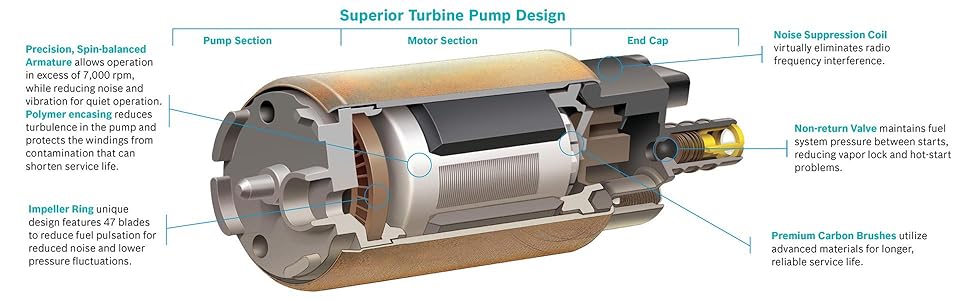
Image: Detailed diagram illustrating the internal components and superior design of Bosch's Turbine Fuel Pump.
5. Maintenance and Care
While the Bosch 67785 Fuel Pump Module Assembly is designed for long-term reliability, proper vehicle maintenance contributes to its extended service life.
- Fuel Strainer: The assembly includes an integrated fuel strainer designed to prevent dirt and debris from entering the pump. This strainer is crucial for preventing premature pump failure.
- Fuel Filter: Regularly check and replace your vehicle's external fuel filter (if applicable) as per the manufacturer's recommendations. A clogged fuel filter can put undue strain on the fuel pump.
- Fuel Quality: Use high-quality fuel to minimize contaminants that could affect the fuel system.
- Avoid Running on Low Fuel: Consistently running the vehicle with very low fuel levels can expose the fuel pump to air and reduce its cooling, potentially shortening its lifespan.
6. Troubleshooting Common Issues
If you experience issues with your vehicle's fuel system after installation, consider the following common troubleshooting steps. Always consult a qualified technician for diagnosis and repair if you are unsure.
- No Start/Hard Start:
- Check electrical connections to the fuel pump module for looseness or corrosion.
- Verify that the fuel pump fuse and relay are functioning correctly.
- Listen for the fuel pump priming sound when the ignition is turned to the 'ON' position.
- Check for proper fuel pressure using a fuel pressure gauge.
- Engine Stalling/Rough Idling:
- Could indicate inconsistent fuel delivery. Check for fuel pressure drops.
- Ensure no air leaks in the fuel lines.
- Fuel Leaks:
- Immediately address any fuel leaks. Re-check all fuel line connections and the seal of the fuel pump module to the tank.
Every Bosch fuel pump undergoes rigorous