
Introduction
The FCMP Outdoor IM4000 Dual Chamber Tumbling Composter is designed to efficiently convert kitchen and yard waste into nutrient-rich compost. Its unique dual-chamber design allows for continuous composting, enabling one batch to cure while another is actively being filled. Made from 100% post-consumer recycled resin, this composter is durable and designed for outdoor use.
Safety Information
Please read and understand all safety information before using the composter.
- Always use gloves when handling compost materials.
- Avoid composting meat, dairy products, diseased plants, or weed seeds to prevent pests and pathogens.
- Keep the composter clean and dry to prevent mold and pests.
- Do not compost sharp objects or materials that may cut or puncture the composter.
- Keep the composter away from children and pets.
- Always follow local regulations for composting.
Setup and Assembly
The FCMP Outdoor IM4000 composter is designed for straightforward assembly. Typically, assembly can be completed within 20-30 minutes with clear instructions provided. Ensure all components are present before beginning assembly.
- Unpack Components: Carefully remove all parts from the packaging and verify against the parts list in the included manual (PDF link available in product documents).
- Assemble the Frame: Construct the galvanized steel frame according to the instructions. Ensure all connections are secure.
- Attach Composter Body: Mount the dual-chamber composter body onto the assembled frame. Ensure it rotates freely and is securely seated.
- Install Doors: Attach the sliding doors to each chamber. These doors are designed for easy access and secure closure.
- Placement: Position the composter in a sunny location to aid in the composting process. Ensure it is on a stable, level surface.
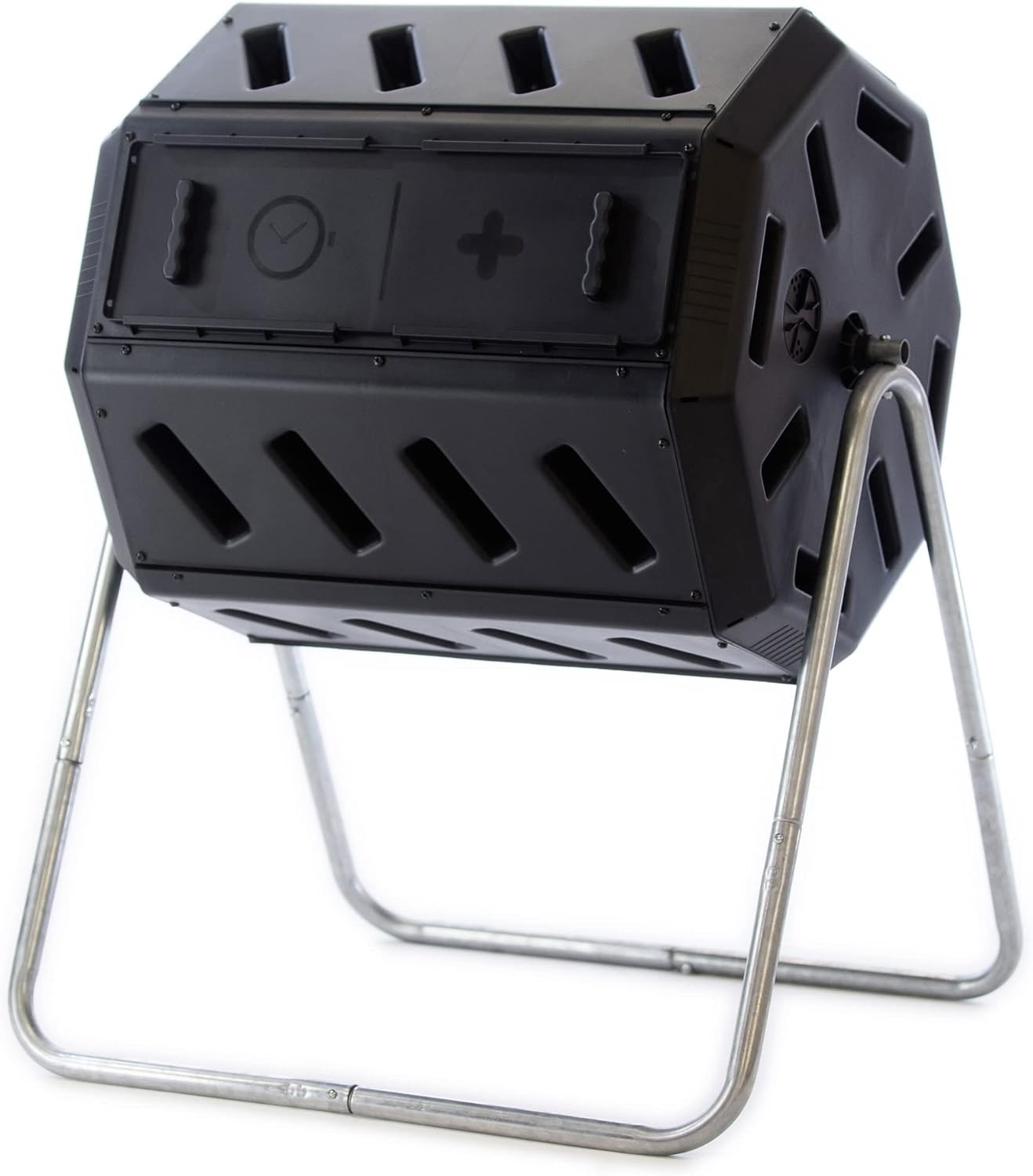
Image: The fully assembled FCMP Outdoor IM4000 Dual Chamber Tumbling Composter, showcasing its black octagonal body and sturdy galvanized steel frame.
Operating Instructions
Adding Materials
The dual-chamber design allows for continuous composting. Use one chamber for adding fresh scraps (the "working" chamber) and the other for curing finished compost (the "curing" chamber).
- "Greens" (Nitrogen-rich): Fruit and vegetable scraps, coffee grounds, tea bags, fresh grass clippings.
- "Browns" (Carbon-rich): Dry leaves, shredded newspaper, straw, wood chips, small twigs.
- Aim for a balance of approximately 2 parts "browns" to 1 part "greens" for optimal composting.
- Chop larger materials into smaller pieces to accelerate decomposition.

Image: The composter with one of its dual chambers open, ready for the addition of organic materials. The sliding door provides easy access.
Tumbling the Composter
Regular tumbling is crucial for aeration and mixing, which speeds up the composting process. The deep fins inside the composter help break up clumps and introduce oxygen.
- Close the sliding door securely after adding materials.
- Turn the composter 5-6 times every 2-3 days. The built-in hand holds make this process easy.
- The composter is designed to self-balance, ensuring the opening is always upright after tumbling.
- In ideal hot and sunny conditions with a proper balance of ingredients, finished compost can be ready in as little as 2 weeks.

Image: The FCMP Outdoor IM4000 composter situated in a lush green garden, demonstrating its outdoor placement and integration with the environment.
Harvesting Compost
Once the compost in one chamber is dark, crumbly, and smells earthy, it is ready to be used. This is typically the "curing" chamber.
- Open the door of the curing chamber.
- Carefully scoop out the finished compost.
- Use the compost to enrich garden beds, potted plants, or lawns.
- Once emptied, this chamber can become the new "working" chamber for fresh materials.
Maintenance
Proper maintenance ensures the longevity and efficiency of your composter.
- Cleaning: Periodically rinse the exterior of the composter with water to remove any buildup.
- Inspection: Regularly check the galvanized steel frame and plastic body for any signs of wear or damage.
- Odor Control: The composter's design helps trap odors. If foul odors occur, it may indicate an imbalance of "greens" and "browns" or insufficient aeration. Adjust ratios and tumble more frequently.
Troubleshooting
| Problem | Possible Cause | Solution |
|---|---|---|
| Foul Odor | Too many "greens" (nitrogen), not enough "browns" (carbon), or lack of aeration. | Add more "brown" materials (e.g., dry leaves, shredded paper). Increase tumbling frequency to improve aeration. Avoid adding meat or dairy. |
| Compost is Dry and Not Breaking Down | Insufficient moisture. | Add water until the mixture is damp like a wrung-out sponge. Avoid over-watering. |
| Compost is Slimy and Smells Sour | Too much moisture, not enough "browns", or lack of aeration. | Add more "brown" materials. Increase tumbling frequency. Ensure proper drainage. |
| Slow Decomposition | Lack of heat, insufficient aeration, or improper material balance. | Ensure composter is in a sunny spot. Increase tumbling. Adjust "green" to "brown" ratio. Chop materials smaller. |
Specifications
- Brand: FCMP Outdoor
- Model: IM4000
- Material: 100% Post-Consumer Recycled Polypropylene (BPA-free, UV-inhibited)
- Frame Material: Galvanized Steel (Corrosion Resistant)
- Color: Black
- Capacity: 37 Gallons
- Product Dimensions: 30"L x 28"W x 36"H
- Shape: Octagonal
- Item Weight: 28 Pounds
- Chambers: Dual
- Aeration: Features aeration holes and deep fins for optimal mixing and oxygenation.
- Origin: Canadian-Made
Warranty Information
For detailed warranty information, please refer to the official FCMP Outdoor website or the warranty card included with your product. Keep your proof of purchase for warranty claims.
Customer Support
If you have any questions or require assistance with your FCMP Outdoor IM4000 composter, please visit the official FCMP Outdoor website for contact information and support resources. You may also refer to the User Manual (PDF) or Installation Manual (PDF) for further details.


