
1. Introduction
This manual provides essential information for the proper installation, operation, and maintenance of your BOSCH BC1521 QuietCast Premium Ceramic Disc Brake Pad Set. Adhering to these instructions will help ensure optimal performance and longevity of the brake pads. For safety, it is recommended that brake system components be installed by a qualified automotive technician.
2. Product Overview
The Bosch QuietCast Premium Ceramic Disc Brake Pad Set is engineered for superior braking performance, quiet operation, and extended durability. These front brake pads feature advanced ceramic friction material and innovative design elements to meet or exceed original equipment (OE) specifications.
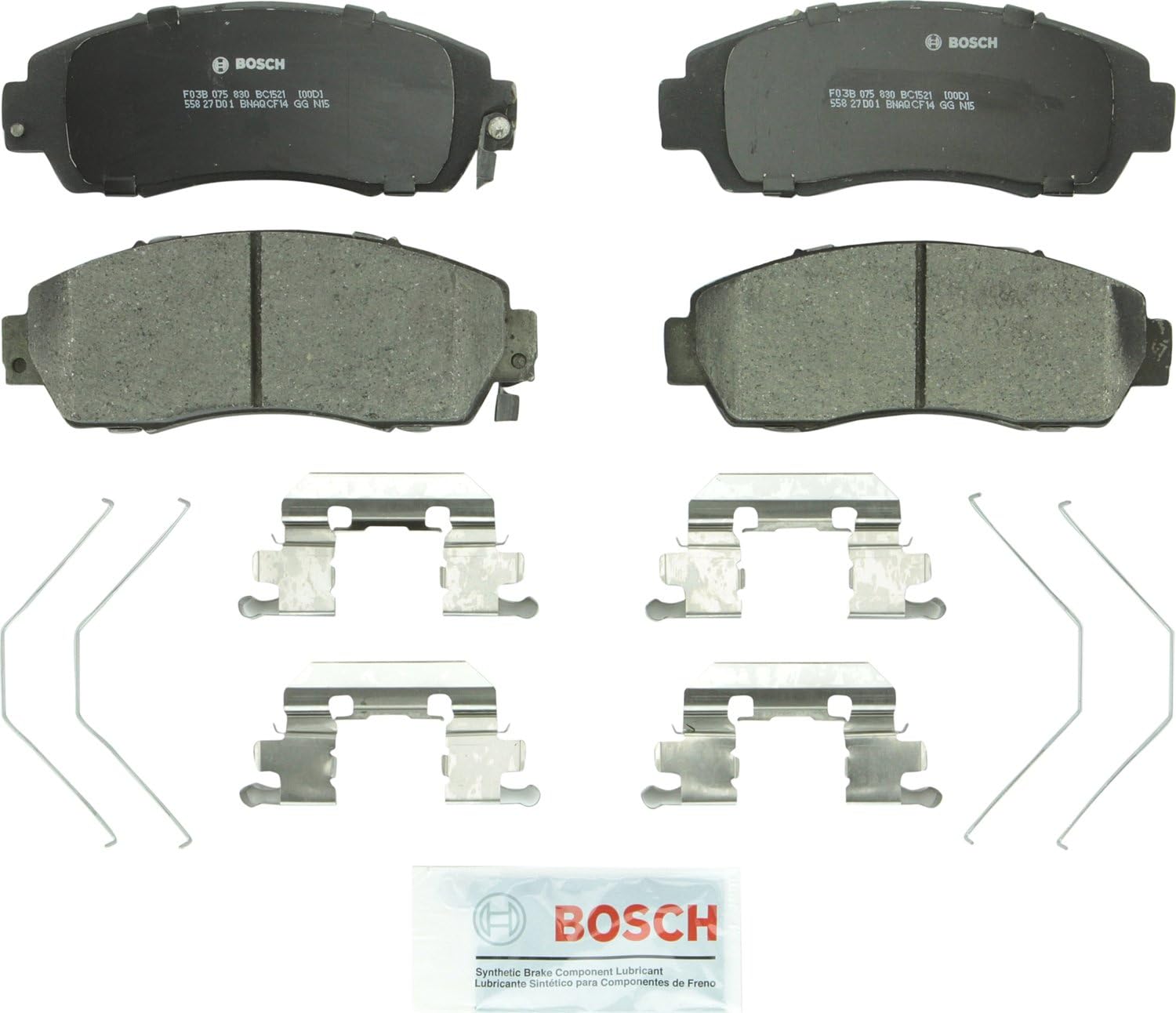
Image 1: Contents of the BOSCH BC1521 QuietCast Premium Ceramic Disc Brake Pad Set, including four brake pads, mounting hardware, and a packet of synthetic lubricant.
3. Key Features
- Ceramic Friction Material: Meticulously engineered for robust performance, exceptional stopping power, and quiet, low-dust operation.
- Molded Shim Technology (MST): Exclusive innovation for enhanced noise reduction and increased strength.
- OE Style Multilayer Rubber Core Shims: Pre-attached shims ensure a high-quality bond between rubber and steel, contributing to lower noise, increased strength, and corrosion resistance.
- Powder-Coated Backing Plates: Prevents rust and corrosion, extending the product life of the brake pad.
- OE Style Slots and Chamfers: Ensures premium quality, fit, and function, matching original equipment design.
- Complete Set: Includes pads for one axle (two wheels), a hardware kit (where applicable), and synthetic lubricant for reduced resistance on sliding contact points.
4. Compatibility
This brake pad set is designed for front axle applications on select vehicles. Always verify specific vehicle fitment details using the manufacturer's fit checker or by consulting a qualified technician.
Compatible Vehicles:
- Acura: 2019-2023 RDX, 2021 TLX
- Honda: 2011 Accord Crosstour, 2012-2016 CR-V, 2020-2022 CR-V, 2012-2015 Crosstour, 2011-2017 Odyssey, 2019-2023 Passport
- Subaru: 2016-2019 Legacy
5. Setup and Installation
Proper installation is critical for brake system safety and performance. If you are not experienced with automotive brake system repairs, it is strongly recommended to seek professional assistance.
General Installation Steps (Consult a service manual for your specific vehicle):
- Safety First: Park the vehicle on a level surface, engage the parking brake, and use jack stands to support the vehicle after lifting. Remove the wheel.
- Remove Old Components: Carefully remove the brake caliper and old brake pads. Inspect the brake rotor for wear, scoring, or warping. Replace rotors if necessary.
- Clean and Lubricate: Thoroughly clean the caliper bracket and all contact points where the brake pads and hardware will sit. Apply the included synthetic lubricant sparingly to the caliper slides, backing plate contact points, and any other metal-to-metal contact areas. Do not apply lubricant to the friction material of the brake pads or the rotor surface.
- Install New Hardware: Install the new brake pad hardware (clips/shims) into the caliper bracket.
- Install New Brake Pads: Insert the new Bosch QuietCast brake pads into the caliper bracket, ensuring they fit securely and the friction material faces the rotor.
- Compress Caliper Piston: Use a suitable tool to carefully compress the caliper piston(s) back into the caliper body to accommodate the thicker new pads.
- Reassemble: Reinstall the brake caliper over the new pads and rotor, securing all bolts to the manufacturer's specified torque.
- Bleed Brakes (If necessary): If the brake lines were opened or air entered the system, bleed the brake system according to your vehicle's service manual.
- Final Checks: Reinstall the wheel, lower the vehicle, and repeat the process for the other side of the axle. Before driving, pump the brake pedal several times until it feels firm. Check the brake fluid level.
For a detailed, vehicle-specific guide, please refer to the official User Manual (PDF) provided by Bosch.
6. Operating and Break-In Procedure
After installing new brake pads, a proper break-in (bedding-in) procedure is essential to optimize performance, reduce noise, and ensure even wear.
Recommended Break-In Procedure:
- Drive the vehicle at a moderate speed (e.g., 30-35 mph).
- Apply the brakes with moderate pressure, reducing speed to about 5-10 mph. Avoid coming to a complete stop.
- Release the brakes and drive for a short distance (e.g., 30 seconds) to allow the pads to cool.
- Repeat this process approximately 10-15 times.
- After the initial sequence, allow the brakes to cool completely for at least 30 minutes before normal driving.
During the break-in period, avoid hard braking, emergency stops, or prolonged heavy braking (e.g., descending a long hill) to prevent overheating and glazing of the pads.
7. Maintenance
Regular inspection and maintenance of your brake system are crucial for safety and performance.
Maintenance Guidelines:
- Regular Inspection: Inspect brake pads, rotors, calipers, and brake fluid levels at least every 12,000 miles or annually, whichever comes first.
- Pad Wear: Replace brake pads when the friction material wears down to the minimum thickness specified by the vehicle manufacturer, typically around 2-3mm.
- Rotor Condition: Check rotors for excessive wear, deep grooves, cracks, or warping. Replace or resurface rotors as needed.
- Brake Fluid: Ensure brake fluid is at the proper level and free from contamination. Replace brake fluid according to your vehicle manufacturer's recommendations.
- Cleanliness: Keep brake components free from dirt, oil, and grease.
8. Troubleshooting
If you experience any issues with your brake system after installation, consider the following common troubleshooting points:
Common Issues and Solutions:
- Brake Noise (Squealing/Grinding):
- Ensure proper lubrication of contact points during installation.
- Verify that anti-squeal shims are correctly installed.
- Check for proper break-in procedure completion.
- Inspect for foreign objects or uneven rotor wear.
- Reduced Braking Performance:
- Confirm proper break-in procedure.
- Check for air in the brake lines (requires bleeding).
- Inspect for brake fluid leaks or low fluid level.
- Ensure calipers are functioning correctly and not seized.
- Vibration or Pulsation:
- Often indicates warped or unevenly worn brake rotors. Rotors may need resurfacing or replacement.
- Check for loose wheel bearings or suspension components.
- Uneven Pad Wear:
- Inspect caliper slides and pistons for proper movement.
- Ensure caliper bracket is clean and free of corrosion.
If troubleshooting steps do not resolve the issue, consult a certified automotive technician.
9. Specifications
| Brand | Bosch |
| Model Number | BC1521 |
| Material | Ceramic |
| Auto Part Position | Front |
| Vehicle Service Type | Automotive |
| Specification Met | OEM |
| Item Weight | 0.01 ounces (shipping weight may vary) |
| Product Dimensions | 8.25 x 5.25 x 3.25 inches |
10. Warranty and Support
For detailed warranty information regarding your Bosch QuietCast Premium Ceramic Disc Brake Pad Set, please refer to the official Bosch Automotive website or contact Bosch customer support directly. Keep your proof of purchase for any warranty claims.
Additional support and resources, including a downloadable PDF user manual, can be found at the following link: BOSCH BC1521 User Manual (PDF).