
Introduction
The Rapala Dives-to (DT) Series crankbaits are meticulously designed to reach specific depths quickly and maintain that depth throughout the retrieve. Crafted from select balsa wood, these lures feature an internal weight, a tapered body, and a thin tail, ensuring they stay in the strike zone longer. This manual provides essential information for the optimal use and care of your DT16 crankbait.
Product Overview
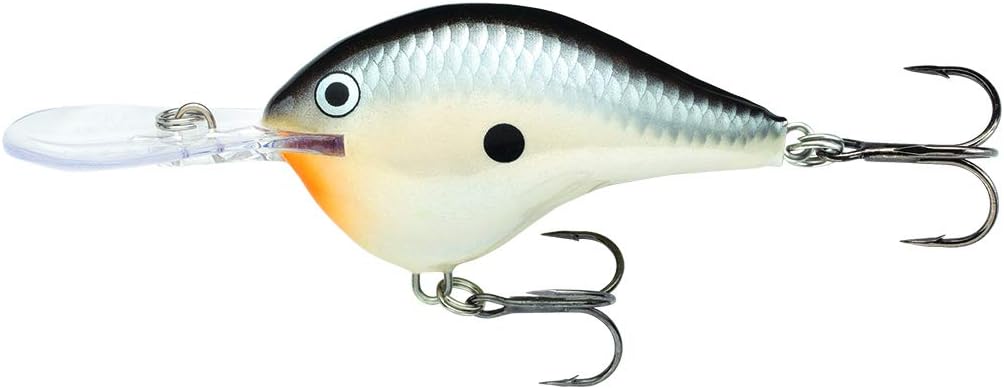
Image: The Rapala DT16 crankbait in a multi-color pattern, featuring a black back, silver sides, and a light belly with an orange throat. It has two treble hooks and a clear diving lip.

Image: A chart detailing the specifications for various Rapala DT series lures, including dive depth, length, and weight for models DT4, DT6, DT10, DT14, and DT16. The text is in Japanese and English, showing "DT (Dives-To)" and a table with columns for "Dive Depth", "Overall Length", and "Weight".
The DT16 is part of the Rapala Dives-to series, known for its ability to quickly reach and maintain specific depths. It is constructed from balsa wood, providing a unique action and buoyancy. The lure is equipped with a SureSet tail hook designed to improve hook-up rates, especially with short-striking fish.
Setup
- Line Selection: Use a fishing line appropriate for crankbait fishing, typically monofilament or fluorocarbon, ranging from 10-20 lb test depending on target species and cover.
- Knot Tying: Securely tie the lure to your main line using a strong, reliable knot such as a Palomar knot or an improved clinch knot. Ensure the knot is snug against the lure's line tie.
- Rod and Reel Pairing: Pair the DT16 with a medium-heavy to heavy action rod, ideally 6'6" to 7'6" in length, designed for crankbait fishing. A baitcasting reel with a moderate retrieve ratio (e.g., 6.3:1 to 7.1:1) is recommended for optimal control and retrieve speed.
Operating Instructions
The Rapala DT16 is designed to dive to approximately 16 feet. Its effectiveness lies in its ability to quickly reach this depth and stay there, making it ideal for targeting fish holding on deep structure.
- Casting: Make long, accurate casts to cover water effectively. The internal weight system aids in casting distance.
- Retrieve: Begin your retrieve immediately after the lure hits the water. A steady, moderate retrieve speed is generally effective. Vary your retrieve speed and incorporate pauses or twitches to mimic wounded baitfish and trigger strikes.
- Contacting Structure: Allow the lure to make contact with underwater structure (e.g., rocks, stumps, ledges). The lure's design helps it deflect off obstacles, often triggering reaction strikes.
- Depth Control: The DT16 is engineered to dive to 16 feet. Adjust your casting distance and retrieve speed to control the depth and keep the lure in the desired strike zone.

Image: An angler holding a large bass that has just been caught, with water splashing around the fish. The scene suggests successful fishing with the lure.
Maintenance
- Hook Sharpening: Regularly check the sharpness of the treble hooks. Sharpen them with a hook file or replace them if they become dull or bent. Sharp hooks are crucial for successful hook-sets.
- Cleaning: After each use, especially in saltwater, rinse the lure with fresh water to remove salt, dirt, and debris. Allow it to air dry completely before storing.
- Storage: Store lures in a tackle box or container that prevents hooks from tangling and damaging the lure's finish. Keep lures away from direct sunlight and extreme temperatures.
- Inspect Components: Periodically inspect the diving lip, split rings, and hooks for any signs of damage, cracks, or corrosion. Replace any compromised components to ensure optimal performance and safety.

Image: A Rapala DT series lure, possibly a DT16, resting on a textured wooden surface. The lure is blue and white with an orange throat, showcasing its detailed finish and clear diving lip.
Troubleshooting
| Problem | Possible Cause | Solution |
|---|---|---|
| Lure not running straight | Bent line tie or damaged diving lip. | Gently bend the line tie eyelet in the opposite direction of the lure's deviation. Inspect the diving lip for cracks or damage; if damaged, replacement may be necessary. |
| Poor casting distance | Incorrect line weight or casting technique. | Ensure line weight is appropriate for the lure's weight. Practice smooth, unhindered casting motions. |
| Hooks dull or bent | Normal wear and tear, contact with structure. | Sharpen hooks with a hook file or replace with new, sharp treble hooks of the same size. |
Specifications
| Feature | Detail |
|---|---|
| Model | DT16 (Dives-to Series) |
| Material | Balsa Wood |
| Dive Depth | Approximately 16 feet |
| Length | 2-3/4 inches (7 cm) |
| Weight | 3/4 oz (22 g) |
| Hooks | SureSet Tail Hook, Treble Hooks |
| Target Species | Bass and other predatory fish |
Note: Specifications are approximate and may vary slightly depending on specific lure color or production batch.
Warranty and Support
Rapala stands behind the quality of its products. For specific warranty information, product support, or to inquire about replacement parts, please visit the official Rapala website or contact their customer service directly.
Official Website: www.rapala.com
Please retain your proof of purchase for any warranty claims.