
Introduction
This manual provides detailed instructions for planting, cultivating, and maintaining your Seedville Pink Royal Azalea (Rhododendron Schlippenbachii) flower seeds. The Royal Azalea is a deciduous shrub known for its vibrant pink blooms in spring and attractive fall foliage. Following these guidelines will help ensure successful growth and a healthy plant.

Image: A cluster of delicate light pink Royal Azalea flowers, showcasing their intricate stamens and petals.

Image: A visual collage illustrating the Royal Azalea's beautiful spring blooms and its striking colorful foliage in autumn.
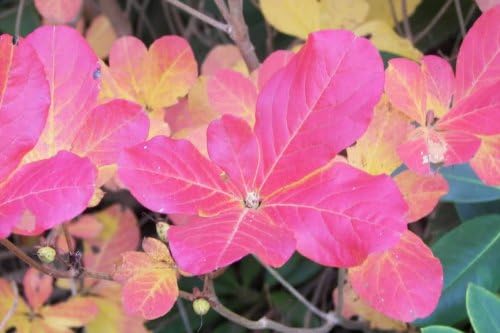
Image: Detailed view of Royal Azalea leaves transitioning to brilliant pink and yellow hues, characteristic of its fall display.
Setup: Planting Instructions
Successful germination and growth begin with proper planting. Royal Azalea seeds require specific conditions to thrive.
Recommended Planting Period
- Expected Planting Period: Spring.
Seed Preparation and Sowing
- Stratification: Royal Azalea seeds often benefit from a period of cold stratification to break dormancy. Place seeds in a moist medium (like peat moss or sand) in a sealed bag and refrigerate for 60-90 days before planting.
- Soil Preparation: Use a well-draining, acidic soil mix. Loam soil is recommended. A mix of peat moss, perlite, and pine bark is ideal.
- Sowing: Sprinkle the tiny seeds on the surface of the prepared soil. Do not cover them with soil, as they require light for germination. Gently press them into the surface.
- Moisture: Keep the soil consistently moist but not waterlogged. A humidity dome or plastic wrap can help maintain humidity.
- Temperature: Maintain a consistent temperature between 65-75°F (18-24°C) for optimal germination.

Image: Young Royal Azalea plant with small pink flowers and vibrant green foliage, illustrating the plant's early growth stage.
Operating: Care Instructions
Once germinated, proper care is crucial for the healthy development of your Royal Azalea plants.
Light Requirements
- Sunlight Exposure: Partial Shade to Light Shade. While they can tolerate sun, protection from intense afternoon sun is beneficial, especially in warmer climates.
- Indoor/Outdoor Usage: Outdoor.
Watering and Soil
- Product Care Instructions: Water.
- Moisture Needs: Moderate Watering. Keep the soil consistently moist, but avoid waterlogging. Ensure good drainage.
- Soil Type: Loam Soil. Azaleas prefer acidic soil (pH 4.5-6.0). Amend heavy clay soils with organic matter to improve drainage and aeration.
Hardiness and Growth
- USDA Hardiness Zone: 5-9.
- Expected Blooming Period: Spring.
- Plant Height: 4-6 feet in shade, 12-15 feet in sun.
- Plant Spacing: 8-10 feet apart to allow for mature size.

Image: A mature Royal Azalea bush displaying a profusion of pink blossoms, integrated into a lush garden landscape.
Maintenance
Regular maintenance helps keep your Royal Azalea healthy and promotes abundant flowering.
Pruning
- Prune immediately after flowering to shape the plant and remove any dead or damaged branches. Avoid pruning late in the season, as this can remove next year's flower buds.
Fertilization
- Fertilize in early spring with a slow-release fertilizer formulated for acid-loving plants. Follow product instructions for application rates.
Winter Protection
- In colder zones (Zone 5), apply a layer of mulch around the base of the plant in late fall to protect roots from freezing temperatures.
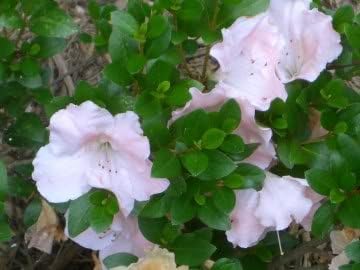
Image: Detailed view of light pink Royal Azalea flowers, highlighting their delicate structure and the surrounding green foliage.
Troubleshooting
Addressing common issues can help maintain the health and vitality of your Royal Azalea.
Poor Germination
- Issue: Seeds do not sprout or have a low germination rate.
- Solution: Ensure proper cold stratification was performed. Verify soil moisture and temperature are consistent. Azalea seeds are very small and can be challenging to germinate; patience is key.
Yellowing Leaves (Chlorosis)
- Issue: Leaves turn yellow, often with green veins.
- Solution: This often indicates a soil pH that is too high (alkaline) or a nutrient deficiency (e.g., iron). Test your soil pH and amend with sulfur or peat moss to lower it. Apply an iron supplement if necessary.
Lack of Blooms
- Issue: Plant grows but does not produce flowers.
- Solution: Ensure adequate sunlight (partial shade is ideal, too much deep shade can reduce flowering). Avoid late-season pruning, which removes flower buds. Ensure proper fertilization; too much nitrogen can promote foliage growth at the expense of flowers.
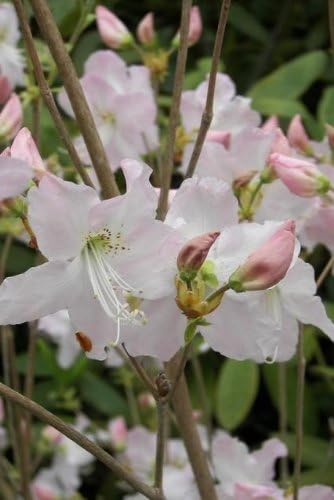
Image: A single, delicate light pink Royal Azalea bloom, highlighting its individual beauty and form.
Specifications
| Feature | Detail |
|---|---|
| Brand | Seedville |
| Model | Rhododendron Schlippenbachii Seeds |
| Indoor/Outdoor Usage | Outdoor |
| Material Feature | Natural |
| Color | Pink |
| Expected Blooming Period | Spring |
| Sunlight Exposure | Partial Shade |
| Unit Count | 50 Count |
| Expected Planting Period | Spring |
| Product Care Instructions | Water |
| USDA Hardiness Zone | 5 |
| Soil Type | Loam Soil |
| Moisture Needs | Moderate Watering |
| Number of Pieces | 50 |
| Package Dimensions | 3 x 2 x 0.01 inches |
| Item Weight | 0.176 ounces |
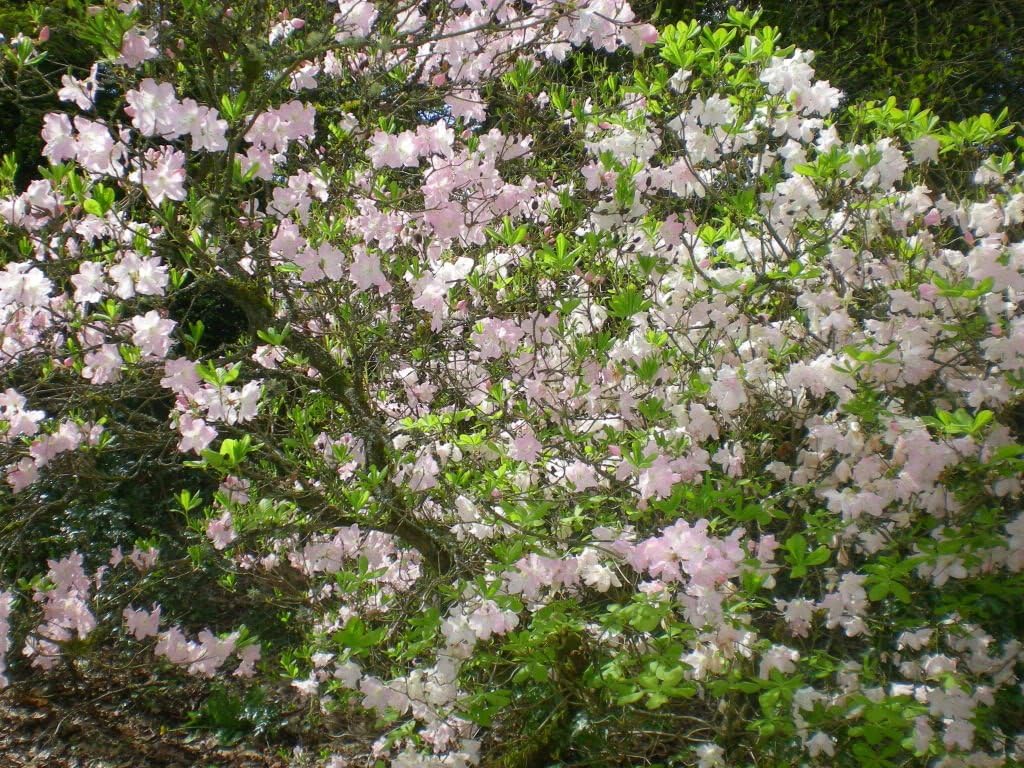
Image: An expansive view of a mature Royal Azalea bush, showcasing its impressive size and abundant light pink flowers during peak bloom.
Warranty and Support
Specific warranty information for Seedville Royal Azalea Rhododendron Schlippenbachii Flower Seeds is not provided in this manual. For any questions regarding your seeds, planting, or plant health, please contact the seller directly through the platform where the purchase was made.
It is recommended to retain your purchase receipt for any inquiries.

Image: A detailed shot of Royal Azalea flowers, some appearing almost white, others with a faint pink hue, surrounded by fresh green leaves.