1. Introduction
This user manual provides comprehensive instructions for the installation, operation, and maintenance of the ASUS P8H77-V motherboard. Designed for Intel LGA 1155 processors, this ATX motherboard features the Intel H77 chipset, offering robust performance and connectivity for personal computer systems. Please read this manual thoroughly before beginning installation to ensure proper setup and to maximize the performance and longevity of your system.

Figure 1: ASUS P8H77-V Motherboard (Angled View)
This image displays the ASUS P8H77-V motherboard from an angled perspective, showcasing its various components such as the CPU socket, RAM slots, expansion slots, and heatsinks.
2. Product Overview
The ASUS P8H77-V motherboard is built on the Intel H77 Express chipset, supporting Intel 3rd and 2nd generation Core i7/i5/i3/Pentium/Celeron processors in the LGA 1155 package. It offers a rich set of features for a balanced and efficient computing experience.

Figure 2: ASUS P8H77-V Motherboard (Top-Down View)
This image provides a clear top-down view of the ASUS P8H77-V motherboard, highlighting the layout of the CPU socket, four DDR3 DIMM slots, various PCI Express slots, SATA ports, and the chipset heatsink.
Key Components:
- CPU Socket (LGA 1155): Supports Intel 3rd/2nd Generation Core i7/i5/i3/Pentium/Celeron Processors.
- Memory Slots: Four DDR3 DIMM slots supporting up to 32GB of dual-channel DDR3 2200(O.C.)/2133(O.C.)/2000(O.C.)/1866(O.C.)/1600/1333 MHz non-ECC, unbuffered memory.
- Expansion Slots:
- 1 x PCIe 3.0 x16 slot (for discrete graphics cards)
- 1 x PCIe 2.0 x16 slot (runs at x4 mode)
- 2 x PCIe 2.0 x1 slots
- 3 x PCI slots (for legacy expansion cards)
- Storage Ports:
- 2 x SATA 6Gb/s ports (Intel H77 chipset)
- 4 x SATA 3Gb/s ports (Intel H77 chipset)
- Supports RAID 0, 1, 5, 10
- Rear I/O Ports: Includes USB 3.0, USB 2.0, HDMI, DVI, VGA, DisplayPort, Gigabit LAN, and 8-channel audio jacks.
3. Setup and Installation
Proper installation is crucial for system stability and performance. Follow these steps carefully.
3.1 Pre-Installation Checklist:
- Ensure you have all necessary components: CPU, CPU cooler, RAM, power supply, storage devices, and a compatible PC case.
- Prepare a clean, static-free workspace. Use an anti-static wrist strap or frequently touch a grounded metal object.
- Refer to your PC case manual for specific mounting instructions.
3.2 Component Installation:
- CPU Installation:
Carefully open the CPU socket lever. Align the triangular mark on the CPU with the mark on the socket. Gently place the CPU into the socket without forcing it. Close the lever to secure the CPU.
- CPU Cooler Installation:
Apply thermal paste (if not pre-applied on the cooler). Mount the CPU cooler according to its manufacturer's instructions, ensuring it is securely fastened and making good contact with the CPU. Connect the CPU fan cable to the "CPU_FAN" header on the motherboard.
- Memory (RAM) Installation:
Open the clips on both ends of the DIMM slots. Align the notch on the RAM module with the key in the slot. Press down firmly on both ends of the module until the clips snap into place. For dual-channel operation, install modules in matching colored slots (e.g., A2 and B2).
- Motherboard Mounting:
Install standoffs in your PC case according to the ATX form factor. Carefully place the motherboard onto the standoffs, aligning the screw holes. Secure the motherboard with screws, ensuring it is firmly seated but not overtightened.
- Power Supply Connections:
Connect the 24-pin ATX main power connector and the 8-pin (or 4-pin) ATX 12V CPU power connector from your power supply to the corresponding ports on the motherboard.
- Storage Device Connections:
Connect SATA data cables from your storage drives (HDD/SSD/ODD) to the SATA ports on the motherboard. Connect SATA power cables from your power supply to the drives.
- Front Panel Connections:
Connect the front panel cables (Power SW, Reset SW, HDD LED, Power LED, USB, Audio) from your PC case to the corresponding headers on the motherboard. Refer to the motherboard's silkscreen labels for correct pin alignment.
- Expansion Card Installation:
If installing a discrete graphics card or other expansion cards, insert them firmly into the appropriate PCIe or PCI slots until they click into place. Secure them with the case's retention mechanism or screws.
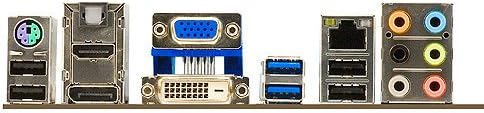
Figure 3: ASUS P8H77-V Motherboard Rear I/O Panel
This image shows a close-up of the rear input/output panel of the ASUS P8H77-V motherboard, detailing the various ports available for connecting external devices such as USB, HDMI, DVI, VGA, LAN, and audio jacks.
4. Operating Instructions
4.1 First Boot-Up:
- After all components are installed and connected, connect your monitor, keyboard, and mouse.
- Turn on the power supply and then press the power button on your PC case.
- The system should power on and display the ASUS logo or BIOS POST screen.
4.2 BIOS/UEFI Setup:
- During POST, repeatedly press the DEL key (or F2 key) to enter the BIOS/UEFI setup utility.
- In the BIOS, you can configure boot order, system time, fan speeds, and other hardware settings.
- Save changes and exit the BIOS to continue booting.
4.3 Driver Installation:
- After installing your operating system, install the necessary drivers for the motherboard's components (chipset, LAN, audio, USB 3.0, etc.).
- Drivers are typically provided on a support DVD included with the motherboard or can be downloaded from the official ASUS support website.
5. Maintenance
Regular maintenance helps ensure the longevity and optimal performance of your motherboard and system.
- Dust Removal: Periodically clean dust from inside your PC case, especially from fans (CPU cooler, case fans, GPU fans) and heatsinks. Use compressed air or a soft brush. Ensure the system is powered off and unplugged before cleaning.
- BIOS Updates: Check the ASUS support website for the latest BIOS versions. BIOS updates can improve compatibility, stability, and performance. Follow the update instructions carefully to avoid system damage.
- Driver Updates: Keep your motherboard drivers updated. Newer drivers can offer performance improvements, bug fixes, and compatibility with new software or hardware.
- Cable Management: Ensure all cables are neatly routed and not obstructing airflow. Loose cables can interfere with cooling and cause connectivity issues.
6. Troubleshooting
This section provides solutions to common issues you might encounter.
Common Issues and Solutions:
- No Power / System Not Turning On:
- Check if the power supply is switched on and properly connected to the motherboard (24-pin and 8-pin/4-pin CPU power).
- Ensure the front panel power button cable is correctly connected to the motherboard header.
- Test the power supply with another system or a power supply tester.
- No Display:
- Verify that the monitor is connected to the correct video output (motherboard integrated graphics or discrete graphics card).
- Reseat the graphics card (if applicable) and RAM modules.
- Try booting with only one RAM stick.
- Clear CMOS (refer to motherboard manual for jumper/button location).
- System Freezes or Crashes:
- Check CPU and GPU temperatures. Overheating can cause instability.
- Run memory diagnostic tools to check for faulty RAM.
- Ensure all drivers are up to date.
- Check for loose power or data cables to storage devices.
- Peripheral Not Detected (USB, SATA):
- Ensure the device is properly connected.
- Check device manager in your operating system for driver issues.
- Try a different port or device to isolate the problem.
- Verify that the ports are enabled in BIOS/UEFI.
For more complex issues, consult the ASUS support website or contact technical support.
7. Specifications
Detailed technical specifications for the ASUS P8H77-V motherboard.
| Feature | Specification |
|---|---|
| Brand | ASUS |
| Model Number | P8H77-V |
| CPU Socket | LGA 1155 |
| Chipset | Intel H77 Express |
| RAM Memory Technology | DDR3 |
| Memory Speed | 2133 MHz (O.C.) |
| RAM Memory Maximum Size | 32 GB |
| SATA Ports | 2x SATA 6Gb/s, 4x SATA 3Gb/s |
| USB 2.0 Ports | 4 (rear) + internal headers |
| Product Dimensions | 12 x 1.7 x 8.9 inches (ATX Form Factor) |
| Item Weight | 2.91 pounds |
| First Available Date | April 12, 2012 |
8. Warranty Information
ASUS products typically come with a limited manufacturer's warranty. The specific terms and duration of the warranty may vary by region and product.
- Please refer to the warranty card included with your product packaging for detailed terms and conditions.
- You can also find the most up-to-date warranty information on the official ASUS support website.
- Keep your proof of purchase (invoice or receipt) as it will be required for any warranty claims.
9. Support
For further assistance, technical support, or driver downloads, please visit the official ASUS support website:
You can also find FAQs, troubleshooting guides, and contact information for regional support centers on their website.


