
Introduction
This manual provides essential information for the setup, operation, and maintenance of your Schecter Hellraiser Extreme-4 4-String Bass Guitar. The Schecter Hellraiser Extreme-4 Bass Guitar is a 4-string instrument featuring neck-thru body construction. It includes highly figured maple tops, abalone binding, and satin finishes. The bass is equipped with black chrome covered EMG 81/89R pickups, providing an active tone. This model is available with Ebony or Maple fingerboards and a choice of bridge types.
Key Features
- Ebony Fingerboard
- Schecter Custom String-Thru Body Bridge
- Mahogany Body with Quilted Maple Top
- Neck-Thru Body Construction
- EMG 81/89R Active Pickups
- Satin Finish
Setup
1. Unpacking and Inspection
Carefully remove the bass guitar from its packaging. Inspect the instrument for any signs of damage that may have occurred during shipping. Retain all packaging materials in case the instrument needs to be returned or transported.
2. Stringing the Bass
The Schecter Hellraiser Extreme-4 uses 4 strings. When replacing strings, ensure you use the correct gauge for optimal performance and to avoid damage to the neck. For the Schecter Custom String-Thru Body Bridge, strings are fed through the back of the body and over the bridge saddles.
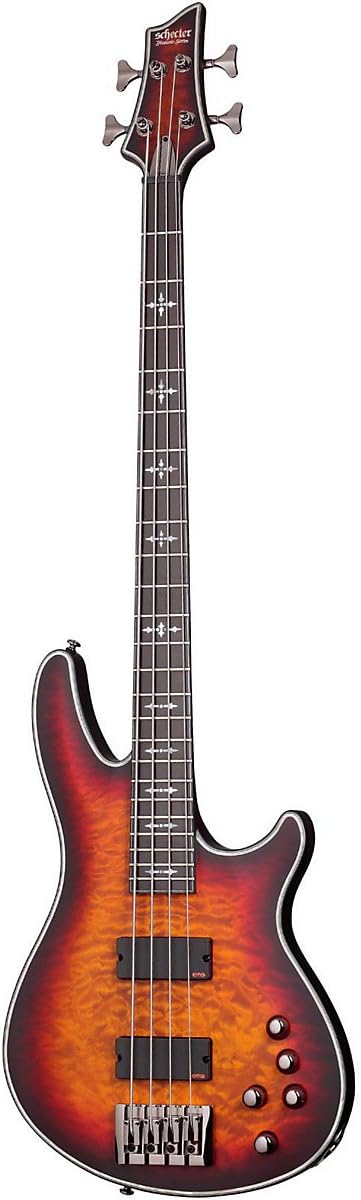
Image: Full view of the Schecter Hellraiser Extreme-4 4-String Bass Guitar, showcasing its body, neck, and headstock.
3. Tuning
Tune the bass strings to standard E-A-D-G (from thickest to thinnest). Use a reliable electronic tuner for accuracy. For drop tunings, ensure the string gauge is appropriate to maintain tension and intonation.
4. Action and Intonation Adjustment
The string action (height above the fretboard) and intonation (accuracy of notes across the fretboard) are factory set. However, environmental changes or personal preference may require adjustments. It is recommended that complex adjustments be performed by a qualified guitar technician.

Image: Close-up of the Schecter Hellraiser Extreme-4 Bass Guitar body, showing the pickups, control knobs, and bridge.
Operating the Bass Guitar
1. Connecting to an Amplifier
Connect a standard 1/4-inch instrument cable from the output jack on the bass to the input of your bass amplifier or audio interface.
2. Active Electronics and Battery
This bass features active EMG 81/89R pickups, which require power. The battery compartment is located on the back of the body and typically uses two 9V batteries. Ensure fresh batteries are installed for optimal sound quality. Unplug the instrument cable when not in use to conserve battery life.
3. Control Knobs
The Schecter Hellraiser Extreme-4 is equipped with several control knobs to shape your tone:
- Volume Knob: Controls the overall output level of the bass.
- Blend Knob: Mixes the output between the neck and bridge pickups.
- Bass EQ: Adjusts the low-frequency response.
- Mid EQ: Adjusts the mid-frequency response.
- Treble EQ: Adjusts the high-frequency response.
Experiment with these controls to find your desired sound. The EQ controls are typically notched at the 12 o'clock position for a flat response.
Maintenance
1. Cleaning
After each use, wipe down the strings and body with a clean, soft cloth to remove sweat and oils. For the satin finish, use a guitar-specific cleaner designed for matte finishes to avoid streaks or damage. Clean the fretboard periodically with a suitable fretboard conditioner, especially if it is Ebony.
2. String Replacement
Replace strings regularly, depending on usage, to maintain optimal tone and playability. Refer to the "Stringing the Bass" section for guidance.
3. Fretboard Care
The Ebony fretboard benefits from occasional conditioning to prevent drying and cracking. Apply a small amount of lemon oil or a specialized fretboard conditioner with a clean cloth, then wipe off any excess.
4. Storage
Store the bass in a climate-controlled environment, ideally in a hard case or gig bag, to protect it from extreme temperature changes and humidity fluctuations, which can affect the wood and setup.
Troubleshooting
- No Sound:
- Check if the instrument cable is fully inserted into both the bass and the amplifier.
- Ensure the amplifier is turned on and its volume is up.
- Verify that the bass's volume knob is turned up.
- Check the 9V batteries in the active electronics compartment. Replace if necessary.
- Buzzing Strings:
- String buzzing can be caused by low action, uneven frets, or a neck that needs adjustment. Consult a guitar technician for proper setup.
- Ensure proper playing technique, as improper finger placement can also cause buzzing.
- Poor Intonation:
- If notes are out of tune higher up the neck, the intonation may need adjustment at the bridge saddles. This is best done by a qualified technician.
- Old or worn strings can also affect intonation; try replacing them.
Specifications
| Feature | Detail |
|---|---|
| Model Number | 1910 |
| Item Weight | 15.25 pounds |
| Product Dimensions | 52 x 6 x 20 inches |
| Body Material | Mahogany |
| Top Material | Maple |
| Back Material | Basswood, Ebony, Mahogany, Maple |
| Neck Material Type | Maple |
| Fretboard Material | Ebony |
| Number of Strings | 4 |
| Scale Length | 34.0 inches |
| String Material | Alloy Steel |
| Finish Type | Satin |
| Instrument Type | Electric Bass |
| Bridge System | Schecter Custom String-Thru Body Bridge |
Note: Specifications are subject to change without notice.
Warranty and Support
Schecter Bass Guitars typically come with a limited warranty. Please retain your purchase receipt as proof of purchase, as this serves as your warranty documentation. For specific warranty terms and conditions, or for technical support, please refer to the official Schecter Guitar Research website or contact their customer service directly. This product does not include a separate printed warranty card or manual beyond this instruction guide.