
1. Introduction
This manual provides comprehensive instructions for the setup, operation, and maintenance of your Geemarc CL100 Amplified Big Button Corded Phone. Please read this manual carefully to ensure proper use and to maximize the benefits of your new telephone.
The Geemarc CL100 is designed for ease of use, featuring large buttons, adjustable amplification, and visual indicators, making it suitable for individuals with hearing or visual impairments. This telephone is line-powered and does not require an external power source.
Important Note: This telephone does not include a built-in answering machine, speakerphone, caller display, talking caller ID, talking keypad, or voice assist functionality.
2. Product Overview
2.1 Package Contents
- Geemarc CL100 Corded Telephone Base
- Handset
- Coiled Handset Cord
- Telephone Line Cord
- User Manual (this document)
2.2 Telephone Layout
Familiarize yourself with the key components and controls of your Geemarc CL100 phone.

Figure 1: Top-down view of the Geemarc CL100 phone, illustrating the large numeric keypad, function buttons, and memory slots.
- Handset: For speaking and listening during calls.
- Numeric Keypad: Large, easy-to-read buttons for dialing numbers.
- P1, P2, P3 Buttons: Priority memory buttons for frequently called numbers.
- M1-M9 Buttons: One-touch memory buttons for storing additional numbers.
- Redial Button: Dials the last number called.
- Flash Button: Used for network services (e.g., call waiting).
- Store Button: Used for programming memory numbers.
- Mute Button: Temporarily mutes your microphone during a call.
- Tone Control Switch: Adjusts the audio tone for clearer conversations.
- Volume Control Switch: Adjusts the receiving volume during a call.
- Visual Ringer Indicator: Flashes when an incoming call is received.
- Memory Index Card: Pull-out card for noting stored memory numbers.

Figure 2: Side view of the phone, illustrating the ringer ON/OFF switch and the telephone line connection port.
3. Setup
3.1 Connecting the Telephone
- Connect the Handset: Plug one end of the coiled handset cord into the handset and the other end into the handset jack on the side of the telephone base.
- Connect the Telephone Line: Plug one end of the telephone line cord into the jack labeled with a telephone icon on the back or side of the phone base. Plug the other end into your wall telephone jack.
- Power Source: The Geemarc CL100 is powered by the telephone line and does not require an external power adapter.
- Ringer Switch: Ensure the ringer switch (located on the side) is set to "Low" or "High" for audible ringing.
3.2 Initial Checks
- Lift the handset and listen for a dial tone. If no dial tone is present, check all connections.
- Make a test call to ensure proper functionality.
4. Operating Instructions
4.1 Making a Call
- Lift the handset.
- Wait for the dial tone.
- Dial the required number using the numeric keypad.
- Upon completion of the call, carefully replace the handset in the cradle to disconnect.
4.2 Answering a Call
When an incoming call is received, the phone will ring and the visual indicator will flash.
- Lift the handset to answer the call.
- Upon completion of the call, carefully replace the handset in the cradle.
4.3 Last Number Redial
- Lift the handset.
- Wait for the dial tone.
- Press the Redial button. The previously dialed number will be automatically redialed.
- Note: This function does not apply to numbers dialed from memory buttons.
4.4 Mute Function
The Mute button allows you to speak privately without your caller overhearing.
- During a call, press the Mute button. You will still hear the caller, but they will not hear you.
- Press the Mute button again to resume normal conversation.
4.5 Storing Telephone Numbers (Memory Dialing)
Your telephone can store 12 direct memory numbers: 3 priority numbers (P1, P2, P3) and 9 standard memory numbers (M1-M9). Priority memories can store up to 24 digits, and M1-M9 can store up to 32 digits.
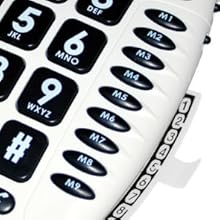
Figure 3: Detail of the memory buttons (M1-M9) and the integrated memory index card.
- Lift the handset.
- Press the Store button.
- Dial the telephone number you wish to store.
- Press the Store button again.
- Press the desired memory button (P1, P2, P3, or M1-M9) where you want to save the number.
- Replace the handset.
- Note: Use the index card located under the base to record your stored numbers for easy reference. Stored memories are protected even if the phone line is unplugged.
4.6 Dialing Stored Numbers
- Lift the handset.
- Wait for the dial tone.
- Press the appropriate memory button (P1, P2, P3, or M1-M9). The stored number will be dialed automatically.
4.7 Recall (R), * & # Buttons
These buttons are used in conjunction with new services provided on digital exchanges. For specific details on their use, please contact your network operator.
4.8 Hearing Aid Compatibility
If you are using this telephone with a hearing aid, set your hearing aid to the "T" (Telecoil) setting for optimal audio quality.
5. Maintenance
- Cleaning: Clean the telephone with a soft, damp cloth. Do not use abrasive cleaners or solvents.
- Storage: Store the phone in a cool, dry place away from direct sunlight and extreme temperatures.
- Avoid Liquids: Do not expose the telephone to water or other liquids.
- Cord Care: Ensure the handset and line cords are not tangled or pinched to prevent damage.
6. Troubleshooting
| Problem | Possible Cause | Solution |
|---|---|---|
| No dial tone | Telephone line cord is not connected properly. | Check that both ends of the telephone line cord are securely plugged in. |
| Cannot hear caller / Caller cannot hear me | Volume settings are too low or Mute is active. | Adjust the Volume control. Ensure the Mute button is not pressed. |
| Phone does not ring | Ringer switch is set to "Off". | Set the ringer switch (on the side) to "Low" or "High". |
| Stored memory numbers are lost | This phone protects stored memories even if the phone line is unplugged. If numbers are lost, they may not have been stored correctly. | Re-store the numbers following the instructions in Section 4.5. |
| Difficulty dialing quickly | Some older phone systems may require a slower dialing pace. | Try dialing at a slightly slower pace. Consider using the memory dial function for frequently called numbers. |
7. Specifications
- Model: Geemarc CL100
- Type: Corded Telephone
- Amplification: Up to 30 dB receiving volume
- Ringer Volume: Adjustable up to 85 dB
- Memory: 3 Priority (P1-P3), 9 One-touch (M1-M9)
- Power Source: Line-powered (no external adapter required)
- Hearing Aid Compatible: Yes (T-coil setting)
- Dimensions: Approximately 7.5 x 8 x 3 inches (19 x 20.3 x 7.6 cm)
- Weight: Approximately 2.25 pounds (1.02 kg)
- Color: White
8. Warranty and Support
8.1 Warranty Information
For information regarding the warranty period and terms for your Geemarc CL100 telephone, please refer to the warranty card included with your purchase or visit the official Geemarc website. Keep your proof of purchase for warranty claims.
8.2 Customer Support
If you encounter any issues not covered in the troubleshooting section or require further assistance, please contact Geemarc customer support. Contact details can typically be found on the Geemarc website or on the product packaging.
For online resources, visit: www.geemarc.com


