
1. Introduction
This manual provides essential instructions for the safe and effective use of your Ken-A-Vision T-17541C Digital CoreScope 2 Compound Microscope. Designed for biological and educational applications, this digital microscope features a monocular head, LED illumination, and a 1.3-megapixel camera for capturing still images and video. Please read this manual thoroughly before operating the device and retain it for future reference.
2. Safety Information
- Electrical Safety: Ensure the power supply is connected to a grounded outlet. Do not operate the microscope with wet hands or in damp environments. Disconnect power before cleaning or servicing.
- Handling: Always carry the microscope by its base and arm. Avoid sudden impacts or vibrations.
- Optical Care: Do not touch optical surfaces with bare fingers. Use only approved lens cleaning materials.
- Ventilation: Ensure adequate ventilation around the microscope to prevent overheating.
- Children: This device is not a toy. Adult supervision is recommended when used by children.
3. Package Contents
Verify that all items listed below are present in your package:
- Ken-A-Vision CoreScope 2 Digital Microscope
- Power Supply
- Applied Vision 4 Software (for Windows, Mac, and Linux)
- Microscope Cover
- Allen Wrench
- Instructions (this manual)
4. Product Overview
The Ken-A-Vision T-17541C CoreScope 2 is a robust digital compound microscope designed for clarity and ease of use. Key components include:
- Monocular Head: Features a fixed 45-degree incline for comfortable viewing and 360-degree rotation.
- Eyepiece: 10x widefield eyepiece with a pointer for easy observation.
- Objectives: Reverse-mounted 4x, 10x, and 40xS DIN achromatic lens objectives, protected against humidity and climate variations.
- Floating Stage: Round stage with spring-loaded clips to secure slides and a stop mechanism to prevent damage.
- Focus Knobs: Separate coaxial coarse and fine focus controls for precise adjustments.
- LED Illumination: Built-in bright and cool white LED light with dimmer and on/off switch.
- Digital Camera: Integrated 1.3-megapixel (MP), 720P high-definition (HD) CMOS camera with a built-in USB port for direct connection to a computer or monitor.

Figure 1: Front-side view of the Ken-A-Vision T-17541C Digital CoreScope 2 Compound Microscope, showing the monocular head, objective lenses, floating stage, focus knobs, and connected USB cable.
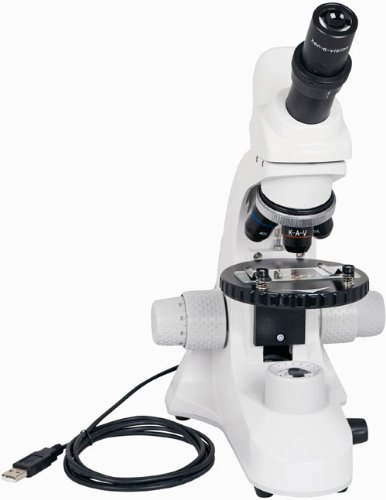
Figure 2: Angled view of the Ken-A-Vision T-17541C Digital CoreScope 2 Compound Microscope, highlighting the compact design and the position of the objective lenses and stage.
5. Setup
- Unpacking: Carefully remove the microscope and all accessories from the packaging.
- Placement: Place the microscope on a stable, level surface away from direct sunlight, excessive heat, or vibrations.
- Power Connection: Connect the provided power supply to the microscope and then plug it into a standard electrical outlet (120-240V). The microscope can also be powered via a low voltage USB computer connection.
- Software Installation: For digital imaging, install the Applied Vision 4 software on your computer. The software is compatible with Windows (XP SP2 or later, Vista, 7), Mac (OS 10.5 or later), and Linux. Follow the on-screen instructions during installation.
- USB Connection: Connect the microscope's built-in USB port to your computer using a USB cable. This connection enables the digital camera functionality and can also provide power.
- Remove Cover: Remove the microscope cover before use.
6. Operating Instructions
- Power On: Turn on the microscope using the on/off switch for the LED illumination.
- Adjust Illumination: Use the dimmer control to adjust the brightness of the LED light to a comfortable level for viewing your specimen.
- Place Specimen: Place your prepared slide on the floating stage, securing it with the spring-loaded clips.
- Select Objective: Rotate the nosepiece to select the desired objective lens (4x, 10x, or 40xS). Start with the lowest magnification (4x) for initial viewing.
- Focusing:
- Use the coarse focus knob (larger knob) to bring the specimen into approximate focus.
- Then, use the fine focus knob (smaller knob) for precise focusing and to achieve a sharp image.
- Eyepiece Adjustment: Adjust the variable diopter on the eyepiece for optimal visual clarity.
- Rotate Head: The monocular head can be rotated 360 degrees for shared viewing or comfortable positioning.
- Digital Imaging (with software):
- Ensure the microscope is connected to your computer via USB and the Applied Vision 4 software is running.
- The software will display the live feed from the 1.3 MP HD CMOS camera.
- Use the software interface to capture still images or record video. Refer to the Applied Vision 4 software manual for detailed instructions on its features.
- Power Off: When finished, turn off the LED illumination and disconnect the power supply. Cover the microscope with the provided dust cover.
7. Maintenance
- Cleaning the Body: Wipe the microscope body with a soft, damp cloth. Avoid using harsh chemicals or solvents.
- Cleaning Lenses: Use a soft lens brush to remove dust. For smudges, use a specialized lens cleaning solution and lens paper. Do not use abrasive materials.
- Storage: Always cover the microscope with the dust cover when not in use to protect it from dust and debris. Store in a dry environment.
- Humidity Control: The objective lenses are designed with humidity and climate control protection, but prolonged exposure to extreme conditions should be avoided.
8. Troubleshooting
- No Illumination: Check if the power supply is properly connected and the on/off switch is engaged. Ensure the dimmer is not set to its lowest setting.
- Image is Blurry: Adjust both the coarse and fine focus knobs. Ensure the objective lens is properly clicked into place. Clean the eyepiece and objective lenses if smudges are present.
- No Image on Computer Screen: Verify the USB cable is securely connected to both the microscope and the computer. Ensure the Applied Vision 4 software is installed and running correctly. Check your computer's device manager to confirm the camera is recognized.
- Specimen Not Centered: Gently adjust the position of the slide on the floating stage.
9. Specifications
| Feature | Specification |
|---|---|
| Model Number | T-17541C |
| Viewing Configuration | Monocular with 45-degree incline, 360-degree rotation |
| Eyepiece | 10x widefield with pointer |
| Objective Lenses | 4x, 10x, 40xS DIN Achromatic |
| Maximum Magnification | 400x |
| Illumination | Bright and cool LED white light with dimmer and on/off switch |
| Focus | Coaxial coarse and fine focus |
| Digital Camera | 1.3 MP, 720P HD CMOS, USB 2.0 |
| Software Compatibility | Applied Vision 4 (Windows XP SP2+, Vista, 7; Mac OS 10.5+; Linux) |
| Stage | Round floating stage with 2 spring-loaded clips |
| Power Source | Low voltage USB computer connection or external USB power plug, 120-240V |
| Material | Aluminum |
| Product Dimensions (H x W x D) | 40.0 x 30.48 x 22.86 cm (15.75 x 12 x 9 inches) |
| Weight | 2.31 kg (5.1 lb) |
| Certificates | ISO:9001 – 2000, CE, CSA, RoHS |
10. Warranty and Support
The Ken-A-Vision T-17541C Digital CoreScope 2 Compound Microscope is manufactured by Ken-A-Vision Manufacturing, headquartered in Kansas City, MO. For warranty information, technical support, or service inquiries, please refer to the official Ken-A-Vision website or contact their customer service department directly. Please have your model number (T-17541C) and purchase date available when contacting support.
