
Introduction to Crimson Bottlebrush
The Crimson Bottlebrush (Callistemon citrinus) is a striking evergreen shrub or small tree native to Australia, known for its vibrant, brush-like red flowers that bloom profusely. These unique flowers attract hummingbirds, bees, and butterflies, making it an excellent choice for pollinator gardens. This guide provides detailed instructions for successfully cultivating Crimson Bottlebrush from seed, ensuring healthy growth and abundant blooms.
Setup: Preparing for Planting
Proper preparation is crucial for successful seed germination and plant establishment.
- Seed Preparation: Bottlebrush seeds typically do not require stratification. They are very small and can be sown directly.
- Sunlight Requirements: Full sun exposure is ideal for Crimson Bottlebrush. Ensure your planting location receives at least 6 hours of direct sunlight daily.
- Soil Requirements: This plant thrives in well-draining soil. A loam soil type is preferred. While adaptable to various soil conditions, good drainage is essential to prevent root rot.
- Hardiness Zone: Crimson Bottlebrush is hardy in USDA Zones 8-11. In colder climates, it can be grown in containers and brought indoors during winter or treated as an annual.

Image: A close-up view of a single, fully bloomed crimson bottlebrush flower, showcasing its distinctive brush-like appearance and rich red color.
Operating: Planting Instructions
Follow these steps for optimal germination and initial growth:
- Choose a Container or Bed: For starting seeds, use seed trays or small pots filled with a high-quality seed-starting mix. If direct sowing, prepare a well-drained garden bed.
- Sowing the Seeds: Due to their small size, sprinkle the seeds thinly over the surface of the soil. Do not cover the seeds with soil, as they require light for germination. Gently press them into the surface.
- Watering: Lightly mist the soil surface with water to ensure good seed-to-soil contact without displacing the tiny seeds. Keep the soil consistently moist but not waterlogged.
- Germination: Place the seed tray in a warm location with plenty of light. Germination typically occurs within 2-4 weeks, but can vary.
- Thinning and Transplanting: Once seedlings have developed a few sets of true leaves and are large enough to handle, thin them to the desired spacing (8-10 feet apart if direct sowing, or transplant to individual pots).
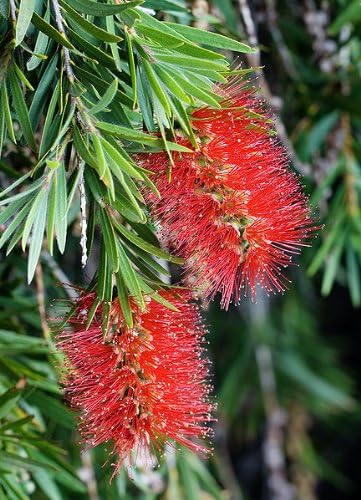
Image: A branch displaying two vibrant crimson bottlebrush flowers, surrounded by slender green leaves, illustrating their natural growth habit.
Maintenance: Ongoing Care
Consistent care will help your Bottlebrush thrive and produce abundant blooms.
- Watering: Once established, Bottlebrush plants are relatively drought-tolerant but perform best with moderate watering, especially during dry periods. Ensure the soil dries out slightly between waterings.
- Sunlight: Maintain full sun exposure for vigorous growth and prolific flowering.
- Pruning: Prune after flowering to maintain shape, encourage bushier growth, and promote more blooms. Remove spent flowers to prevent seed formation and redirect energy to new growth.
- Fertilization: Fertilize sparingly with a balanced, slow-release fertilizer in spring. Avoid high-phosphorus fertilizers, which can be detrimental to Australian native plants.
- Pest and Disease: Bottlebrush plants are generally resistant to most pests and diseases. Ensure good air circulation and proper watering to prevent fungal issues.

Image: A single crimson bottlebrush flower, captured from a slightly different angle, highlighting its texture and the surrounding evergreen leaves.
Troubleshooting Common Issues
Addressing common problems can help ensure the health of your Bottlebrush plant.
- Seeds Not Germinating: Ensure seeds are not covered by soil and receive adequate light and consistent moisture. Temperature should be consistently warm.
- Poor Growth/Lack of Blooms: This is often due to insufficient sunlight. Ensure the plant receives full sun. Over-fertilization, especially with high phosphorus, can also inhibit flowering.
- Yellowing Leaves: Can indicate overwatering or nutrient deficiency. Check soil drainage and adjust watering schedule. A balanced fertilizer may be needed if nutrients are lacking.
- Leggy Growth: Insufficient light can cause plants to stretch. Move to a brighter location or provide supplemental lighting for seedlings.

Image: A unique top-down perspective of a crimson bottlebrush flower, revealing its central structure and the arrangement of its needle-like leaves.
Specifications
| Feature | Detail |
|---|---|
| Plant Type | Bottlebrush (Callistemon citrinus) |
| Number of Seeds | 40 |
| Expected Bloom Time | Mid Summer |
| Hardiness Zone | USDA 8 - 11 |
| Mature Plant Height | Up to 15 Feet |
| Plant Spacing | 8 - 10 Feet |
| Light Requirements | Full Sun |
| Soil Type | Loam Soil (Well-draining) |
| Moisture Needs | Moderate Watering (Average - Dry) |
| Flower Color | Red |
| Material Feature | Heirloom Seeds |
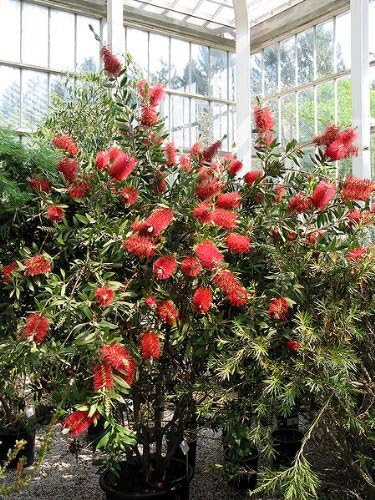
Image: A mature crimson bottlebrush plant, showcasing its full size and abundant red flowers, indicating its potential growth.
Warranty and Support
As this product consists of natural seeds, specific germination rates can vary due to environmental factors beyond our control. Seedville strives to provide high-quality, viable seeds. For any questions regarding your purchase or cultivation, please refer to the seller's contact information on the platform where the seeds were acquired. Please note that specific warranty details for live plant materials like seeds are typically limited. Always ensure you follow the planting instructions carefully for the best results.