1. Introduction
Thank you for choosing the Sony SL-HF701D Betamax Deck. This instruction manual provides essential information for the safe and efficient operation of your Betamax video cassette recorder. Please read this manual thoroughly before using the unit and retain it for future reference.
The SL-HF701D is a premium vintage Betamax deck featuring advanced capabilities such as βIs recording and playback, Super High Band Betamax technology, 16-face multi-play, and zoom functions, designed to deliver high-quality video and audio performance.
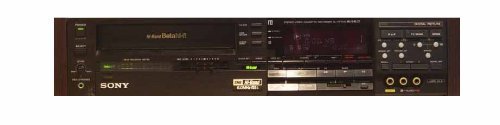
Figure 1: Sony SL-HF701D Betamax Deck
This image displays the front panel of the Sony SL-HF701D Betamax Deck, showcasing its classic design and primary controls.
2. Setup
Before operating your Betamax deck, ensure all connections are made correctly. Refer to the diagrams below for typical setup configurations. Specific connection ports may vary slightly based on your television or audio system.
2.1 Connecting to a Television
- Power Off: Ensure both the Betamax deck and your television are powered off before making any connections.
- Video Connection: Connect a video cable (typically yellow RCA) from the "VIDEO OUT" port on the Betamax deck to the "VIDEO IN" port on your television.
- Audio Connection: Connect audio cables (white for left, red for right RCA) from the "AUDIO OUT" ports on the Betamax deck to the "AUDIO IN" ports on your television or audio receiver.
- Antenna/Cable Connection (Optional): If you intend to record broadcast television, connect your antenna or cable TV line to the "ANTENNA IN" port on the Betamax deck, and then connect the "ANTENNA OUT" port to your television's antenna input.
- Power On: Plug in the power cords for both the Betamax deck and the television. Power on the television and select the appropriate video input source (e.g., "Video 1", "AV", "Line In").
Note: The provided videos in the product listing are for a different product (a video capture device) and are not relevant to the setup of the Sony SL-HF701D Betamax Deck. Therefore, no videos are embedded in this section.
3. Operating Instructions
3.1 Basic Playback
- Insert Tape: Gently insert a Betamax video cassette into the tape slot until it is fully loaded.
- Press Play: Press the PLAY button on the front panel or remote control. The video should appear on your television screen.
- Adjust Volume: Use the volume controls on your television or audio receiver to adjust the sound level.
- Stop Playback: Press the STOP button to halt playback.
- Fast Forward/Rewind: Use the FF (Fast Forward) and REW (Rewind) buttons to navigate through the tape.
3.2 Recording
- Insert Recordable Tape: Ensure a blank or recordable Betamax cassette is inserted.
- Select Input Source: Use the INPUT SELECT button (or similar) to choose the desired recording source (e.g., TV tuner, AV input).
- Press Record: Press the REC (Record) button. On some models, you may need to press REC and PLAY simultaneously. The recording indicator will illuminate.
- Stop Recording: Press the STOP button to end the recording.
3.3 Advanced Features (SL-HF701D Specific)
- βIs Recording/Playback: This feature enhances video quality, particularly for high-fidelity recordings. Refer to the on-screen menu or specific buttons for activation.
- Super High Band Betamax: The SL-HF701D supports Super High Band (SHB) Betamax, offering superior picture resolution. Ensure you use SHB compatible tapes for optimal performance.
- 16-Face Multi-Play: This function allows for advanced playback options, potentially displaying multiple frames or segments simultaneously. Consult the user interface for navigation and selection.
- Zoom Function: Utilize the zoom feature during playback to magnify specific areas of the video image.
4. Maintenance
Regular maintenance ensures the longevity and optimal performance of your Betamax deck.
- Cleaning the Exterior: Wipe the exterior of the unit with a soft, dry cloth. Avoid using abrasive cleaners or solvents.
- Head Cleaning: Over time, video heads can accumulate dirt, leading to poor picture quality. Use a specialized Betamax head cleaning cassette sparingly, following its instructions. Excessive use can cause wear.
- Dust Prevention: Keep the unit in a clean, dust-free environment. Ensure ventilation slots are not obstructed.
- Tape Care: Store Betamax tapes vertically in their cases, away from direct sunlight, heat, and magnetic fields. Rewind tapes fully before storing.
- Avoid Liquids: Never spill liquids on or inside the unit.
5. Troubleshooting
If you encounter issues with your Sony SL-HF701D, refer to the following common problems and solutions:
| Problem | Possible Cause | Solution |
|---|---|---|
| No picture or sound | Incorrect input selection on TV; loose cables; power off. | Check TV input source; ensure all cables are securely connected; verify power to both units. |
| Poor picture quality (snowy, distorted) | Dirty video heads; damaged tape; weak signal. | Use a head cleaning cassette; try a different tape; check antenna/cable connection. |
| Tape will not load or eject | Tape jam; mechanical issue. | Do not force the tape. Power cycle the unit. If the problem persists, seek professional service. |
| Remote control not working | Dead batteries; obstructed sensor. | Replace batteries; ensure clear line of sight to the unit's remote sensor. |
If these solutions do not resolve the issue, contact Sony customer support or a qualified service technician.
6. Specifications
- Brand: Sony
- Model: SL-HF701D
- Recording System: βIs (Beta Is)
- Video System: Super High Band Betamax
- Special Features: 16-face multi-play, Zoom function
- Dimensions (Approx.): 61 x 46.2 x 18 cm (Width x Depth x Height)
- Weight (Approx.): 11.22 kg
- ASIN: B0046QAD7Y
- First Available on Amazon.co.jp: 2010/10/10
Note: Specifications are subject to change without notice. For the most accurate and up-to-date information, please refer to the product's official documentation or contact Sony directly.
7. Warranty and Support
For warranty information, please refer to the warranty card included with your product or contact the original point of purchase. As this is a vintage product, warranty terms may vary or be expired.
For technical support, service, or inquiries regarding your Sony SL-HF701D Betamax Deck, please visit the official Sony support website or contact Sony customer service in your region. You can find contact details on the official Sony website: Sony Support


