
Product Overview
The Aerobin 400 is an insulated composter designed for year-round compost production. It features double-wall polystyrene-core sides and a patented "lung" system for self-aeration. A 4-gallon reservoir collects leachate, which can be diluted to create "compost tea." This composter requires no turning; simply add waste at the top and remove finished compost through the bottom side doors. It processes a similar capacity to 3-4 standard 110-gallon composters.
Key Features
- Double-wall polystyrene-core sides for year-round composting.
- Patented "lung" system for self-aeration, eliminating the need for manual turning.
- Integrated 4-gallon reservoir for collecting nutrient-rich leachate.
- Convenient top-loading design for adding waste.
- Easy access bottom side doors for compost removal.
- High capacity, equivalent to 3-4 standard 110-gallon composters.
- Dimensions: 29" W x 29" L x 47" H.
Setup and Assembly
The Aerobin 400 is designed for straightforward assembly, typically involving snapping components together. For detailed visual instructions, please refer to the official assembly video provided below.
Official assembly guide for the Aerobin 200 & 400 composters. This video demonstrates the step-by-step process of putting the unit together.
Placement: Choose a level location for your composter. It is recommended to raise the Aerobin 400 slightly above ground level using bricks or similar sturdy supports to ensure proper air circulation and leachate collection. Ensure there is easy access to both the top lid for adding waste and the bottom side doors for compost removal.
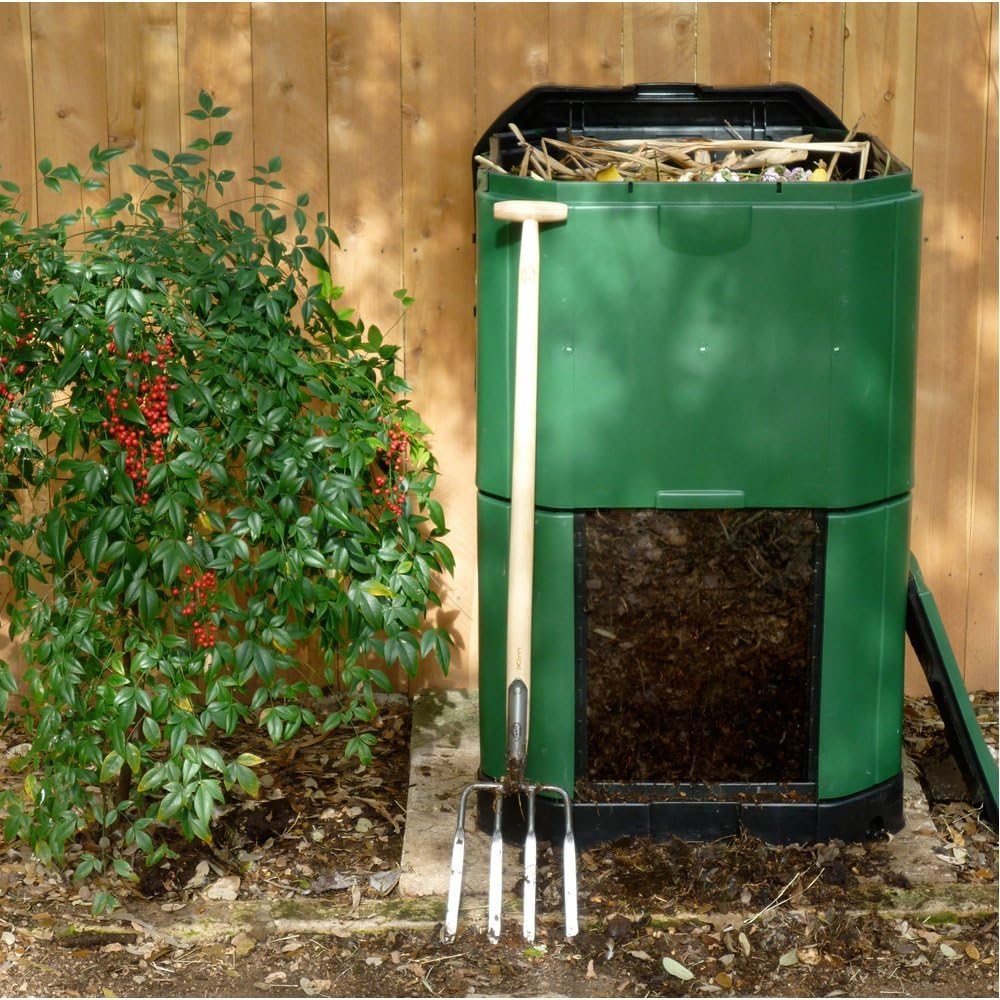
The Aerobin 400 composter positioned in a garden, demonstrating its compact footprint and accessibility. A pitchfork rests against its side, and a side access door is visible.
Initial Setup: To initiate the composting process, place a layer of hay or moist soil at the bottom of the composter. Adding a compost starter can accelerate decomposition.
Operating Instructions
The Aerobin 400 is designed for ease of use with a continuous composting method.
Adding Waste
- Open the top lid and add your organic waste.
- Suitable materials include vegetable and fruit scraps, coffee grounds, tea bags, eggshells, yard clippings, and fallen leaves.
- Avoid adding dairy products or meat to prevent odors and pests.
- After adding kitchen scraps, cover them with a layer of dry leaves or yard clippings to minimize odor.
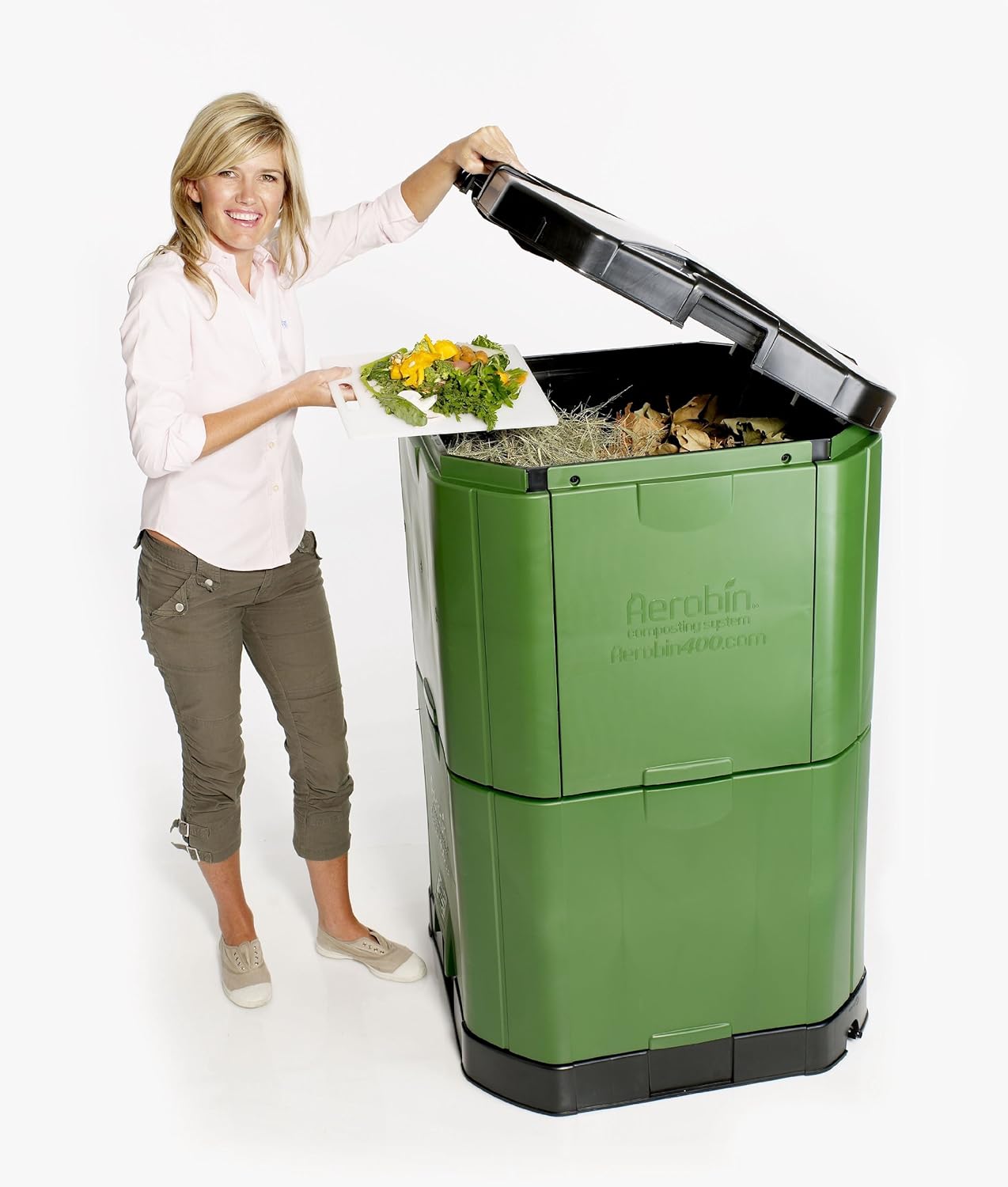
A user demonstrates adding kitchen scraps to the top of the Aerobin 400, highlighting the convenient top-loading feature.
No Turning Required
Thanks to its patented "lung" aeration system, the Aerobin 400 does not require manual turning. The internal structure ensures adequate airflow throughout the compost pile, facilitating efficient decomposition.

An internal view of the Aerobin 400's patented central aeration lung, illustrating how air and moisture circulate to promote decomposition without manual turning.
Leachate Collection
The composter is equipped with a 4-gallon reservoir at the base to collect leachate, a liquid organic fertilizer often referred to as "compost tea." This can be drained and diluted for use on plants.

Detail of the leachate collection system, showing the valve for draining liquid organic fertilizer. The valve should be turned 1/4 turn only to open.
Compost Removal
Finished compost can be removed from the bottom side doors. These doors provide easy access to the most decomposed material without disturbing the newer waste at the top.
This video demonstrates the operation of the Exaco Aerobin 400, including adding materials and accessing finished compost from the side doors.
Maintenance
- Leachate Drainage: Regularly check and drain the leachate reservoir at the bottom. Dilute the collected liquid before using it as fertilizer.
- Preventing Blockages: If the leachate outlet becomes blocked, avoid backflushing with a garden hose, especially if there is insect activity, as this could harm them. Instead, use a flexible tool like a pipe cleaner or a straightened garden hoop to clear the tube.
- Odor Control: If an odor develops, ensure new kitchen scraps are covered with a layer of dry leaves or yard clippings.
- Pest Management: Regularly open the side doors to allow any trapped insects to escape safely. Remove any larger pests like spiders that may be lurking around the composter.
- Compost Removal Tools: When removing finished compost, use flexible plastic tools (e.g., plastic cooking spoons, yogurt containers) instead of sharp metal garden tools to avoid injuring beneficial insects and worms.
Troubleshooting
- Odor: A slight odor can occur. Covering fresh kitchen scraps with dry leaves or grass clippings usually resolves this.
- Blocked Leachate Tube: If the leachate tube is blocked, use a flexible tool (e.g., pipe cleaner, garden hoop) to gently clear it. Avoid forceful backflushing.
- Pests: The insulated and enclosed design of the Aerobin 400 helps deter larger pests. However, small insects may enter through bottom holes. Regularly opening the side doors can help them escape. Ensure the lid is securely closed.
- Slow Decomposition: Ensure a good balance of 'greens' (nitrogen-rich, e.g., food scraps) and 'browns' (carbon-rich, e.g., dry leaves, grass clippings). Maintain adequate moisture levels (like a damp sponge).
Product Specifications
| Feature | Detail |
|---|---|
| Material | Plastic |
| Color | Green |
| Brand | Exaco |
| Capacity | 113 Gallons |
| Product Dimensions | 29"L x 29"W x 47"H |
| Shape | Rectangular |
| Item Weight | 23.7 pounds |
| Item Model Number | Aerobin 400 |
Warranty and Support
For any questions regarding your Exaco Aerobin 400 Insulated Composter, including warranty information or technical support, please contact Exaco customer service directly. Refer to the product packaging or the official Exaco website for the most current contact details and warranty terms.