
MIRRO Mirro-matic Pressure Pan and Canner
Mirro-matic Pressure Pan and Canner: Recipes, Directions, and Time Tables
Comprehensive Guide for Safe and Efficient Pressure Cooking and Canning
Introduction
This manual provides essential recipes, detailed directions, and precise time tables for the effective and safe use of your Mirro-matic Pressure Pan and Canner. Designed to assist users in preparing a wide variety of foods, from canning fresh produce to cooking daily meals, this guide ensures optimal results and preserves food quality. Refer to these instructions for all pressure cooking and canning operations.
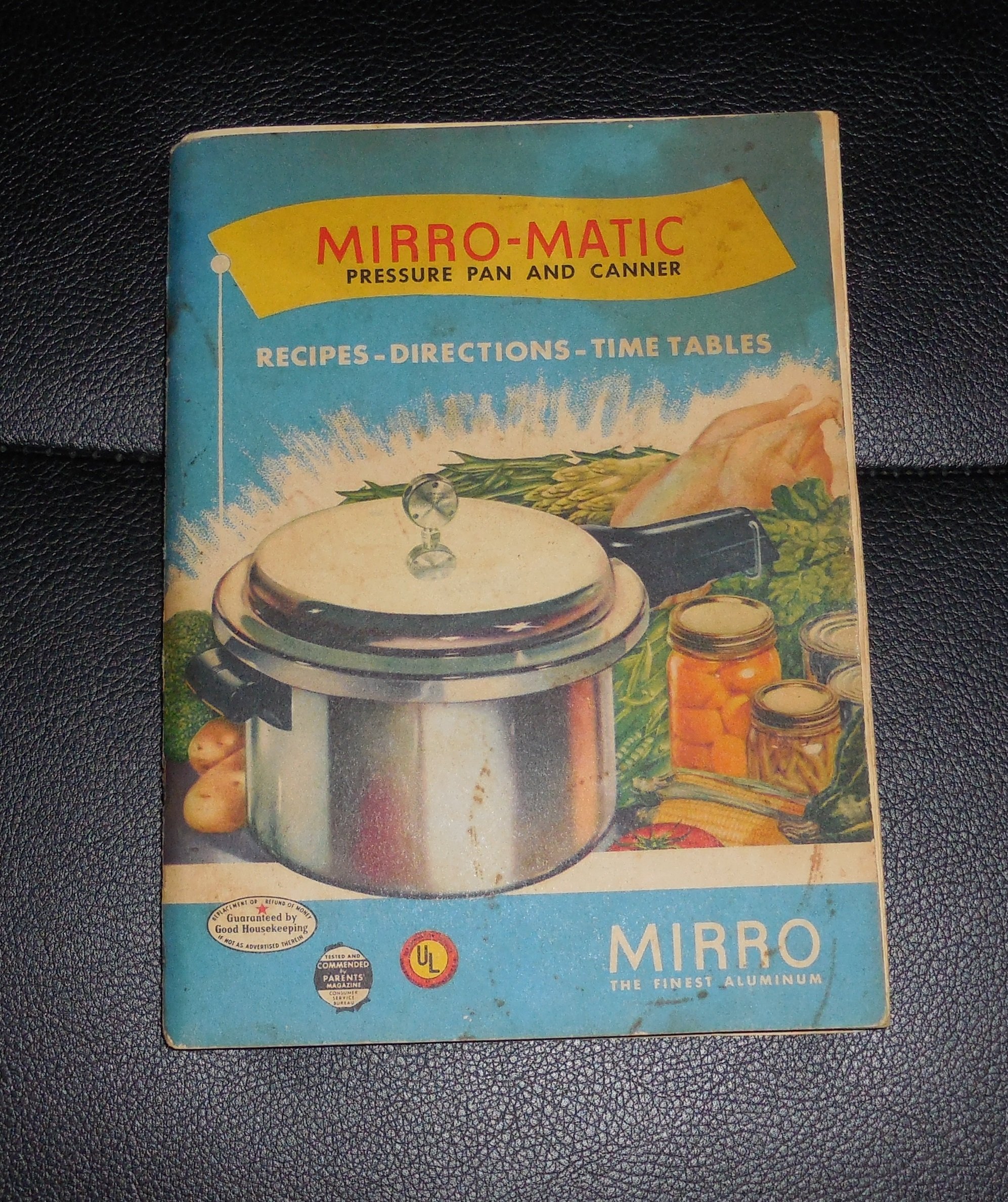
Figure 1: Front cover of the original Mirro-matic Pressure Pan and Canner instruction manual, featuring an illustration of the appliance and various food items.
General Safety and Setup
Before each use, inspect your Mirro-matic Pressure Pan and Canner for any damage or wear. Ensure the gasket is properly seated and free from cracks. Verify that the pressure regulator or weight is clean and functions correctly. Always read and understand the specific instructions for your model before operating. Never force the lid open when the unit is under pressure.
- Initial Cleaning: Wash all parts with warm, soapy water before first use. Rinse thoroughly and dry.
- Lid Placement: Ensure the lid is securely locked in place according to the markings on the lid and body.
- Water Level: Always add the minimum required liquid to generate steam, typically 1 to 2 cups, unless specified otherwise in a recipe.
- Heat Source: Use a heat source appropriate for the size of the canner, ensuring even heating.
Operating Instructions
Operating the Mirro-matic Pressure Pan and Canner involves careful attention to pressure build-up and release. Follow these general steps, always referring to specific recipe instructions for precise timings and pressure levels.
- Loading: Place food and liquid inside the pressure pan. For canning, ensure jars are properly prepared and spaced.
- Securing the Lid: Align the lid and body, then rotate to lock securely.
- Heating: Place the canner on a high heat source. Allow steam to escape steadily from the vent pipe for 5-10 minutes to ensure all air is expelled.
- Applying Pressure Regulator: Place the pressure regulator (weight) onto the vent pipe. The pressure will begin to build.
- Maintaining Pressure: Once the desired pressure is reached (indicated by the regulator's rocking or gauge reading), reduce heat to maintain a steady, gentle rocking motion or consistent gauge pressure. Begin timing the cooking process.
- Pressure Release: After cooking, remove the canner from heat. Allow pressure to drop naturally until the safety lock releases and no steam escapes when the regulator is tilted. Never attempt to open the lid while pressure is present.
- Opening: Once pressure is fully released, remove the regulator, then carefully unlock and open the lid away from your face to avoid steam burns.
Recipes and Time Tables
This section outlines various food categories with specific directions and recommended time tables for pressure cooking and canning. Always consult the detailed recipes within the full manual for precise ingredient quantities and preparation steps.
- Canning: Instructions for preserving fruits, vegetables, meats, and other low-acid foods safely. Includes preparation of jars, processing times, and cooling procedures.
- Cereals: Directions for cooking various grains and cereals quickly under pressure.
- Desserts: Recipes for pressure-cooked puddings, custards, and other sweet treats.
- Dried Vegetables and Fruits: Rehydration and cooking methods for dried produce.
- Frozen Vegetables: Efficient cooking times for frozen vegetables without thawing.
- Fish and Seafood: Gentle pressure cooking techniques for delicate fish and shellfish.
- Pasta: Quick cooking methods for various pasta types.
- Meats: Recipes for tenderizing and cooking tougher cuts of meat, including beef, pork, and lamb.
- Poultry and Game: Instructions for cooking chicken, turkey, and game birds to perfection.
- Sauces: Methods for preparing flavorful sauces and gravies.
- Soups and Chowders: Recipes for hearty and quick-to-prepare soups and chowders.
Each recipe includes specific pressure levels and cooking durations. Adherence to these time tables is crucial for food safety and quality.
Maintenance and Care
Proper maintenance ensures the longevity and safe operation of your Mirro-matic Pressure Pan and Canner.
- Cleaning: After each use, wash all parts with warm, soapy water. Do not use abrasive cleaners or steel wool, as these can damage the finish.
- Gasket Care: Remove the rubber gasket from the lid for cleaning. Inspect it regularly for cracks, hardening, or stickiness. Replace if any damage is observed.
- Vent Pipe and Regulator: Ensure the vent pipe is clear of food particles. Clean the pressure regulator thoroughly.
- Storage: Store the pressure pan with the lid inverted on the body to allow air circulation and prevent gasket compression.
Troubleshooting
Should you encounter issues with your pressure pan, consult this basic troubleshooting guide. For persistent problems, refer to the original manufacturer's guidelines or contact a qualified service professional.
| Problem | Possible Cause | Solution |
|---|---|---|
| Steam leaks from under the lid | Gasket improperly seated or worn; lid not properly locked. | Reposition gasket, replace if damaged. Ensure lid is fully locked. |
| Pressure does not build | Vent pipe clogged; insufficient liquid; heat too low. | Clean vent pipe. Add more liquid. Increase heat. |
| Food is undercooked | Insufficient cooking time; pressure too low. | Increase cooking time or ensure correct pressure is maintained. |
Specifications
The Mirro-matic Pressure Pan and Canner is designed for home use. Specific capacity and material details would be found on the appliance itself or in its original packaging. This manual, published in 1949, serves as a guide for its operation.
- Product Type: Pressure Pan and Canner
- Brand: MIRRO
- Model Series: Mirro-matic
- Material: Typically high-quality aluminum (as indicated on the cover: "MIRRO THE FINEST ALUMINUM")
- Capacity: Varies by specific Mirro-matic model (e.g., 4-quart, 6-quart, 16-quart canner). Refer to your appliance for exact capacity.
Warranty and Support
As this manual pertains to a product line from the mid-20th century, specific warranty information for new purchases is no longer applicable. For support regarding vintage Mirro-matic appliances, it is recommended to consult specialized antique appliance forums or collectors' resources. Original parts may be difficult to source.
The original manual cover indicates endorsements from "Good Housekeeping" and "Parents Magazine," reflecting quality standards of its era.
Related documentsMirro-matic Pressure Pan and Canner


Ask a question about this manual
Ask about setup, troubleshooting, compatibility, parts, safety, or missing instructions. Manuals+ will review the question and use this page’s manual context to help answer it.