
1. Product Overview
The Rosewill RNX-EasyN4 is a 2T2R Wireless Single chip 11N Broadband Router designed to provide high-speed wireless connectivity. It offers data rates up to 300Mbps, delivering faster speeds and extended coverage compared to 802.11g devices. This router supports home networks with superior throughput and performance, along with a robust wireless range.
Key Features:
- Compliant with draft 802.11n standard, offering up to 12 times faster speed and 4 times farther range than 802.11g devices.
- Features two built-in antennas utilizing MIMO (Multiple-Input Multiple-Output) technology to create a robust signal, reduce dead spots, and deliver high-speed performance and coverage.
- Supports WEP, WPA, and WPA2 standards for secure wireless encryption and includes a built-in firewall to protect against potential internet attacks.
2. Package Contents
Verify that all items listed below are present in your product package. If any item is missing or damaged, please contact your retailer or Rosewill support.

Image 2.1: The image displays the Rosewill RNX-EasyN4 router, its retail box, a power adapter, an Ethernet cable, a Quick Installation Guide, and a Driver CD-ROM.
- Rosewill RNX-EasyN4 Wireless-N 2.0 Broadband Router
- Power Adapter
- Ethernet Cable
- Quick Installation Guide
- Driver CD-ROM
3. Hardware Overview
Familiarize yourself with the physical components and ports of your Rosewill RNX-EasyN4 router.

Image 3.1: This image shows the top and front view of the Rosewill RNX-EasyN4 router, highlighting its compact design and two external antennas.
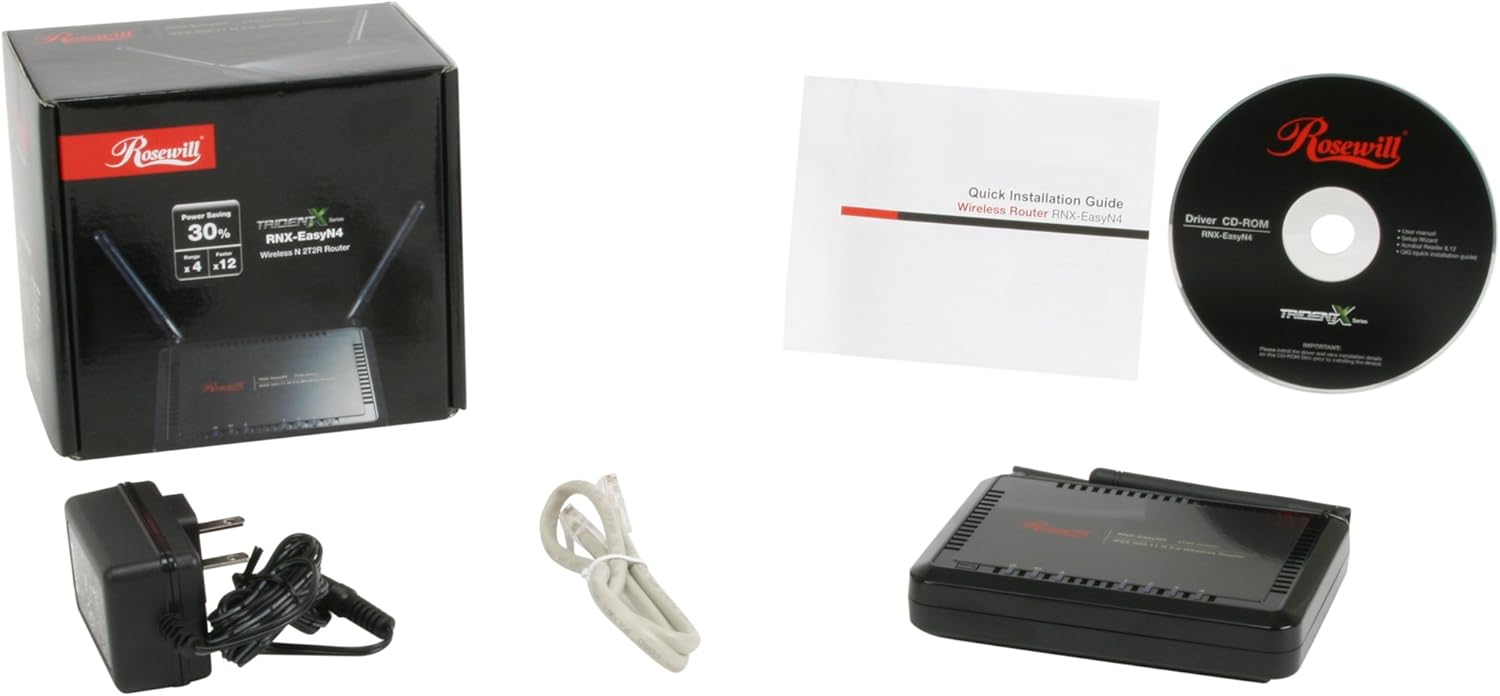
Image 3.2: This image displays the rear panel of the Rosewill RNX-EasyN4 router, showing the power input, four yellow LAN ports, one blue WAN port, and a WPS button.
Rear Panel Description:
- Power Port: Connect the provided power adapter here.
- LAN Ports (Yellow, 1-4): Four 10/100Mbps Ethernet ports for connecting wired devices such as computers, gaming consoles, or network printers.
- WAN Port (Blue): One 10/100Mbps Ethernet port for connecting to your modem (DSL/Cable/Fiber). This port receives the internet connection.
- WPS Button: Used for Wi-Fi Protected Setup, allowing for easy and secure connection of WPS-compatible wireless devices without manually entering the password.
4. Setup Guide
Follow these steps to set up your Rosewill RNX-EasyN4 router for the first time.
- Power Off Devices: Disconnect the power from your modem and computer.
- Connect Modem to Router: Connect one end of the provided Ethernet cable to the LAN port on your modem and the other end to the blue WAN port on the Rosewill RNX-EasyN4 router.
- Connect Computer to Router (Optional for initial setup): For initial configuration, connect one end of another Ethernet cable to a yellow LAN port on the router and the other end to your computer's Ethernet port. You can also connect wirelessly after the router is powered on.
- Power On Modem: Connect the power adapter to your modem and power it on. Wait for the modem's indicator lights to stabilize, indicating an active internet connection. This may take a few minutes.
- Power On Router: Connect the provided power adapter to the router's power port and plug it into a wall outlet. The router will power on automatically. Wait for the router's indicator lights to stabilize.
- Power On Computer: Turn on your computer.
- Access Router Configuration: Open a web browser on your connected computer. In the address bar, type the default IP address (usually
192.168.1.1or192.168.0.1) and press Enter. Refer to the Quick Installation Guide or the label on the bottom of the router for the exact default IP address, username, and password. - Follow On-Screen Wizard: Once logged in, follow the on-screen setup wizard to configure your internet connection type (e.g., Dynamic IP, Static IP, PPPoE) and set up your wireless network name (SSID) and password.
Note: It is recommended to change the default administrator password for security purposes.
5. Operating Instructions
5.1. Wireless Network Configuration
To customize your wireless network settings:
- Log in to the router's web-based management interface using the IP address and credentials.
- Navigate to the "Wireless" or "Wi-Fi Settings" section.
- SSID (Network Name): Change the default SSID to a unique name for your wireless network.
- Security Mode: Select a strong security protocol. WPA2-PSK (AES) is recommended for optimal security.
- Wireless Password (Pre-Shared Key): Enter a strong password (at least 8 characters, including uppercase, lowercase, numbers, and symbols).
- Channel: If you experience interference or slow speeds, try changing the wireless channel. "Auto" mode often works well, but manual selection (e.g., channels 1, 6, or 11 in 2.4GHz) can improve performance in congested areas.
- Save your settings. Your wireless devices will need to reconnect using the new SSID and password.
5.2. WPS (Wi-Fi Protected Setup)
WPS allows for a quick and secure connection of WPS-compatible devices to your wireless network without entering the password manually.
- Using the WPS Button: Press the WPS button on the rear panel of the router. Within two minutes, activate WPS on your client device (e.g., wireless adapter, printer). The devices will automatically establish a secure connection.
- Using PIN: Some devices may require you to enter a PIN from the router's web interface into the client device, or vice-versa. Refer to your device's manual for specific instructions.
5.3. Firewall and Security
The router includes a built-in firewall to protect your network. You can configure additional security settings through the web interface:
- Access Control: Manage which devices can access your network or the internet.
- Port Forwarding: Configure rules to allow specific external traffic to reach devices on your local network (e.g., for gaming or specific applications).
- DMZ (Demilitarized Zone): Designate a device to be exposed to the internet, bypassing the firewall. Use with caution.
6. Maintenance
Regular maintenance helps ensure optimal performance and longevity of your router.
- Regular Reboots: Periodically reboot your router (e.g., once a month) by unplugging the power adapter for 10 seconds and then plugging it back in. This can resolve minor performance issues.
- Firmware Updates: Check the Rosewill support website for firmware updates. Firmware updates can improve performance, add new features, and fix security vulnerabilities. Follow the instructions provided by Rosewill carefully when performing an update.
- Physical Cleaning: Keep the router in a well-ventilated area. Dust can accumulate and cause overheating. Gently clean the exterior with a soft, dry cloth. Do not use liquid cleaners.
- Placement: Place the router in a central location, away from obstructions, large metal objects, and devices that emit strong electromagnetic interference (e.g., microwaves, cordless phones) to maximize wireless coverage.
7. Troubleshooting
This section addresses common issues you might encounter with your Rosewill RNX-EasyN4 router.
7.1. No Internet Connection
- Check Cables: Ensure all Ethernet cables are securely connected to the correct ports (modem to router WAN, computer to router LAN).
- Power Cycle: Power off your modem, then the router, then your computer. Wait 30 seconds, then power on the modem, wait for it to fully boot, then power on the router, wait for it to fully boot, and finally power on your computer.
- Modem Status: Verify that your modem has an active internet connection (check its indicator lights).
- Router Configuration: Log into the router's web interface and ensure your internet connection settings (WAN settings) are correctly configured according to your Internet Service Provider (ISP).
7.2. Cannot Connect to Wireless Network
- Check SSID and Password: Ensure you are selecting the correct wireless network name (SSID) and entering the correct password. Passwords are case-sensitive.
- Wireless Adapter: Make sure your device's wireless adapter is enabled.
- Signal Strength: Move closer to the router to check if signal strength is an issue.
- Wireless Channel: If many wireless networks are in your area, interference might occur. Try changing the wireless channel in the router's settings (e.g., to 1, 6, or 11).
7.3. Slow Wireless Speeds
- Interference: As mentioned above, try changing the wireless channel.
- Router Placement: Ensure the router is centrally located and not obstructed.
- Number of Devices: Too many devices actively using the network can reduce speeds.
- Firmware: Ensure your router's firmware is up to date.
- Client Device Compatibility: Ensure your wireless client devices support 802.11n for optimal speeds.
8. Specifications
| Brand | Rosewill |
| Model Number | RNX-EasyN4 |
| Wireless Communication Standard | 802.11a, 802.11b, 802.11b/g, 802.11bgn, 802.11g, 802.11n |
| Data Transfer Rate | Up to 300 Megabits Per Second |
| Connectivity Technology | Wi-Fi, Ethernet |
| LAN Port Bandwidth | 10/100 Megabits Per Second |
| Number of LAN Ports | 4 |
| Number of WAN Ports | 1 |
| Antenna Configuration | 2T2R (Two Transmit, Two Receive) with built-in antennas |
| Security Protocol | WEP, WPA-PSK, WPA2-PSK |
| Special Feature | WPS (Wi-Fi Protected Setup) |
| Compatible Devices | Personal Computer and other network-enabled devices |
| Recommended Use | Home Networking |
| Item Weight | 0.9 Pounds |
| Manufacturer | Rosewill |
9. Warranty and Support
For warranty information, technical support, or further assistance, please refer to the documentation included with your product or visit the official Rosewill website. Contact information for customer support is typically available on the manufacturer's website.
Manufacturer: Rosewill
Please retain your proof of purchase for warranty claims.


