
1. Introduction
The MXL R144 is a multi-purpose ribbon microphone designed for high-quality audio capture. It features a Figure-8 polar pattern and a 1.8-micron aluminum ribbon, making it suitable for vocal and instrument recordings, as well as broadcast applications. Its design allows for excellent performance on acoustic instruments, strings, and horns, offering high Sound Pressure Level (SPL) capability, effective side rejection, and precise directivity.
Key features include:
- Classic ribbon sound with a rich, smooth midrange.
- Figure-8 polar pattern for natural instrument and room sound capture.
- High SPL capability, suitable for horns and electric guitars.
- Compact design for easy microphone placement.
- Expands the tonal palette of your sound recordings.
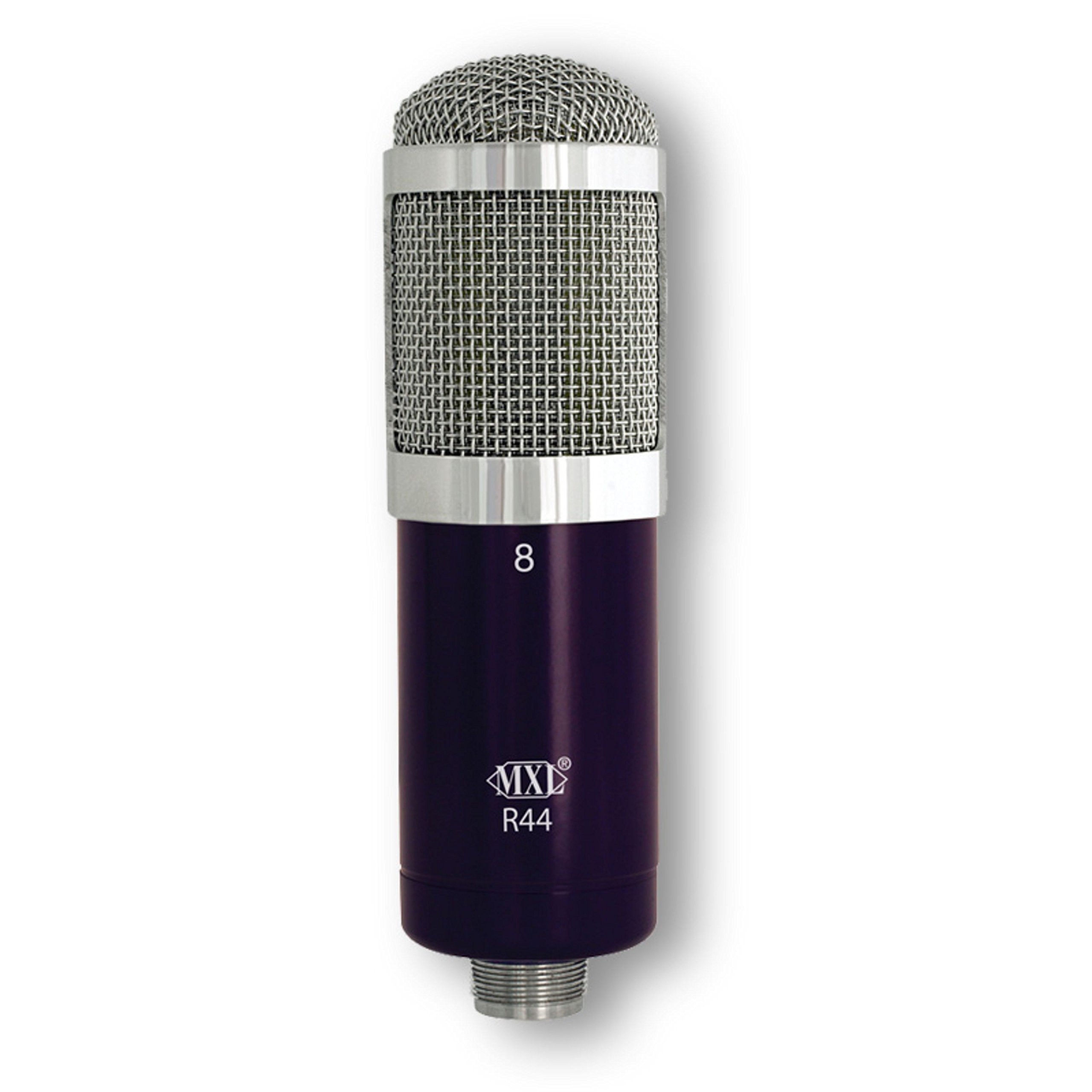
Figure 1: The MXL R144 Multi-Purpose Ribbon Microphone with its included shockmount. The microphone features a purple body and a silver grille.
2. Setup
Proper setup is crucial for optimal performance and longevity of your ribbon microphone. The MXL R144 is a passive ribbon microphone and does not require phantom power. Applying phantom power to a passive ribbon microphone can potentially damage the ribbon element, especially if there is a wiring fault in the cable or connector. Always ensure phantom power is OFF before connecting or disconnecting the microphone.
- Mounting the Microphone:
Attach the MXL R144 to the included shockmount. The shockmount helps to isolate the microphone from vibrations and handling noise. Secure the shockmount to a sturdy microphone stand.
- Connecting to an Audio Interface/Mixer:
Use a high-quality XLR cable to connect the microphone to an audio interface or mixer. Ensure that the audio interface or mixer's phantom power is disabled before making the connection. Ribbon microphones typically have a lower output level compared to condenser microphones, so a preamplifier with sufficient clean gain is recommended.
- Gain Staging:
Adjust the gain on your preamplifier or mixer to achieve an appropriate signal level. Monitor your input levels to prevent clipping while ensuring a strong signal-to-noise ratio.
3. Operating Instructions
The MXL R144 features a bidirectional (Figure-8) polar pattern, meaning it picks up sound equally from the front and rear of the microphone, while rejecting sound from the sides. This characteristic offers unique recording possibilities.
- Microphone Placement:
Due to its Figure-8 pattern, the R144 is excellent for capturing two sources simultaneously (e.g., two vocalists facing each other) or for recording a source along with the natural room ambiance. Positioning the microphone with its sides facing unwanted sound sources will help in rejecting them.
- Suitable Applications:
This microphone is versatile and performs well on:
- Vocals: Provides a smooth, warm tone. Experiment with distance for proximity effect.
- Acoustic Instruments: Captures the natural resonance of guitars, strings, and woodwinds.
- Electric Guitars/Horns: Its high SPL capability allows for close miking of loud sources without distortion.
- Drum Overheads/Room Mics: Can add a unique character to drum recordings by capturing both direct sound and room reflections.
- Proximity Effect:
Like most directional microphones, the R144 exhibits proximity effect, meaning bass response increases as the microphone is moved closer to the sound source. Utilize this effect creatively to add warmth or fullness to recordings.
4. Maintenance
Ribbon microphones are delicate instruments. Proper care and handling will ensure their longevity and performance.
- Handling:
Avoid dropping or subjecting the microphone to strong impacts, as this can damage the delicate ribbon element. Do not expose the microphone to strong blasts of air (e.g., blowing directly into it), as this can stretch or tear the ribbon.
- Storage:
When not in use, store the MXL R144 in its protective case to shield it from dust, moisture, and physical damage. Store it vertically if possible, to prevent the ribbon from sagging over time.
- Cleaning:
Clean the exterior of the microphone with a soft, dry cloth. Do not use liquid cleaners or solvents, as these can damage the finish or internal components.
- Phantom Power:
As a passive ribbon microphone, the MXL R144 does not require phantom power. Ensure phantom power is always turned OFF on your preamplifier or mixer before connecting or disconnecting the microphone. Accidental application of phantom power, especially with faulty cables, can damage the ribbon.
5. Troubleshooting
If you encounter issues with your MXL R144, refer to the following common problems and solutions:
| Problem | Possible Cause | Solution |
|---|---|---|
| No Sound or Very Low Output |
|
|
| Distorted Sound |
|
|
| Unwanted Noise/Hum |
|
|
If problems persist, contact MXL customer support or a qualified service technician.
6. Specifications
| Feature | Detail |
|---|---|
| Model Name | MXL R144 Ribbon Microphone |
| Polar Pattern | Bidirectional (Figure-8) |
| Ribbon Element | 1.8-micron aluminum ribbon |
| Frequency Response | 20 Hz - 20 kHz |
| Sensitivity | -56 dBV/Pa (approx.) |
| Impedance | 250 Ohm |
| Signal-to-Noise Ratio | 76 dB |
| Max SPL | >130 dB |
| Connectivity | XLR |
| Material | Metal |
| Color | Purple |
| Dimensions (L x W x H) | 12 x 4 x 8 inches (Product Dimensions) |
| Item Weight | 1.54 pounds (0.7 kg) |
| Included Components | Microphone, Shockmount |
7. Warranty and Support
The MXL R144 Ribbon Microphone typically comes with a manufacturer's warranty. Users can register their microphone on the official MXL website to activate a 2-year warranty protection.
For technical support, service, or warranty claims, please visit the official MXL website or contact their customer service department directly. Ensure you have your product model number (R144) and proof of purchase available when seeking support.
Manufacturer: Marshall Electronics


