
1. Introduction
This manual provides essential information for the safe and efficient operation, installation, and maintenance of your Ingersoll Rand D18IN Compressed Air Dryer. The D18IN is designed to remove moisture from compressed air, preventing rust in tools and equipment, and preserving lubricant effectiveness. It features an ISO Class 6 dryer rating, 11 CFM capacity, and an integral stainless steel moisture separation system, ensuring reliable and efficient performance with minimal pressure drop.
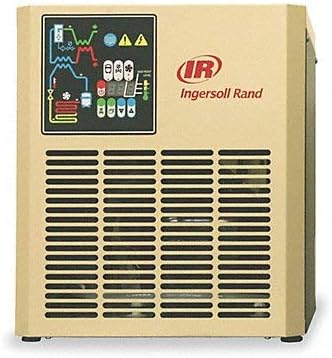
Figure 1: Front view of the Ingersoll Rand D18IN Compressed Air Dryer. The unit is beige with a black control panel on the top left and a large ventilation grille covering the lower front.
2. Safety Information
WARNING: Read and understand all safety instructions before operating this equipment. Failure to follow these instructions may result in serious injury or property damage.
- Always disconnect power before performing any maintenance or service.
- Ensure proper ventilation in the operating area.
- Do not operate the dryer if any parts are damaged or missing.
- Wear appropriate personal protective equipment (PPE) when working with compressed air systems.
- Ensure all connections are secure and leak-free to prevent pressure loss or injury.
- Dispose of condensate and waste materials according to local environmental regulations.
3. Setup and Installation
- Unpacking: Carefully remove the dryer from its packaging. Inspect for any shipping damage. Report any damage to the carrier immediately.
- Location: Place the dryer on a level, stable surface in a clean, dry, and well-ventilated area. Ensure adequate clearance around the unit for airflow and maintenance access. Avoid direct sunlight or extreme temperatures.
- Air Connections:
- Connect the compressed air inlet from your compressor's aftercooler to the dryer's inlet port.
- Connect the dried air outlet to your air distribution system or point of use.
- Use appropriate pipe thread sealant on all connections to prevent leaks.
- Condensate Drain: Connect the condensate drain port to a suitable drainage system. Ensure the drain line has a continuous downward slope and is not obstructed.
- Electrical Connection: Connect the dryer to a dedicated electrical circuit with the correct voltage and amperage as specified on the unit's nameplate. Ensure proper grounding.
4. Operating Instructions
- Pre-Start Check:
- Verify all air and electrical connections are secure.
- Ensure the condensate drain is properly connected and clear.
- Confirm the compressor is operating and supplying air to the dryer.
- Starting the Dryer: Turn on the main power switch for the dryer. The unit will begin its drying cycle. Allow several minutes for the dryer to reach optimal operating conditions.
- Monitoring Operation:
- Observe the pressure gauge to ensure proper airflow and minimal pressure drop.
- Check the condensate drain for regular discharge of moisture.
- Listen for any unusual noises or vibrations.
- Stopping the Dryer: To stop operation, turn off the main power switch. It is recommended to depressurize the air system before extended shutdowns.
5. Maintenance
Regular maintenance is crucial for the longevity and efficient performance of your air dryer.
- Daily: Check the condensate drain for proper operation. Ensure there are no air leaks in the system.
- Weekly: Clean the exterior of the dryer. Inspect cooling fins for dust and debris accumulation.
- Monthly: Inspect all electrical connections for tightness. Check for signs of wear on hoses and fittings.
- Annually: Have a qualified technician inspect the refrigerant system and replace any filters as recommended by Ingersoll Rand.
Always refer to the detailed maintenance schedule provided in the full product manual for specific intervals and procedures.
6. Troubleshooting
| Problem | Possible Cause | Solution |
|---|---|---|
| No power to unit | Power cord disconnected, circuit breaker tripped, fuse blown | Check power connection, reset breaker, replace fuse (if applicable) |
| Wet air at outlet | Condensate drain blocked, ambient temperature too high, dryer undersized, refrigerant issue | Clear drain, ensure proper ventilation, consult specifications, contact service technician |
| Excessive pressure drop | Clogged pre-filter (if installed), restricted air lines, dryer undersized | Inspect/replace pre-filter, check air lines for obstructions, verify dryer capacity |
| Unusual noise/vibration | Loose components, motor issue, fan obstruction | Inspect for loose parts, contact service technician |
For issues not listed or if solutions do not resolve the problem, contact Ingersoll Rand customer support or a qualified service technician.
7. Specifications
| Feature | Value |
|---|---|
| Brand | Ingersoll Rand |
| Model Number | D18IN |
| Air Flow Capacity | 11 Cubic Feet Per Minute (CFM) |
| Motor Horsepower | 5 Horsepower (HP) |
| Noise Level | 69 Decibels |
| Item Weight | 40 Pounds |
| Product Dimensions | 16.6 x 13.4 x 17.5 inches |
| Material | Aluminum |
| Recommended Uses | Auto (for use with compressors with aftercoolers) |
| UPC | 094704393728 |
8. Warranty and Support
For specific warranty information regarding your Ingersoll Rand D18IN Compressed Air Dryer, please refer to the warranty card included with your product or visit the official Ingersoll Rand website. Warranty terms and conditions may vary by region and purchase date.
For technical support, service, or to order replacement parts, please contact Ingersoll Rand customer service. You can typically find contact information on the product label, in the original packaging, or on the official Ingersoll Rand website.
Online Resources: www.ingersollrand.com