
1. Introduction
This manual provides essential information for the proper installation, operation, and maintenance of your Cole Hersee 24082 12 Volt Solenoid. Please read these instructions thoroughly before proceeding with installation or use to ensure safe and efficient performance.
2. Product Overview
The Cole Hersee 24082 is a genuine 12-volt solenoid designed for various automotive and marine applications. It functions as an electromagnetic switch, allowing a small current to control a larger current flow, typically used in starter circuits or for controlling auxiliary equipment.
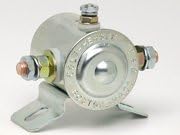
Figure 2.1: Front view of the Cole Hersee 24082 12 Volt Solenoid, showing the main terminals and mounting bracket.
3. Safety Information
Always observe the following safety precautions during installation and operation:
- Disconnect the vehicle's battery before performing any electrical work to prevent short circuits and electrical shock.
- Wear appropriate personal protective equipment, including safety glasses and gloves.
- Ensure all connections are clean, tight, and properly insulated to prevent arcing or overheating.
- Do not exceed the specified voltage and current ratings of the solenoid.
- Consult a qualified technician if you are unsure about any part of the installation process.
Legal Disclaimer: Warning: This product may contain materials cautioned by California Proposition 65. For more information, please refer to the official California Proposition 65 website.
4. Package Contents
Upon opening the package, verify that all components are present and undamaged:
- Cole Hersee 24082 12 Volt Solenoid (1 unit)
No additional accessories are typically included with this specific product unless specified by the retailer.
5. Installation Instructions
The following steps outline a general installation procedure. Specific wiring diagrams for your application should be consulted.
- Preparation: Ensure the vehicle's battery is disconnected. Identify the mounting location for the solenoid, ensuring it is secure, dry, and away from excessive heat or vibration.
- Mounting: Securely mount the solenoid using appropriate fasteners through its integrated mounting bracket.
- Wiring - Main Power: Connect the main positive (+) battery cable to one of the large terminals on the solenoid. Connect the cable leading to the starter motor or controlled device to the other large terminal. Ensure these connections are tight and corrosion-free.
- Wiring - Control Circuit: Connect the ignition switch or control switch wire (typically a smaller gauge wire) to the small terminal on the solenoid. This terminal activates the solenoid when power is applied.
- Grounding: Ensure the solenoid body is properly grounded to the vehicle chassis. Some solenoids ground through their mounting bracket; others may require a separate ground wire.
- Testing: Reconnect the battery. Test the solenoid's operation by activating the control circuit (e.g., turning the ignition key to the start position). Listen for a distinct click and observe the function of the connected device.

Figure 5.1: Example of a solenoid with typical wiring connections. Always refer to specific vehicle wiring diagrams.
6. Operating Principles
The Cole Hersee 24082 solenoid operates on the principle of electromagnetism. When a small current is applied to the control terminal (from the ignition switch), it energizes an internal coil, creating a magnetic field. This magnetic field pulls a plunger, which in turn closes a set of heavy-duty contacts. These contacts then allow a large current to flow from the battery to the connected load (e.g., starter motor), initiating its operation. When the control current is removed, the magnetic field collapses, and a spring returns the plunger to its original position, opening the contacts and cutting off the high current flow.
7. Maintenance Guidelines
To ensure the longevity and reliable performance of your solenoid, consider the following maintenance tips:
- Inspect Connections: Periodically check all electrical connections for tightness and corrosion. Clean any corroded terminals with a wire brush and apply dielectric grease to prevent future corrosion.
- Check for Damage: Visually inspect the solenoid for any signs of physical damage, such as cracks, melted plastic, or loose components.
- Environmental Protection: Ensure the solenoid is protected from excessive moisture, dirt, and extreme temperatures where possible.
- Avoid Overloading: Do not use the solenoid in applications that exceed its specified current or voltage ratings, as this can lead to premature failure.
8. Troubleshooting Guide
This section addresses common issues you might encounter with your solenoid.
| Symptom | Possible Cause | Solution |
|---|---|---|
| Solenoid clicks but device (e.g., starter) does not engage. |
|
|
| Solenoid does not click or engage. |
|
|
| Solenoid overheats. |
|
|
9. Technical Specifications
| Feature | Specification |
|---|---|
| Model Number | 24082 |
| Voltage Rating | 12 Volt |
| Manufacturer | Cole Hersee |
| Item Weight | 12.6 ounces (approx. 357 grams) |
| Product Dimensions | 3.5 x 2.5 x 2.25 inches (approx. 8.9 x 6.4 x 5.7 cm) |
| Manufacturer Part Number | 24082 |
| National Stock Number | 5945-01-456-6730 |
| ASIN | B001FQL43A |
10. Warranty and Customer Support
For information regarding warranty coverage, technical assistance, or to purchase replacement parts, please contact Cole Hersee customer support directly or visit their official website. Details are typically available on the product packaging or the manufacturer's website.
When contacting support, please have your product model number (24082) and purchase information readily available.


